By Celeste Noraian
Armenian artist Sona Abgaryan says artificial intelligence is not the cause of the crisis facing the art world, but a new phenomenon that brings existing questions about creativity into sharper focus.
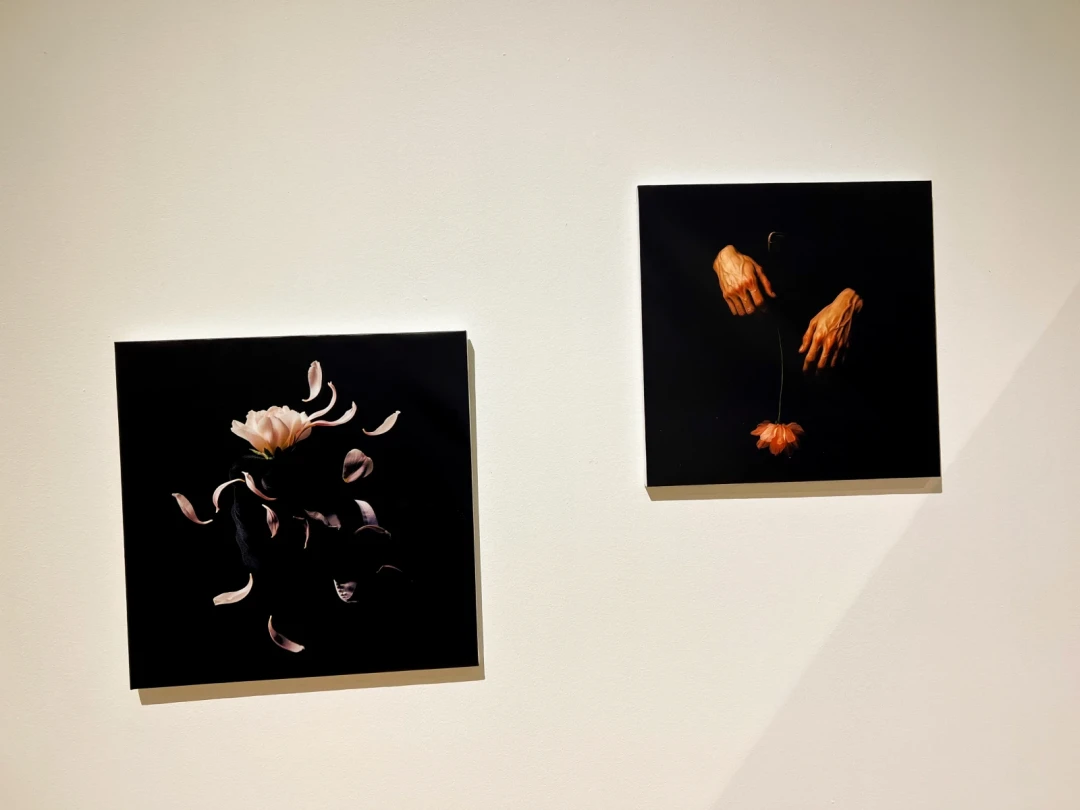
Her exhibition, Index of Pressure, which runs at the National Gallery of Armenia from November 15-29, explores the connection between technology and art, leaving the viewers to form their own perspectives on AI. The exhibition features a multimedia installation combining an AI-generated video, images printed on canvas, and a 3D-printed sculpture.
“I was simply curious about this new tool and format, and wanted to explore its possibilities and limitations, particularly the boundaries between what is real and what is unreal,” Abgaryan told CivilNet.
Abgaryan works at TUMO Center for Creative Technologies as the Digital Drawing Training Lead. Her artistic work spans from painting, video art, digital drawing, writing, and book illustration. She said she often approaches art as a form of research, experimenting with different mediums and formats.
The idea for Index of Pressure began last year through a series of conversations with AI. Initially, Abgaryan did not have a plan to turn those exchanges into an exhibition. However, it later became a form of research to create her first art project involving AI. The Index of Pressure is also the first AI art exhibit in Armenia.
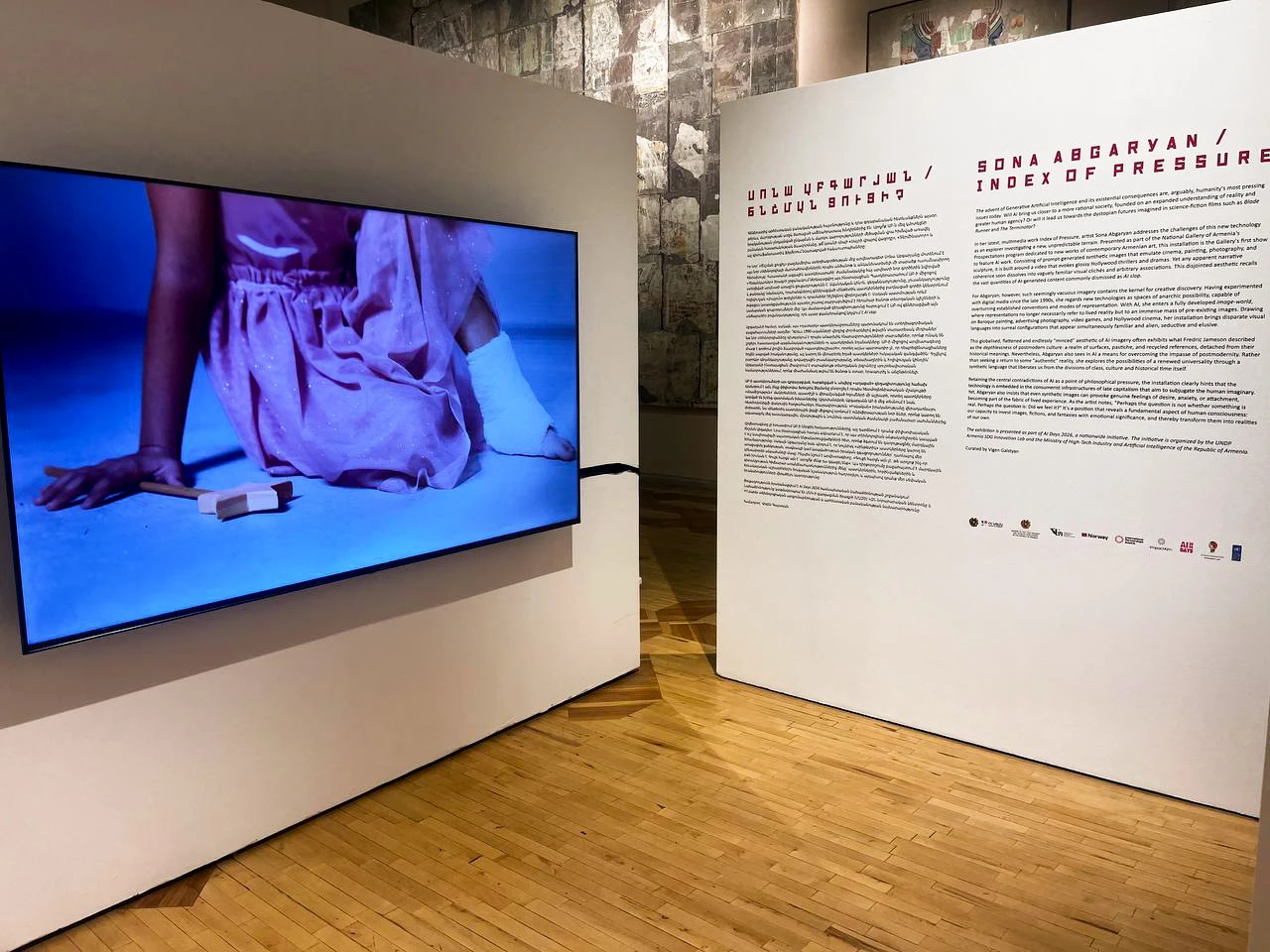
AI became more than a tool for generating images. Abgaryan also described it as a “nonexistent friend” and conversational partner who helped her develop and question her ideas.
Abgaryan said her exhibition reflects the pressure people face when established ideas and narratives no longer provide convincing answers. This uncertainty forces people to question their assumptions and reconsider how they understand the present and imagine the future.
AI and the changing art world
Asked whether AI threatens traditional art, Abgaryan questioned the idea that traditional art should be protected from change. She argued that challenges facing the art world began long before the emergence of AI.
Political instability, the COVID-19 pandemic, weakening legal systems, and broader social uncertainty have all influenced how people understand the world and imagine the future, she said.
“For a while, art seemed to abandon its ambition to change the world,” Abgaryan said.
She shared that art had increasingly turned toward smaller, more personal stories. While this shift can offer new forms of freedom and expression, she questioned whether it can aspire to change anything in the world.
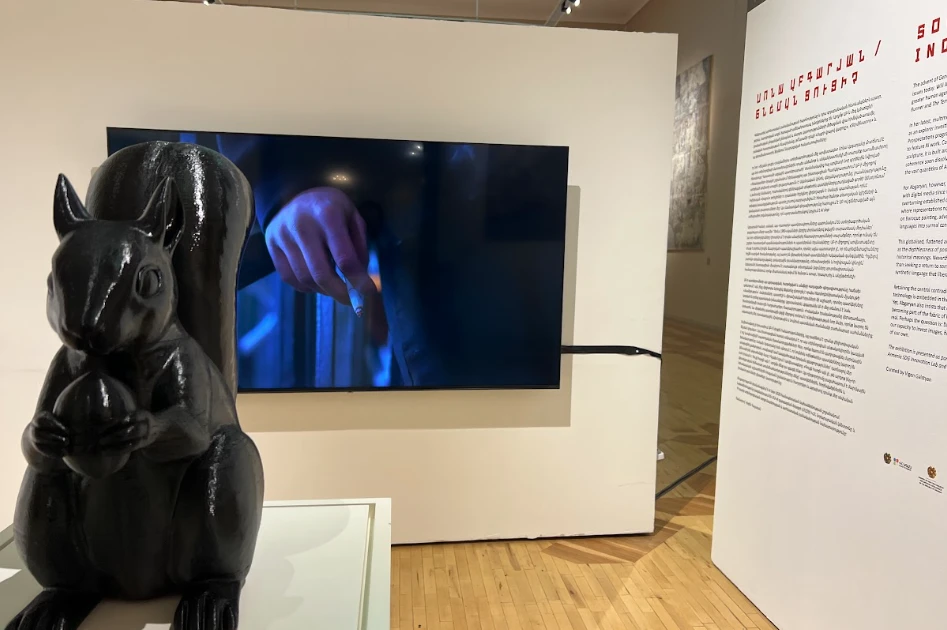
Abgaryan sees AI as a development that makes existing questions about art and society more visible. While she acknowledged that AI can reproduce sameness, she said it can create new opportunities for artistic experimentation.
She does not believe that the growing accessibility of AI tools will diminish the importance of professional artistic experience. Instead, she suggested that professional knowledge and experience could become even more valuable as these technologies become available to more people.
But not everyone is convinced that AI belongs in the art world. CivilNet spoke with visitors at the gallery about art and AI.
Yury P., who has used AI for practical tasks and experimented with AI-generated images and travel planning, sees the technology as having a supporting role rather than replacing human creativity.
“I don’t see it taking over artistic work, philosophy, or deep scientific thinking,” he said. “Where calculations are needed, or where databases can be used, then of course AI is useful. But otherwise, generally speaking, no.”
Joshua Taylor takes a stronger stance against AI-generated art, arguing that it lacks the meaning and human creativity that give art its value.
“I think it undermines actual art and just doesn't have any value,” Taylor said, describing it as “a form of deception.”
Taylor also said he avoids AI as much as possible and boycotts companies that use it in their advertising. He argued that the technology threatens artists while often failing to make clear when content has been generated by AI.
For Abgaryan, however, the exhibition was not intended to provide a definitive answer about AI's place in art. She said she wanted to create an opportunity for people to engage with the subject and consider the changes taking place around them
“I'm interested not only in presenting the artworks, but also in thinking together about the changes we are all part of: discussing them, raising questions, and listening to different perspectives,” she said.

 Stories