 Alexander Pracht
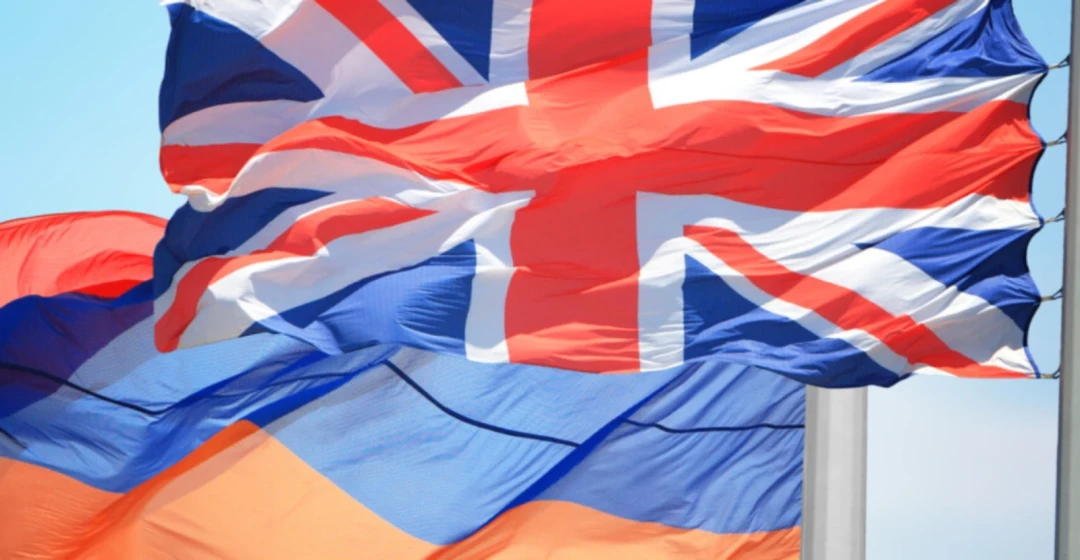
Armenian officials last week presented the United Kingdom’s existing zero-tariff suspensions as a recent bilateral achievement, yet available evidence indicates these are general measures available to almost any country rather than new preferences granted specifically to Armenia.
Armenian foreign ministry’s announcement
Armenia’s foreign ministry (recently formally renamed the Ministry of Foreign Affairs and International Trade) announced last Wednesday that Armenian businesses may enjoy zero-duty opportunities when exporting certain goods to the United Kingdom.
“We would like to inform Armenian businesses that the United Kingdom has defined autonomous trading measures for Armenian origin products. The decision is in line with the Armenia-United Kingdom strategic partnership and aims to contribute to the expansion of export opportunities of Armenian products and deepening bilateral economic cooperation,” the ministry’s spokesperson Ani Badalyan wrote on Facebook, and the ministry reposted this.
The announcement was posted exclusively in Armenian and not on the MFA’s website. Its wording presented the opportunity as a recent achievement in bilateral relations, as if the UK waived import duties for Armenia specifically, without referring to when exactly this happened.
A day later, Foreign Minister Ararat Mirzoyan also addressed the UK tariffs, explicitly presenting it as a recent decision.
“Yesterday we announced that, in addition to the EU, the United Kingdom has also decided to provide Armenia with autonomous trade measures. That is, we can export to the United Kingdom in a way similar to how we export to EU countries.”
Badalyan’s announcement included a PDF that listed the possible commodities Armenian businesses can export to the UK with zero tariff. The list includes a wide range of products produced in Armenia, from fresh fruits to spices and alcoholic beverages. The PDF also lists import requirements for each item, such as phytosanitary certificates, explains how to obtain certificates, and lists importers and possible intermediaries with contact info for each, such as the Armenian-British Business Chamber, the UK Wine and Spirit Trade Association, and others.
The document does not state what authority issued it, and appears to be an informal memo rather than a formal document describing new regulations.
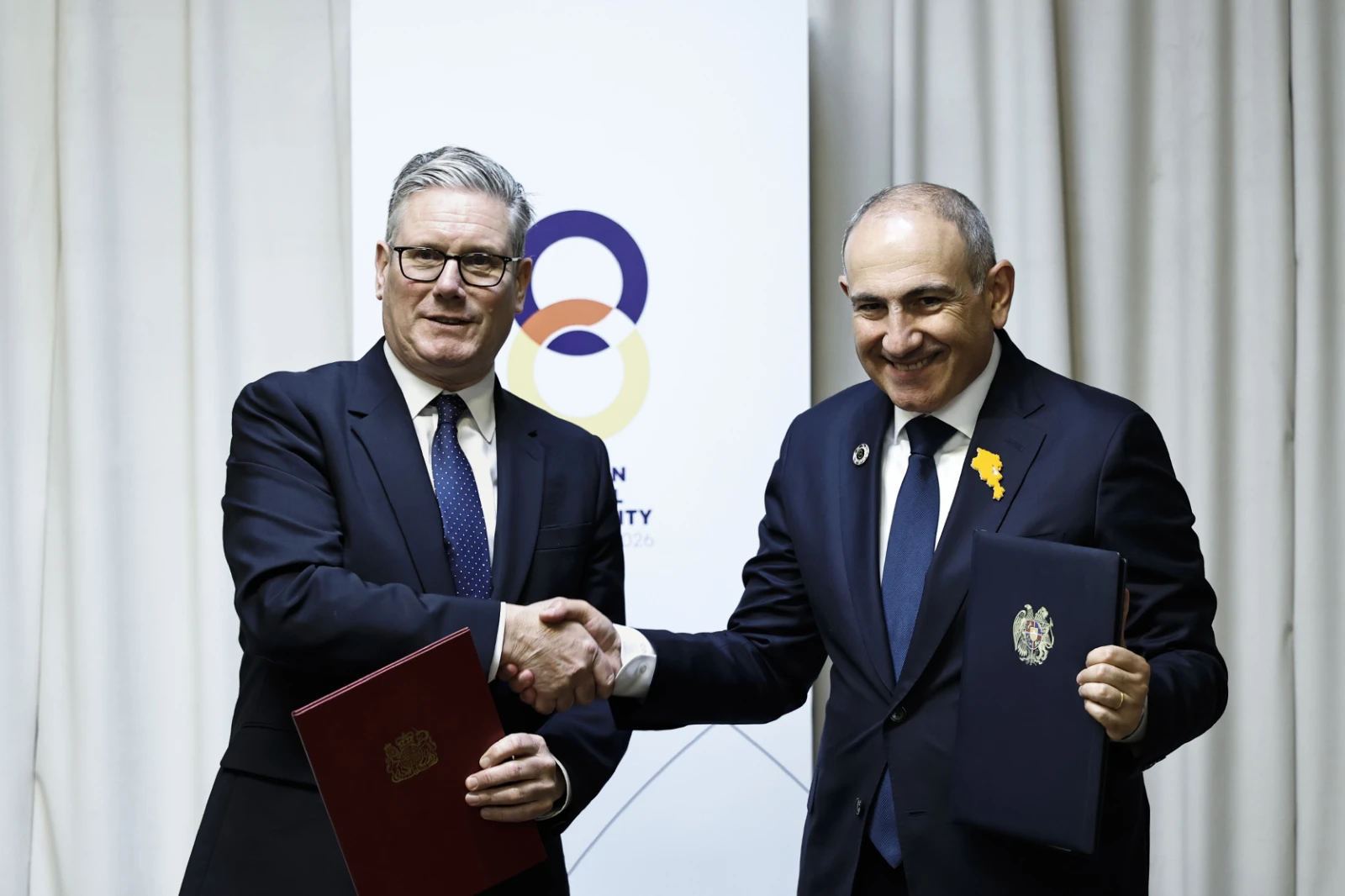
The announcement was also reported by several Armenian media outlets, including state news agency Armenpress, all presenting it as a recent and Armenia-specific change.
How the UK manages import duty waivers
“Duty suspensions are designed to help UK […] businesses remain competitive in the global marketplace. They do this by removing or reducing import duties on specific goods, normally those used in production processes, for a defined period,” the UK government explains.
These suspensions can allow unlimited quantities of the goods in scope to be imported, or limited quantities – the latter are referred to as Autonomous tariff quotas, or ATQs. Some suspensions are permanent (until further notice), while others are currently effective through the end of 2028, although these deadlines are often extended.
There are only six ATQs as of now: five for fish products and one for raw cane sugar. Neither is on the list provided by MFA’s PDF, however, the PDF is incorrectly titled “ATQ.”
Neither any British authority such as the Business and Trade Department, nor organizations such as the Armenian-British Business Chamber have reported introducing specific tariff waivers for Armenia. Moreover, the UK government explicitly says that duty suspensions are applicable to imports from any country.
“They are applied on a Most Favoured Nation (MFN) basis. This means that goods in scope of suspensions or quotas can be imported into the UK from any country or territory at the specified reduced tariff rate, subject to any conditions that apply,” the UK government says in its guidance on the matter, though in other documents it mentions that the waivers do not apply to goods from Russia, Belarus, and North Korea due to the economic sanctions.
In addition to its list of zero-tariff goods that is regularly updated based on economic considerations, the UK also adopted an additional list of waivers in May 2026 specifically in connection with the U.S.-Israeli war on Iran.
“The government has applied tariff suspensions on a number of agricultural items to support households with rising prices as a result of the conflict in the Middle East,” the announcement said. Some of the items on that list, including, for instance, fresh peaches and sultanas, also made it to Armenian MFA’s PDF.
Additionally, the UK government provides a tool allowing anyone to check import duties and VAT rates for each type of product. For example, product type “Beer made from malt,” listed in MFA’s PDF, is indeed included with 0% third country duty – but again, it is the universal UK government policy rather than an Armenia-specific regulation. It is different for wine, for example, which has an import duty ranging from 10 to 26 pounds per 100 liters of imported product. Apparently, the UK supports cheaper imported beer, but not wine.
Thus, there is no evidence that the UK recently introduced any tariff waiver exclusively for Armenia – unlike the European Union that adopted Armenia-specific trade relief measures in September, described as aimed at helping Yerevan cope with Russia’s recent extensive bans on Armenian imports. Those were widely viewed as Moscow’s attempt to pressure Armenia into stopping its westward political pivot.
In response to CivilNet’s request to clarify the matter, the British Embassy in Yerevan made the following statement:
“The UK Government formally communicated with the Armenian authorities on this matter on 30 October. As set out in that communication, the UK has put in place temporary trade liberalisation measures which will help to support and strengthen trade flows from Armenia to the UK. The communication included a list of Armenian agricultural products benefiting from zero-tariff access to the UK market, together with practical information on relevant UK import requirements,” the embassy told CivilNet.
Its response does not indicate that the United Kingdom recently introduced any new, Armenia-specific regulations. The phrasing contains no clear temporal reference, and although it describes the measures as helping to support trade flows from Armenia, this is consistent with the general application of UK duty suspensions.
Those, as the Embassy itself notes and as the GOV.UK guidance confirms, are available on a Most Favoured Nation basis to imports from any country or territory. “Further information on the UK’s duty suspensions and autonomous tariff quotas is available in the GOV.UK guidance. The guidance explains that UK duty suspensions and ATQs are applied on a Most Favoured Nation basis,” the embassy said in its response.
At the time of publication, the Ministry of Foreign Affairs and International Trade and the Armenian-British Business Chamber had not responded to CivilNet’s inquiries.
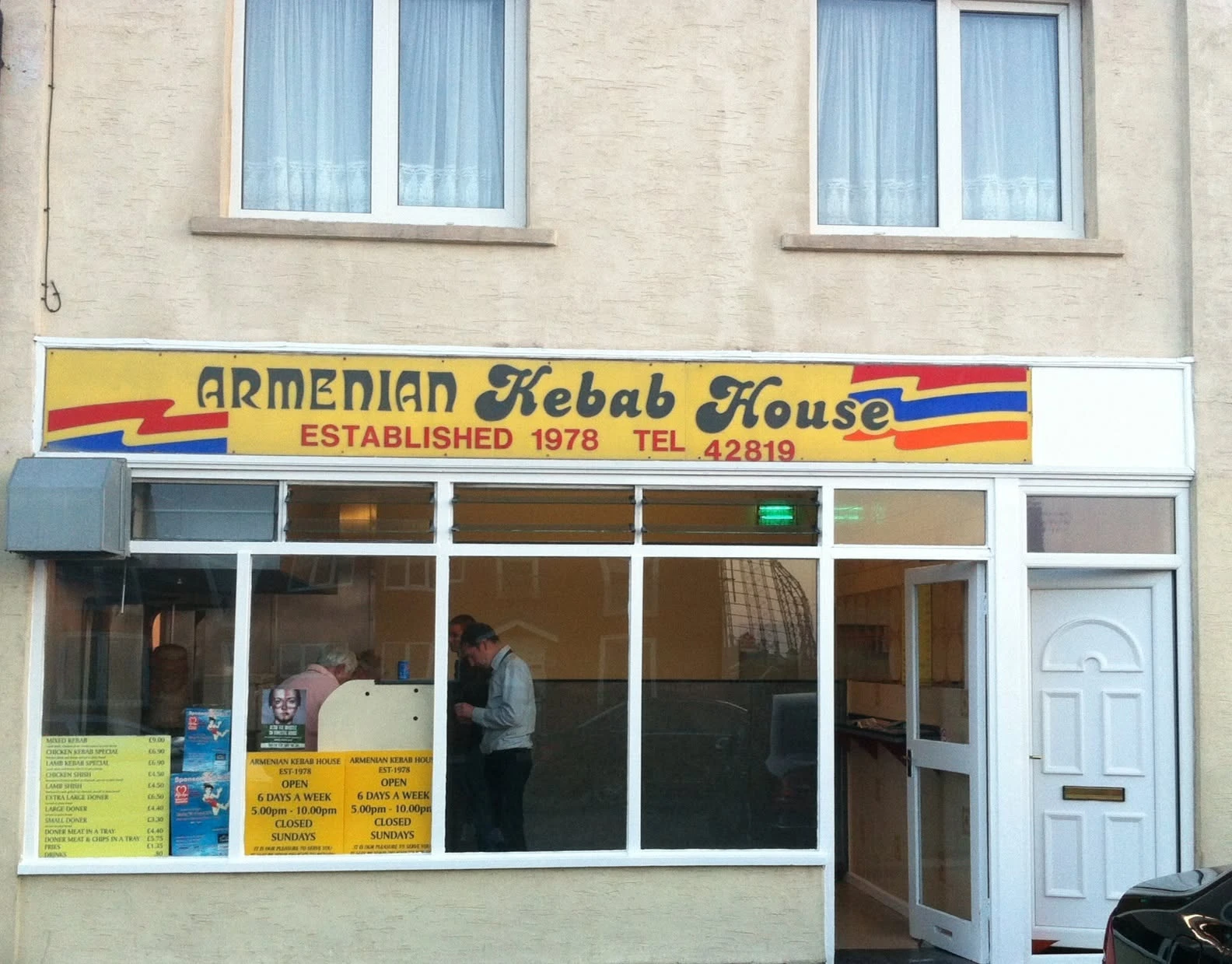
According to the UK Government Trade and Investment Factsheet updated last week, total trade in goods and services between the two countries was £159 million ($211 million) between July 2025 and July 2026, of which only 11.3% (£18 million) were Armenia’s exports to the United Kingdom, the rest being British goods imported to Armenia.



 Stories