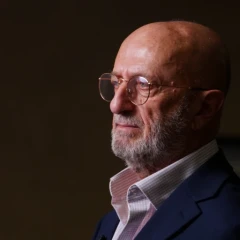
 Hrair Balian

By Hrair Balian
The debate over the draft constitution published by Armenia’s Ministry of Justice on 23 November has centred on its opening lines. The preamble drops the 1990 Declaration of Independence, meeting the condition Baku has set for signing the initialed peace treaty. That change deserves the attention it is getting. It should not, however, distract from the rest of the text. Read against the international human rights treaties Armenia has ratified, provisions on the judiciary, the press and citizenship fall below obligations the state has already accepted and leave ordinary laws free to complete the breach. This article sets out those provisions. The governance model, whether parliamentary, presidential or hybrid, is a separate question and will be the subject of another article.
The draft’s own yardstick
The draft constitution supplies its own test (Art. 6(5)). Article 22(2) states that restrictions on fundamental rights may not exceed those permitted by Armenia’s international treaties, and Article 22(3) requires constitutional rights to be interpreted considering the practice of treaty bodies, above all the European Court of Human Rights and the UN Human Rights Committee. Both clauses are carried over from the 2015 Constitution. Yet Article 6(5) also requires ratified treaties to conform to the Constitution. Wherever the draft authorizes what the European Convention on Human Rights (ECHR) or the International Covenant on Civil and Political Rights (ICCPR) forbids, the proposed draft contradicts itself. And in Strasbourg and Geneva, Armenia remains answerable whatever its domestic text says.
1. The judiciary: vetting without a judge
Article 85 is the centre of gravity of the draft. On the day after the new Constitution is published, when Chapter 12 takes effect, every judge of the Court of Cassation, the appeal courts, and the courts of first instance and specialized courts would become a “temporary acting judge”. Each would stay in that status, for up to five years, until a one-time reassessment of integrity, competence and assets against lawful income (Arts. 83, 85(1)–(5)). Non-judge members of the Supreme Judicial Council are treated the same way. The Union of Judges puts the number of affected judges above 300. A five-member commission conducts the reassessment. Parliament elects it by a simple majority of all deputies, on nominations of two members by the President, two by the Human Rights Commissioner and one by the Government (Art. 85(6)–(7)). The commission’s findings “are not subject to judicial review”. A judge may challenge only the final non-appointment, and only before the Constitutional Court (Art. 85(11)–(12)).
This design collides with Armenia’s obligations on four counts. The first is security of tenure. The UN Basic Principles on the Independence of the Judiciary (Principles 12, 18–20), the UN Human Rights Committee (General Comment No. 32, para. 20) and the Council of Europe’s Committee of Ministers (Recommendation CM/Rec(2010)12 on judges: independence, efficiency and responsibilities, paras. 49–50) all treat irrevocability, save for incapacity or serious misconduct established through fair procedure, as a core guarantee. The European Court has twice found violations where a reform terminated or curtailed judicial mandates by legislative or constitutional fiat (Baka v. Hungary; Grzęda v. Poland). Converting an entire bench into provisional officeholders is the same move on a far larger scale.
The second is the exclusion of judicial review. Under the European Court’s settled test, a state may shut a public servant out of court only if the exclusion is expressly provided and objectively justified in the state’s interest (Vilho Eskelinen and Others v. Finland). Article 85(11) meets the first condition and offers nothing for the second. Basic Principle 20 requires that removal decisions be subject to independent review. A Constitutional Court appeal limited to the outcome, with the findings beyond review, does not provide it.
The third is the independence of the vetting body. Strasbourg accepted Albania’s vetting of its judges in Xhoxhaj v. Albania because of exceptional circumstances and strong safeguards: bodies with judicial guarantees, a specialized appeal chamber, and an International Monitoring Operation. The Armenian design has none of these. Its commission is chosen by a bare majority, and every nominating authority is itself chosen by that majority. Because the draft’s Chapter 12 takes effect before the institutional chapters, the commission would be constituted by the present parliament, where Civil Contract holds 64 of 105 seats. The nominators would be the incumbent President and Human Rights Defender, both elected by that majority (Arts. 83, 87(4)).
The fourth concerns litigants rather than judges. Article 6 of the European Convention and Article 14 of the ICCPR guarantee a hearing before an independent tribunal, which includes guarantees against outside pressure and the appearance of independence (Campbell and Fell v. the United Kingdom, ICCPR, Art. 14(1); ECHR, Art. 6(1)). For five years, every case in Armenia, including the prosecutions of opposition leaders, would be heard by judges whose careers depend on a commission the governing majority controls. The Prime Minister has said he cannot know which court “might issue a ruling that sets free” a corrupt figure, and that freeing justice “from the clutches of the oligarchy” is a purpose of the text. In the circumstances, that reads less as reassurance than as a statement of intent.
The permanent architecture compounds the transition. Under the 2015 Constitution (Art. 174), the General Assembly of Judges elects the five judge members of the Supreme Judicial Council. Under draft Article 58(4), judges merely nominate and parliament elects all ten members by three-fifths, a threshold the governing party clears on its own. The Council of Europe Committee of Ministers’ standard is that at least half of a judicial council’s members be judges “chosen by their peers” (CM/Rec(2010)12, para. 27). The Union of Judges said on 24 November that the provisions breach European standards. It noted that no judge took part in the drafting and asked international bodies to examine the text. Armenia’s first President, Levon Ter-Petrossian, called the statement “perhaps the most serious document” yet corroborating Pashinyan’s “creeping dictatorship”. The draft does contain defensible elements (Arts. 59(3), 59(5), 63(3)(14)): jury trials, a Supreme Judicial Council acting as a court in discipline, and a Constitutional Court appeal against dismissal. The problem is not reform. It is who controls the transition.
2. The press: a thinner freedom
Article 42(1) of the 2015 Constitution protects the freedom “to seek, receive and disseminate information and ideas through any media … regardless of state frontiers.” The draft splits this guarantee and narrows it. Article 20(1)(17) protects the forming and expression of opinion “in any form” and through any means of communication. Article 20(1)(12) protects the right to seek and receive information, but only information on the activities of state and local bodies. The freedom to impart information and ideas, and the words “regardless of frontiers”, disappear. Both phrases are integral to Article 19(2) of the ICCPR and Article 10(1) of the ECHR (also UN Human Rights Committee, General Comment No. 34 (2011), paras. 11, 13, 18). Courts could read them back in through draft constitution Article 22(3). But a constitution that pares down the text of a right invites legislation that pares down its substance. The draft does add a “necessary in a democratic society” test for restricting expression, an improvement. Yet access to information may be restricted for “public interests” (Draft Constitution, Art. 24(5)–(6)), a ground broader than any permitted by ICCPR Article 19(3), and with no necessity test attached.
The broadcasting regulator is downgraded. Under the current Constitution, the Television and Radio Commission is an independent constitutional body elected by three-fifths (Art. 195). The draft (Arts. 76(1)–(2)) turns it into an “autonomous body” created by ordinary law, with members appointed by a simple majority. Article 88 then terminates the existing Commission and its members’ mandates if a successor is not formed within a year of the next parliament convening. The Human Rights Committee calls for an independent broadcasting regulator (General Comment No. 34, para. 39). The Council of Europe asks that regulators be shielded from political majorities and that members not be dismissed for political reasons (Recommendation Rec(2000)23). Simple-majority appointment and termination of mandates by statute defeat both standards.
Draft constitution Article 28(3) adds that the media “operate on the principle of financial transparency”. Transparency of media ownership is a legitimate European standard. In this draft, however, the clause sits beside a rule that makes foreign financing a ground for banning political parties, and another confining party funding to citizens and the state (Arts. 24(12), 27(5), 28(3)). Without safeguards, an unqualified transparency mandate is an open invitation to “foreign funding” laws aimed at outlets, the model the Venice Commission has criticized elsewhere in the region. Media-finance rules must not become tools of government control (see also).
The context makes this more than a drafting quibble. In 2026 Reporters Without Borders dropped Armenia from 34th to 50th place, citing abusive defamation lawsuits and legislative projects with a deterrent effect. On 19 November the Prime Minister repeatedly called a reporter “deplorable” at a live briefing and told her they would “meet in court”. The Union of Journalists of Armenia responded that he had “declared war on journalists”. A constitution drafted in that climate should strengthen protection of the press. This one thins it.
3. Citizenship: from guarantee to sanction
The 2015 Constitution (Art. 47(5)) is unequivocal: “A citizen of the Republic of Armenia may not be deprived of citizenship.” Draft constitution Article 24(11)(5) allows a court to order deprivation “for crimes directed against the foundations of the constitutional order or state security”, and draft Article 20(1)(14) leaves the cases of termination to ordinary law. Article 15(2) of the Universal Declaration of Human Rights (UDHR) prohibits arbitrary deprivation of nationality. More concretely, Article 8(1) of the 1961 Convention on the Reduction of Statelessness (CRS) forbids deprivation that would leave a person stateless. The exception in CRS Article 8(3), for conduct seriously prejudicial to the state’s vital interests, is available only to states that declared it on accession. Armenia acceded without reservations or declarations. The draft constitution contains no bar on statelessness. For the many Armenians who hold no other nationality, the clause authorizes exactly what the treaty prohibits. For dual nationals, the European Court has held that deprivation can violate Article 8 of the Convention where it is arbitrary or disproportionate (Ramadan v. Malta; Usmanov v. Russia).
The trigger is as troubling as the sanction. “Crimes against the foundations of the constitutional order” is an elastic category that reaches speech, such as public calls to seize power, and it is being invoked while senior opposition figures are under prosecution. The consequences cascade. The draft (Art. 23(1)(9), (11)) bars extradition of citizens and guarantees citizens’ entry into Armenia, so a person stripped of citizenship loses both protections, as an attorney has pointed out. Article 12(4) of the ICCPR forbids depriving anyone arbitrarily of the right to enter their own country. The Human Rights Committee has made clear that a state may not strip nationality to expel. A political opponent convicted under a loosely drafted law could thus be rendered stateless, handed to a foreign state and barred from returning, all under dubious constitutional authority.
4. The same pattern elsewhere
The same pattern runs through other provisions. Receiving “financing from a foreign source”, a term left undefined, becomes a ground for banning a party outright (draft constitution, Art. 24(12)). The Venice Commission treats dissolution as a last resort for parties that use or advocate violence. The European Court has accepted limits on foreign funding of parties, not the dissolution of parties over it (Parti nationaliste basque – Organisation régionale d’Iparralde v. France). The ban on retroactive laws that worsen a person’s position now yields to “public interests” outside criminal law. And citizens who have not lived in Armenia for a year out of the two preceding a vote lose it in national elections and referendums (draft Art. 20(1)(24), (28)). Each provision can be given a defensible purpose. Each is drafted broadly enough to reach the government’s principal opponents. And each depends, for its final interpretation, on courts whose composition the draft places within the majority’s reach.
What should follow
None of this requires abandoning constitutional reform. It requires correcting the text before parliament votes. Four steps would do it:
Submit the full draft to the Venice Commission for review. Redesign Article 85 so that vetting findings are subject to judicial review, the commission is chosen by a qualified majority with opposition consent, and international monitoring is built in. Restore peer election of judge members of the Supreme Judicial Council and the constitutional independence of the broadcasting regulator. Restore the wording of Article 42(1) of the 2015 Constitution.
On citizenship, restore the absolute bar. At a minimum, prohibit any deprivation that causes statelessness and confine revocation to citizenship obtained by fraud, the one ground the 1961 Convention on the Reduction of Stateless (Art. 8(2)(b)) allows Armenia without a declaration. And, as I have argued before, separate the peace-related layer from the rest so that each can be judged on its merits.
The Prime Minister has promised a constitution that is finally “yours”. A text that makes judges provisional, thins the freedom of the press and turns citizenship into a revocable privilege does not belong to the citizens. It belongs to whoever commands sixty-three votes in parliament.
Hrair Balian has served in leadership positions with the UN, the OSCE/ODIHR, and NGOs, including The Carter Center and the International Crisis Group. During a 35-year career in public service, he has worked on conflict resolution, elections and human rights in the Balkans, Eastern Europe, Caucasus, Central Asia, Middle East and Africa. He has taught conflict resolution, negotiations, and mediation at the Emory University School of Law. Books published – Anatomy of Peacemaking: Nagorno-Karabakh Conflict & Missed Opportunities (Springer Nature / Palgrave Macmillan, February 2026); Armenian translation (Newmag, April 2026).

 Stories