 Civilnet
 The Turkish Daily Sabah writes that sources inside Turkey’s government are denying that the Gallipoli commemorations, which are slated to take place on April 24, have been cancelled. A day earlier, the Sunday’s Zaman published an article saying that the Turkish government had decided to cancel the highly touted centennial commemorations of the Gallipoli Campaign of World War One. According to the piece, the commemoration was cancelled “due to the unwillingness of international leaders to visit Ankara and overshadow the genocide ceremonies in Yerevan.”
According to the Sabah, Zaman is “known for its articles opposed to the ruling party and for being linked to the Gülen Movement, which allegedly orchestrated the Dec. 17 and Dec. 25 operation in an apparent attempt to topple the government.” The Sabah goes on to say that sources from both the President’s and Prime Minister’s office have denied that the high-level commemorations were cancelled, although they would not elaborate as to how many countries and world leaders had indeed confirmed their attendance.
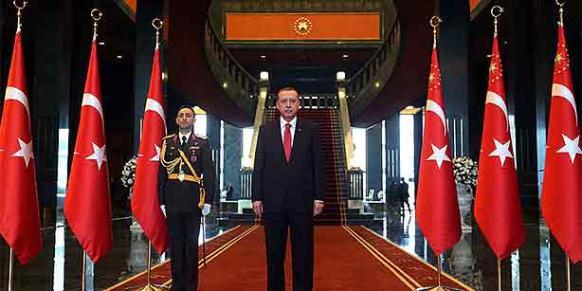
Turkey’s President Recep Tayyip Erdogan invited world leaders to participate in the 100th anniversary of the Gallipoli campaign on April 24, 2015 in Turkey. Up until 2013, Turkey commemorated Gallipoli on March 18, also known as Canakkale Victory and Martyr’s Day.
This move left little doubt that the Turkish government was attempting to divert the world’s attention from the centenary of the Armenian Genocide, which will be marked this year, as always, on April 24.
The Gallipoli Campaign, also known as the Dardanelles Campaign or the Battle of Canakkale (Canakkale Savasi – Turkish) was spearheaded by the Lord of the British Admiralty, Winston Churchill during World War I. The disastrous campaign, led by the British was intended to secure a sea route from the Gallipoli peninsula, the northern bank of the Dardanelles (the Ottoman Empire at the time) to the Russian Empire. This campaign by the Allies on April 25, 1915 involved British, French, Australian and New Zealand Army Corps (ANZAC) and aimed to secure Constantinople (present-day Istanbul). Poor planning, lack of sufficient intelligence and knowledge of the terrain coupled with fierce Turkish resistance led to heavy casualties on both sides and the eventual withdrawal of Allied forces to Egypt.
Canakkale Savasi has a very significant place in Turkish history, it has become a symbol of how the Ottoman army was able to hold back a multinational force and “prevent them from invading the Turkish homeland.” It is equally significant for Australia and New Zealand; for these two countries, the campaign remains a sense of national pride and identity.



 Stories