 Civilnet
 Turkish President Recep Tayyip Erdogan has invited world leaders to participate in the 100th anniversary of the Gallipoli campaign on April 24, 2015 in Turkey. Up until 2013, Turkey commemorated Gallipoli on March 18, also known as Canakkale Victory and Martyr’s Day.
This move left little doubt that the Turkish government is attempting to divert the world’s attention from the centenary of the Armenian Genocide, which will be marked this year, as always, on April 24.
In what many saw as a cynical move, Erdogan also extended an invitation to Armenia’s President Serzh Sargsyan to participate in the ceremonies. Sargsyan, for his part, swiftly responded by saying that Turkey continues its traditional policy of denial and that Turkey “has a more important responsibility toward its own people and all of humanity – to recognize and condemn the Armenian Genocide.”
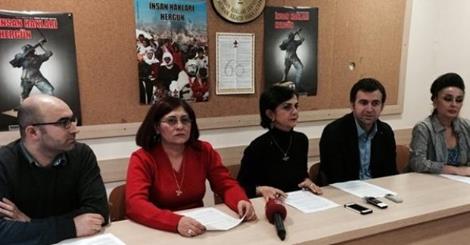
On February 5, a number of human rights organizations in Turkey issued a statement, urging world leaders not to participate in the Gallipoli ceremonies and instead go to Yerevan on April 24 to participate in the commemorations for the Armenian Genocide of 1915.
Below is the full text of their statement:
CALL TO WORLD LEADERS:ON APRIL 24 OF THE 100th YEAR OF THE GENOCIDE,GO TO YEREVAN, NOT GALLIPOLI
President Erdoğan has announced that this year, the annual commemorations of the Battle of Gallipoli, held annually on March 18, will instead take place on April 24 —the day that marks the 100th year of the Armenian Genocide. The President has invited world leaders to the said commemorations in Gallipoli.
Touted as a “victory” and ceremonially celebrated by Turkey, the Battle of Gallipoli is in actual fact one of the many mournful pages of a war of domination into which the Ottoman Empire entered with dreams of conquest and out of which it emerged in heavy defeat. The Battle is part of a painful history, of children from far-flung lands killing each other in the name of state policy.
April 24, on the other hand, is the date that universally signifies the beginning of the Armenian Genocide, which was planned, organized, overseen in terms of its proceeding and results, and meticulously recorded so as to destroy Ottoman Armenians with all their social fabric and historical heritage. The Assyrian people too were a target of genocide, and massacred en masse in the Assyrian Genocide known as “Seyfo.” The genocide ultimately resulted in the destruction of all Christian peoples on Ottoman territory, including Armenians and Assyrians—as well as Greeks, who constituted the largest Christian population in the region in the beginning of the nineteenth century.
By turning the symbolic starting point of such a massive, irremediable, and irredeemable destruction into official commemorations of a fictive “victory,” the government of the Republic of Turkey not only scorns the memory of the victims of the genocide and their descendants, but also intends to cast a shadow on and make invisible the efforts at commemorating the genocide by human rights defenders and activists against racism and denial in Turkey.
As organizations and solidarity groups against genocide denial, we protest the President’s invitation in the days leading to the 100th anniversary of April 24, 1915. We call on world leaders to visit the Genocide Memorial in Yerevan instead of coming to Gallipoli.
We hereby entreat:
Do not accept the invitation of the government of the Republic of Turkey, which to this day has carried the responsibility for the genocide by recruiting perpetrators from among the CUP to form the founding establishment, and by institutionalizing denial from the onset through legislation, history writing, and systematic official or unofficial policies. Do announce, to the world entire, that you will not desecrate the memory of the victims of genocide and trample upon their descendants’ century-long mourning by coming to Gallipoli on April 24.
Signatories (Alphabetically):
Human Rights Association, Committee Against Racism and DiscriminationIzmir Assyrian Platform for Culture and SolidarityNor Zartonkwww.suryaniler.com Cultural PlatformZan Foundation for Social, Political, and Economic Research


 Stories