Civilnet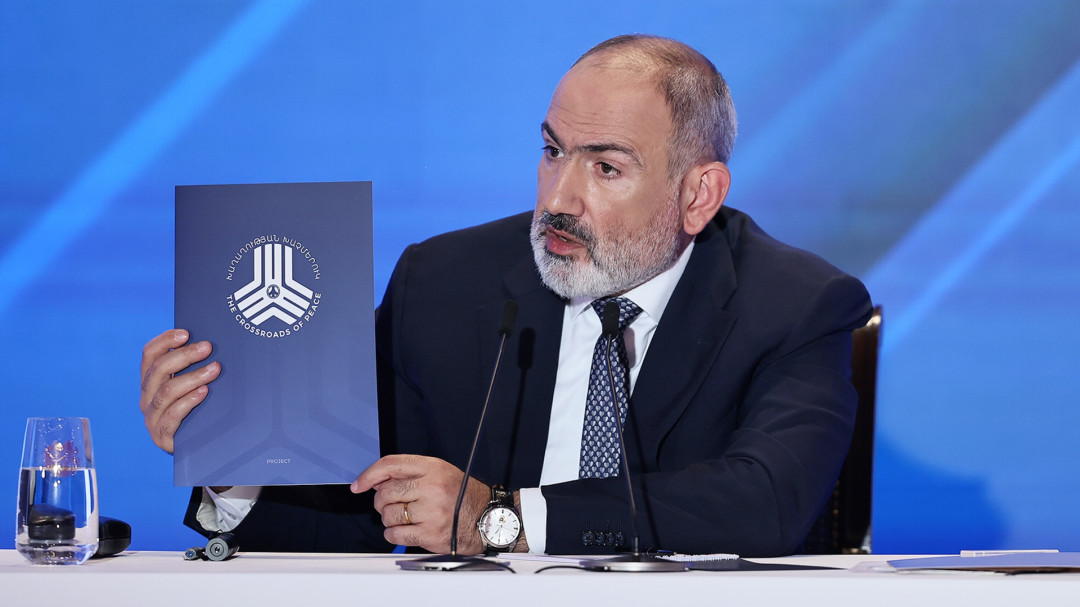
By Mark Dovich
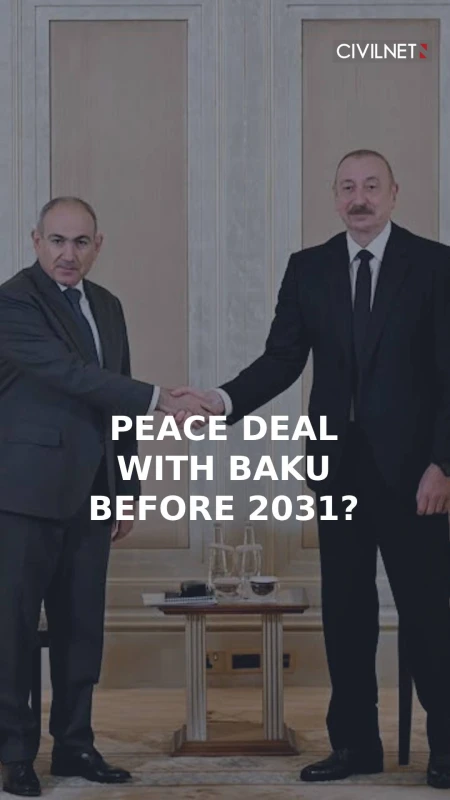
Prime Minister Nikol Pashinyan has reiterated his readiness to sign a normalization agreement with Azerbaijan and put forward a novel proposal to ink a partial deal as soon as possible. At the same time, he rejected a number of Baku’s preconditions, including providing an extraterritorial corridor.
In addition, Pashinyan slammed Russia for what he said amounted to failing to uphold the ceasefire declaration that ended Armenia’s 2020 war with Azerbaijan, marking his latest escalation in rhetoric against the Kremlin.
Armenia ready to sign deal with Azerbaijan
Speaking with reporters at a press conference Saturday, Pashinyan said Armenia remains ready to sign a long-elusive normalization deal with Azerbaijan, revealing that Yerevan sent a proposal yesterday to Baku through unspecified diplomatic channels to reach a partial agreement as soon as possible.
"There are 17 articles in the draft peace agreement. Thirteen, including the preamble, are fully agreed upon…Yerevan's proposal is to take the articles and formulations that are agreed upon and sign them as a peace treaty…The proposal was submitted to Baku yesterday,” he said.
Armenia and Azerbaijan can then resolve the outstanding disagreements through further negotiations, Pashinyan added.
To that point, he said he believes direct talks between Armenian and Azerbaijani negotiators remain the “correct” choice, but pointedly kept the door open for third-party involvement, declining to “rule out work in another format.” He did not elaborate on that.
At the same time, Pashinyan rejected a number of preconditions that Baku has put forward to Yerevan before it would sign a deal, namely the provision of an extraterritorial corridor and the formal dissolution of the now-defunct Minsk Group.
“We reject the logic of corridors,” Pashinyan said, dismissing Baku’s demand for Yerevan to cede a route connecting mainland Azerbaijan and its Nakhichevan exclave through Armenia’s southernmost Syunik region.
Pashinyan has previously said Armenia would be willing to reopen Syunik to international transit under his trademark ‘Crossroads of Peace’ initiative, but only if it retains control over all future routes through its territory.
The Russia-brokered ceasefire that ended the 2020 Nagorno-Karabakh war specifically requires the “unobstructed movement of persons, vehicles, and cargo” between mainland Azerbaijan and Nakhichevan via Syunik, with Russian border guards “responsible for overseeing” that route, rather than Armenian customs agents.
Similarly, Pashinyan indicated he would be willing to dissolve the Minsk Group, but only after reaching a normalization agreement, and not before, as Azerbaijan has called for.
“The dissolution of the Minsk Group is possible only in the context of peace,” he insisted.
Dissolving the Minsk Group, the international body tasked with mediating a peaceful solution to the Nagorno-Karabakh conflict, would require both Yerevan’s and Baku’s consent.
The Organization for Security and Cooperation in Europe set up the Minsk Group in the early 1990s to lead mediation efforts, which it did unsuccessfully for some three decades up until the 2020 war. The group, which is co-chaired by France, Russia, and the United States, has been inactive since then, though it formally still exists.
Russia to blame for failure of Karabakh ceasefire
Meanwhile, Pashinyan blamed Moscow for the fact that transit routes linking Yerevan and Baku remain closed, despite the ceasefire saying that “all economic and transport connections in the region shall be unblocked.”
“Regional communications have not been opened up until now due to comments made by a number of our Russian partners,” he charged, adding, “Armenia not only does not sabotage the topic of regional communications, but is also seriously interested (in it).”
That came in response to Sergey Lavrov, Russia’s top diplomat, who told state television earlier this month that “it is the Armenian leadership that is sabotaging the (ceasefire) agreement,” in remarks that previously sparked a heated war of words between Yerevan and Baku.
Likewise, Pashinyan called the fact that Russia has not pressured Azerbaijan to release the dozens of Armenians in its custody “regrettable,” pointing out that the ceasefire commits the countries to “exchange prisoners of war, hostages, and other detained persons.”
Azerbaijan continues to hold eight former senior Nagorno-Karabakh officials, plus dozens of former Armenian soldiers and civilians, many of them on war crimes or other serious charges.
For the first time, Pashinyan did not rule out the possibility he may withdraw Armenia from the ceasefire entirely, telling reporters Saturday, “If Yerevan intends to withdraw from the (ceasefire) statement, Yerevan will announce that intention.”
These latest criticisms come after Pashinyan and other senior Armenian officials previously rebuked Russia for allowing Azerbaijan to blockade and eventually take full control of Nagorno-Karabakh last year, also in breach of the 2020 ceasefire.
Russian peacekeepers deployed to Nagorno-Karabakh as part of the ceasefire did nothing to prevent Azerbaijan’s more than nine-month near-total blockade of the region and then stood aside as Azerbaijan launched a lightning military offensive to take over the region, forcing the roughly 100,000 Armenians living there to flee.
A number of independent observers have since determined that Azerbaijan's actions in Nagorno-Karabakh last year amounted to ethnic cleansing.
No decision yet on attending COP29
Turning to COP29, the global climate summit slated to be held in Baku in November, Pashinyan refused either to confirm or rule out sending an Armenian delegation, saying only, “We haven’t made a decision. In general, the circumstances and processes cannot not impact that decision.”
Hikmet Hajiyev, a senior aide to Azerbaijani President Ilham Aliyev, said last month that his country had formally invited Armenia’s top diplomat to the talks.
The United Nations awarded Baku hosting rights last year after Yerevan agreed last year to drop its opposition in exchange for the release of nearly three dozen Armenian prisoners of war held in Azerbaijan.


 Stories