Civilnet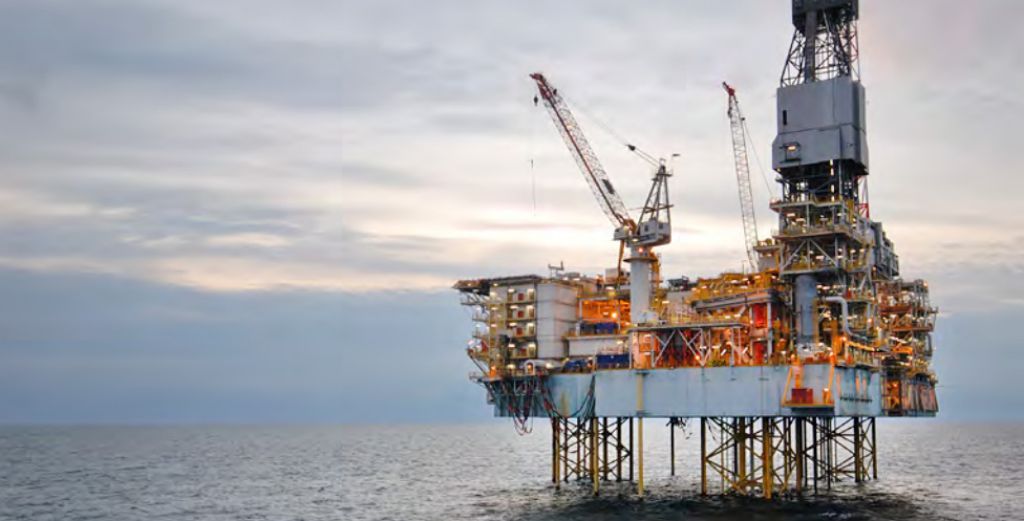
The article was published in World Energy Weekly (June 3-9 issue), a publication of Petrostrategies, a French think tank.
Since BP entered Azerbaijan in 1992, the British group and its partners have developed major hydrocarbon projects in the Caspian Sea. This includes oil development as part of the Azeri-Chirag-Deepwater Günashli (ACG) project and natural gas in Shah Deniz (BP operates both). But the company believes that there is still considerable potential for growth in Azerbaijan, and on June 3, it signed several agreements with this in mind. Chief among these is the final investment decision (FID) for the third phase of development at Shah Deniz: Shah Deniz Compression (SDC). SDC is scheduled to come on stream in 2029, with an estimated investment cost of $2.9 billion. It will enable the BP-led consortium to produce and export additional volumes of 50 bcm of natural gas and 25 Mbbl of condensate. Shah Deniz produced 243 bcm of gas and 50 MMt of condensates between 2006 (when it came on stream) and the end of the first quarter of 2025. In 2024, its production was 28 bcm of gas and over 4 MMt of condensates, according to the operator.
Discovered in 1999, Shah Deniz is a supergiant field. It contains volumes initially estimated at 1,000 bcm of gas and 2 billion barrels of condensates. Phase 1 began in 2006, with gas sales to Azerbaijani purchasers as well as to Georgia and Turkey. Exports to the European Union began at the end of 2020 via the Southern Gas Corridor. The consortium developing and operating the field comprises BP (29.99%), Lukoil (Russia, 19.99%), TPAO (Turkey, 19%), SGC (Azerbaijan, 16.02%), NICO (Iran, 10%) and MVM (Hungary, 5%).
Shah Deniz Compression is one of BP’s “major” projects scheduled to come on stream between 2028 and 2030. There are eight to ten in all, and they will contribute to the group’s hydrocarbon production increase to 2.3-2.5 MMboe/d by 2030. Earlier this year, the company sharply scaled back its ambitions in renewable energies and abandoned its objectives of producing less oil and gas. The new agreements recently signed with Azerbaijan are very much in line with this strategic shift.
Shah Deniz Compression (SDC) involves the installation, at a water depth of 85 meters, of a new platform after SDA (Shah Deniz Alpha) and SDB (Shah Deniz Bravo). Construction is due to start this year, with production scheduled to begin four years later. SDC will enable gas from SDA and SDB to be compressed before being transported to the Sangachal onshore processing and export terminal. BP believes that this third phase of development will ensure that Shah Deniz remains an important supplier of gas and liquids for decades to come.
On the same day that BP announced its major SDC agreement, it also strengthened its exploration and development interests in Azerbaijan. The British group will acquire 35% stakes in two Caspian Sea blocks. The first includes the Karabagh oil field, and the second is the Ashrafi-Dan-Ulduzu-Aypara (ADUA) zone. BP will be the operator in association with the Azerbaijani national company SOCAR (65%). Meanwhile, on the Shafag-Asiman offshore block, BP and SOCAR have found a new partner in Turkish firm TPAO (30%). Natural gas and condensate resources were discovered on the permit in 2021. With the inclusion of TPAO in the consortium, they now aim to accelerate the process that could lead to development. BP’s goal is to achieve a worldwide hydrocarbon reserve replacement rate of at least 100% by 2027. It believes that these new agreements in Azerbaijan could contribute to accomplishing that goal.
BP wasn’t done for the day quite yet, though, as it and its partners also gave the go-ahead for a link between the 240 MW Shafag solar project and the Sangachal terminal electrification project. This will have two benefits: reducing the terminal’s greenhouse gas emissions and increasing the volumes of gas available for export, since the electricity Sangachal needs is currently generated by gas-fired turbines. Phase 1 of this electrification project (Sangachal Terminal Electrification - STEL) will be completed by mid-2027, and Phase 2 by the end of 2028. BP is the terminal operator and holds a 50.01% stake in the Shafag Solar project.
ACG project produces 331,000 b/d of oil in Q1 2025
Apart from Shah Deniz (SD), BP’s biggest project in Azerbaijan is Azeri-Chirag-Deepwater Günashli (ACG). The Caspian Sea oil project produced 331,000 b/d of crude in the first quarter of 2025. From its 1997 start-up through the end of the first quarter of 2025, cumulative production stands at
4.5 billion barrels. Pipelines had to be developed to transport SD and ACG’s production. The most important of these are the 1,768 km Baku-Tbilisi-Ceyhan (BTC) oil pipeline and the 691 km South Caucasus Pipeline (SCP) for gas. SCP forms part of the Southern Gas Corridor (SGC) network. According to BP, investments in ACG, SD, BTC and SCP have totaled $85 billion since 1995.




 Stories