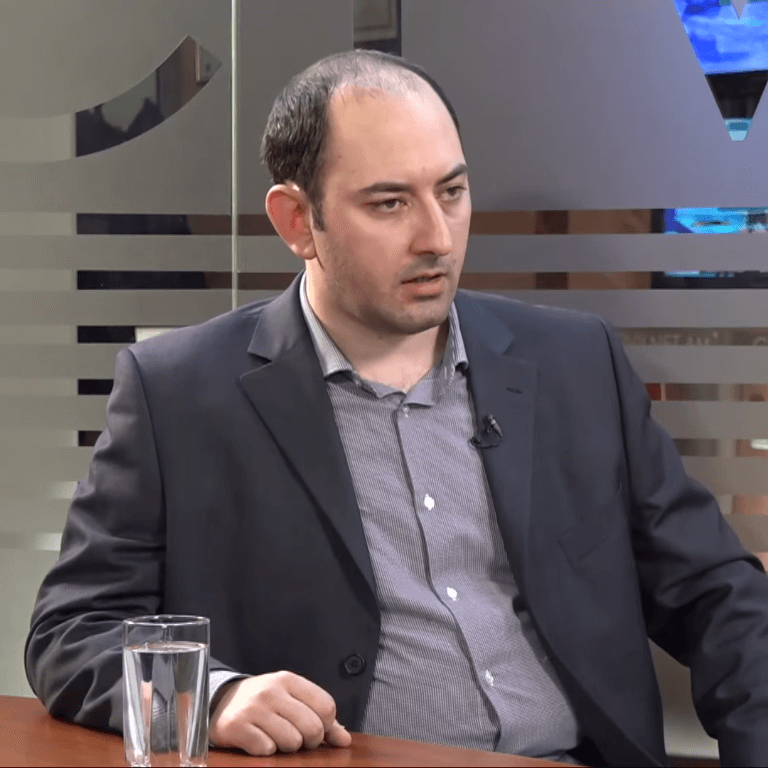
 Tigran Grigoryan
 Civilnet
On September 1, the OSCE officially declared the dissolution of the Minsk Group and its related structures. This announcement followed Baku’s and Yerevan’s joint appeal to the OSCE during the Washington summit on August 8 to abolish these structures.
The Minsk Group was established in the early 1990s, during the initial phase of the First Karabakh War, following Armenia’s and Azerbaijan’s accession to the CSCE in January 1992. On March 24, at a ministerial meeting in Helsinki, the CSCE decided to convene a peace conference in Minsk, bringing together eleven states, including the conflicting parties, to seek a lasting settlement of the Nagorno-Karabakh conflict. Although the conference never took place in Minsk, its members gradually evolved into what became known as the Minsk Group. By 1994, the Co-Chairmanship format was introduced to lead mediation efforts.
The Group reflected the spirit of the post-Cold War liberal order. Its mission rested on the principle of internationalism – fostering joint conflict-resolution efforts by all the major powers involved in the South Caucasus.. Even in its years of decline, the Minsk Group symbolized the possibility of cooperative diplomacy between adversarial powers.
After Russia’s annexation of Crimea in 2014 and the deterioration of relations between Moscow and the West, the Minsk Group’s co-chair trio – the U.S., Russia, and France – continued working together on the Karabakh peace process. During this period, a former Nagorno-Karabakh official used to joke with foreign journalists that there were only two areas left where Russia and the West still cooperated: space exploration and Nagorno-Karabakh.
Even on the eve of Russia’s full-scale invasion of Ukraine, this was still the case. When US Secretary of State Antony Blinken and Russian Foreign Minister Sergey Lavrov met in Stockholm in December 2021, Blinken listed the Nagorno-Karabakh conflict as one of the issues on which Washington and Moscow should continue to work together.
However, the Group was never free of geopolitics. Russia, skeptical from the start, saw it as a Western attempt to encroach on its regional monopoly. Over the past 30 years, the internal dynamics within the co-chairmanship reflected global trends. U.S. activism in the late 1990s and early 2000s was followed by a period of Russian primacy in the 2010s, when the other two co-chair countries largely outsourced mediation to Moscow, acknowledging its greater leverage in the region to push the peace process forward. As a result, all the major peace plans in the decade preceding the Second Karabakh War were drafted and promoted mainly by Russia, with the other co-chairs merely endorsing them. This trend intensified during the first Trump presidency, when U.S. involvement in the Karabakh peace process reached a historic low.
The Second Karabakh War in 2020 dealt a decisive blow to the Minsk Group. Victorious on the battlefield, Azerbaijan dismissed the mediators as ineffective relics that had prolonged the status quo for thirty years. Baku mobilized considerable efforts to promote this narrative in the information space. For instance, in 2021 Richard Hoagland, the former U.S. co-chair of the Minsk Group who later became affiliated with the pro-Azerbaijani Caspian Policy Center think tank in Washington, published an article harshly criticizing the Minsk format and portraying it as both ineffective and extravagant during his tenure. Russia, meanwhile, having deployed peacekeepers to Nagorno-Karabakh and established itself as the main broker of post-war arrangements, had little interest in preserving a serious role for this OSCE mechanism.
For a brief period, the Minsk Group still attempted to mediate, organizing two foreign ministerial meetings between Armenia and Azerbaijan in New York and Paris. But by early 2022, with the outbreak of Russia’s full-scale war in Ukraine, the Co-Chair format collapsed entirely, and the Minsk Group ceased to exist in practice long before its formal burial this month.
In this sense, the decision merely reflects a previously accomplished fact. More interesting, however, is how Azerbaijan has managed to persuade international actors that the Minsk Group was the problem during the decades of peace talks preceding the Second Karabakh War. Of course, there were, and should have been, criticisms of the Minsk Group’s work, particularly on the eve of the 2020 war. Yet the real reason a negotiated solution was never reached lay in Baku’s maximalist stance and a long-standing political decision to resolve the problem through military means, which turned the conflict into a zero-sum game. Ilham Aliyev’s pre-war policies and post-war statements vividly confirm this.
What is more troubling, however, is the adoption of this same narrative by Armenian politicians and analysts. In recent months, Armenian officials and pro-government voices have echoed Baku’s talking points, dismissing the Minsk Group as ineffective and blaming it for the current grim outcome. This ignores an inconvenient reality: the failure to achieve peace cannot be attributed to the mediators alone. Pashinyan’s government failed to constructively engage with the proposals on the table in the two years preceding the war, giving Aliyev the opportunity to legitimize his resort to war.
Several years ago, shortly after the end of the Second Karabakh War, Laurence Broers, a leading scholar of the conflict, described the Minsk Group as “a unipolar artifact in a multipolar world.” Today, the dissolution of the Minsk Group reflects not only changes at the global level and the post-Karabakh reality in the region, but also affirms and legitimizes the new global rules of the game: the absence of rules. “Might makes right,” and actors from West to East tacitly or openly acknowledge this new reality.

 Stories