 Tigran Grigoryan
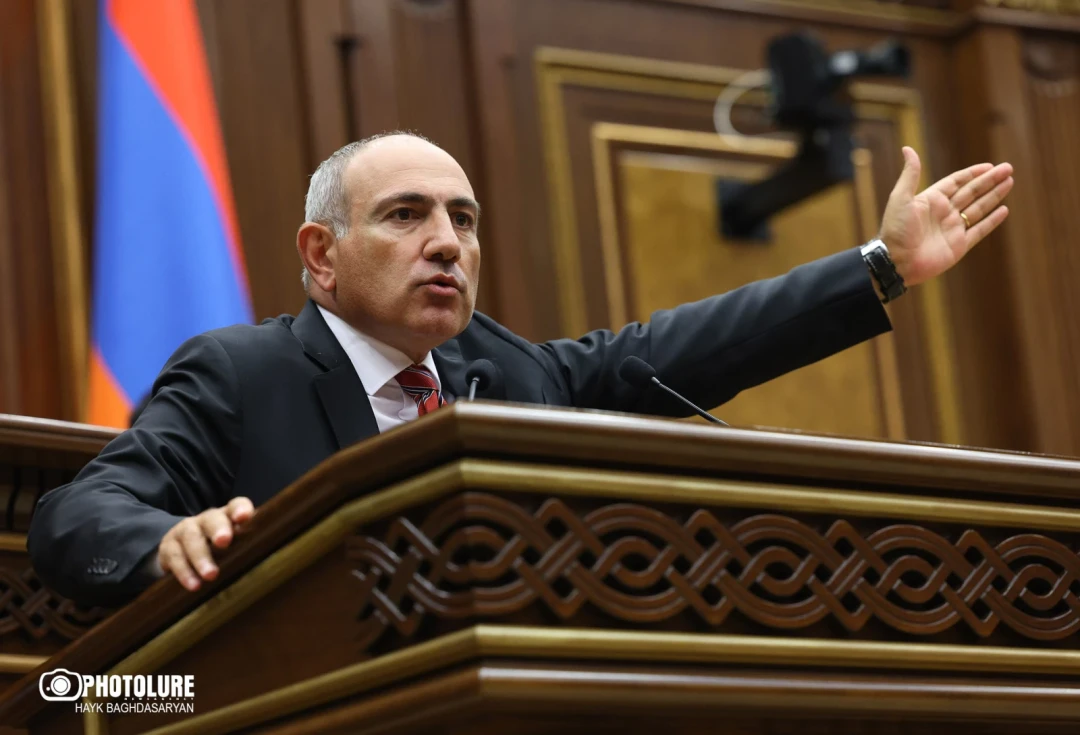
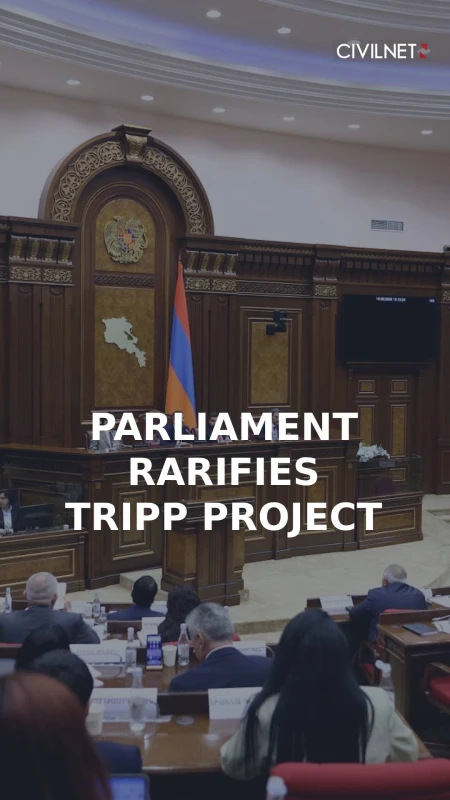
The Armenian parliament ratified the Framework Agreement between the Republic of Armenia and the United States of America on Strategic Cooperation Concerning the Trump Route for International Peace and Prosperity (TRIPP).
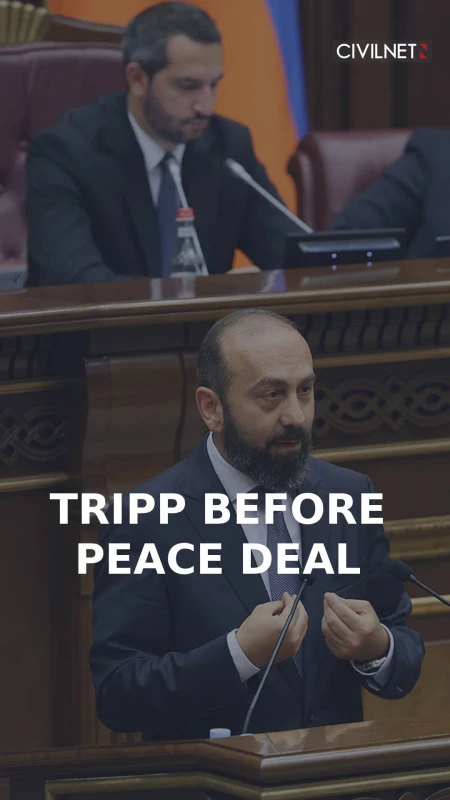
Strong Armenia, the main opposition faction in parliament, refused to vote in favor of ratification, despite having previously publicly embraced the TRIPP project and arguing that it should not be viewed as a corridor but rather as a sovereign communication route passing through Armenian territory. Its main argument was that the peace treaty with Azerbaijan should be signed first to safeguard the comprehensive nature of the regional connectivity agenda and ensure that Baku remains committed to opening communications beyond the scope of TRIPP.
If applied, this logic could further complicate the regional connectivity agenda, particularly given the current deadlock over the peace treaty due to Azerbaijan's precondition that Armenia change its constitution. Following the ruling party's failure to secure a constitutional majority in the 2026 parliamentary elections, the prospects for constitutional change have become even more uncertain
However, Pashinyan has made clear in his public statements that constitutional change, followed by the signing of a peace treaty with Azerbaijan, remains his government's main priority in the coming years. A few weeks ago, he hinted that if he failed to convince the parliamentary opposition to support the draft of a new constitution and put it to a national referendum, he might call snap parliamentary elections.
This week, Pashinyan was quick to seize on statements made by opposition leaders and came up with a new approach. He has sought to turn the concerns voiced by opposition MPs, as well as their belief that the constitutional demand would not be the last obstacle Baku would raise in the peace process, into political leverage.
On October 29, during his weekly briefing with journalists, Pashinyan announced that he would soon make an offer to the parliamentary opposition regarding the constitutional referendum that they would not be in a position to reject.
Pashinyan hinted that he would seek assurances that Azerbaijan's demand for constitutional changes represents its final precondition and that the peace treaty would be signed once this requirement is met. He added that if such assurances were obtained, it would be impossible for the parliamentary opposition to vote against the draft of the new constitution without presenting itself as opposed to peace.
An analysis of these statements suggests that Pashinyan intends to use the opposition's rejection of constitutional changes as leverage in future negotiations with Azerbaijan. He will seek at least verbal, and ideally written, assurances that the constitutional issue is the final obstacle to signing the peace treaty.
If he manages to obtain such assurances, even partially, he will present them as evidence that the opposition's concerns about Baku's maximalist position and its potential for further escalation are no longer valid. He could then seek to use public pressure, including street protests, to push the opposition toward voting in favor of the new constitution in parliament.
However, the feasibility of each step in this plan remains questionable.
First, it is highly unlikely that Azerbaijan will agree to provide such unequivocal assurances. Strategic ambiguity and the coexistence of different approaches have been key elements of Baku's policy toward the conflict, particularly since 2020.
Second, even if such assurances were somehow obtained, they would not necessarily be sufficient to convince the parliamentary opposition to support the draft constitution. Doing so would contradict its established political rhetoric and potentially undermine its credibility among its supporters.
Finally, Pashinyan does not appear to have the capacity to mobilize sufficient public support to pressure the opposition through street protests. The recent confrontation with the Armenian Apostolic Church demonstrated this. During the infamous standoff in Etchmiadzin, Pashinyan managed to mobilize only a few thousand supporters at best. The issue of constitutional changes, widely perceived as being imposed by Azerbaijan, is extremely unpopular in Armenia. Even an attempt to frame these changes as a necessary concession in the interest of regional peace may not be enough to generate sufficient public support for street mobilization.
This suggests that the newly announced process, which could unfold over the coming months, will face considerable obstacles and has a very low likelihood of success. If Pashinyan's initiative fails to produce the desired outcome, he may be compelled to consider alternative options. Given the recent history of politicized and selective justice in Armenia, the ruling party may be inclined to use these mechanisms to put pressure on individual opposition MPs. However, even these measures may prove insufficient to achieve Pashinyan's objective.


 Stories