 Tigran Grigoryan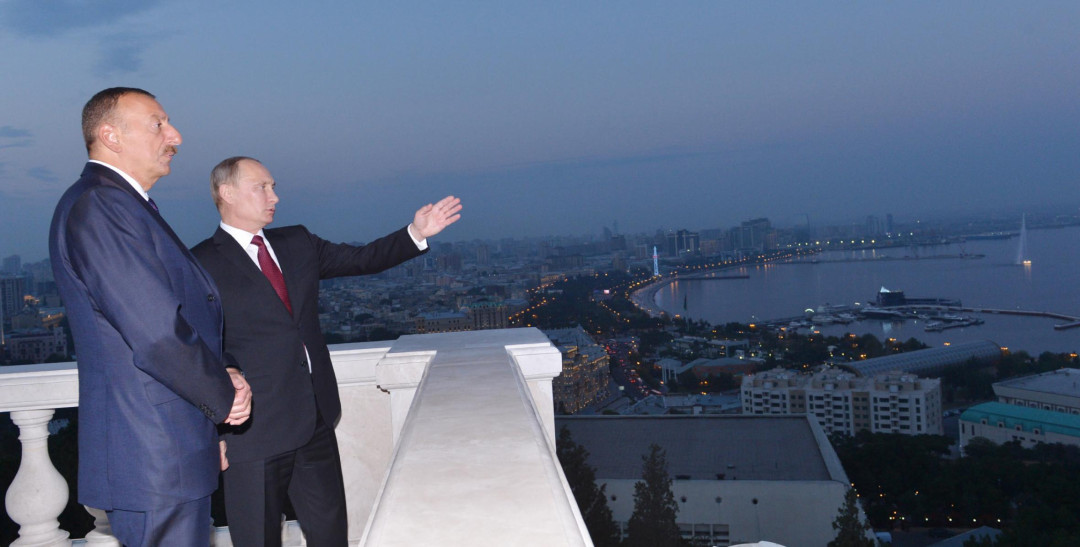
By Tigran Grigoryan
The bilateral relations between Russia and Azerbaijan have been plummeting for more than six months. What began as a formal diplomatic strain following the downing of an Azerbaijani civilian aircraft by Russian air defense systems in December 2024 has since escalated into a broader atmosphere of mutual distrust and allegations. The plane incident, which resulted in the loss of civilian lives, prompted an immediate response from Baku. Azerbaijani officials demanded an apology and compensation from Moscow. The Kremlin reacted with an indirect and carefully worded response from Vladimir Putin.
The situation took a sharper turn in June 2025, when Russian law enforcement conducted raids against members of the Azerbaijani community in the Russian city of Yekaterinburg. Two ethnic Azerbaijanis died during these operations, sparking a harsh reaction in Azerbaijan.
In response to the deaths of two ethnic Azerbaijanis in Yekaterinburg, Baku launched an unusually strong retaliation by post-Soviet standards. Azerbaijani authorities accused Russian security forces of deliberately killing their compatriots and took a series of coordinated steps: all Russia-related cultural events were canceled, the Baku office of the Russian state media outlet Sputnik was raided, and its senior staff were arrested on charges including financial crimes and alleged ties to Russian intelligence. In parallel, several Russian IT specialists were also detained and accused of drug trafficking and cybercrime. Azerbaijani state media sharply criticized Moscow, and reports emerged of increased document checks on Russian nationals within Azerbaijan.
Yet beyond these headline-grabbing incidents lies a more fundamental shift in the structural relationship between the two countries - one defined by changing geopolitical roles and reconfigured dependencies.
At the heart of the current crisis is the collapse of the geopolitical hierarchy that once defined Russia-Azerbaijan relations. For much of the post-Soviet period, Russia occupied a position of primacy in the South Caucasus. Even during moments of tension, Baku treated Moscow with caution, understanding that as long as the Armenia-Azerbaijan conflict remained unresolved, Russia retained considerable leverage as the region’s chief arbiter and power broker. The thinking in Baku was clear: even a weak Russia is stronger than Azerbaijan and the policy towards it should be very measured and balanced.
This dynamic began to unravel following Russia’s invasion of Ukraine, as Moscow redirected its resources to that front, creating a power vacuum in the South Caucasus. Azerbaijan exploited this new reality to pursue strategic objectives it had failed to achieve after its victory in the Second Karabakh War of 2020, ultimately taking full control of Nagorno-Karabakh in September 2023 and ethnically cleansing its Armenian population under the watch of the Russian peacekeeping force. As Russian peacekeepers withdrew from Nagorno-Karabakh after its fall and Moscow showed little appetite or ability to intervene, Azerbaijan came to view itself not only as the dominant power in the South Caucasus, but also as a state no longer beholden to Russia's preferences.
Azerbaijan redraws the balance
Russia’s failure to prevent Azerbaijan’s final military operation in Karabakh, as well as its subsequent sidelining from ongoing Armenia-Azerbaijan normalization talks, stripped Moscow of the role that had previously given it influence over Baku. This new geopolitical reality emboldened Azerbaijan to seek a recalibrated relationship with Russia - no longer based on deference, but on parity. Baku now expects to be treated not as a junior partner, but as an equal actor with its own regional agenda and red lines.
This assertiveness is not only ideological but also underpinned by Azerbaijan’s rising strategic and economic importance to Russia. Since the onset of the Russia-Ukraine war, Azerbaijan has become a critical point in Russia’s reoriented energy and infrastructure strategies. With the European Union actively reducing imports of Russian natural gas, Moscow has to identify alternative routes and intermediaries to sustain its energy exports. Azerbaijan, with its well-developed gas infrastructure, has become increasingly central to this strategy.
Recent analyses, including by Azerbaijani economist Gubad Ibadoghlu, have raised credible suspicions that Russian gas may be quietly re-exported to Europe under the guise of Azerbaijani-origin gas. According to Ibadoghlu’s statistical review, Azerbaijan’s declared exports to Europe exceed the combined volume of its domestic production and imports, implying a “laundering” of Russian gas through the Azerbaijani system. While unconfirmed officially, such a practice would illustrate the deepening energy interdependence between the two countries. In this scheme, Azerbaijan purchases Russian gas for internal use, freeing up its own production for export, thereby enabling Moscow to retain a presence in the European market.
Beyond gas, Azerbaijan plays a crucial role in Russia’s broader connectivity strategy. The International North-South Transport Corridor (INSTC) - a multi-modal network linking Russia to Iran, India, and the wider Global South - relies heavily on Azerbaijani territory and Caspian Sea access. Russia has pledged to invest over a billion dollars in restoring railway links and constructing pipelines that pass through Azerbaijan as part of this corridor. These projects are not just economic - they are part of Moscow’s geopolitical response to its exclusion from Western-led trade and financial systems. Baku, for its part, gains from transit fees and a bolstered regional status. Azerbaijan also imports Russian petroleum products for domestic consumption, enabling it to sell higher-quality crude oil at global market rates. In short, mutual economic benefit and logistical interdependence have created a complex web of relations that neither side can easily afford to sever.
Against this backdrop, it is unlikely that the current tensions will escalate into a long-term strategic rupture. While both sides have engaged in symbolic and retaliatory actions, these appear more about negotiating status and recalibrating the terms of engagement than about fundamentally breaking ties. This view is supported by recent comments from Hikmet Hajiyev, the Azerbaijani president’s foreign policy aide, who characterized the current dispute as a “misunderstanding․”. His statement reflects that while the balance in their relationship has shifted, neither side has an interest in sustained confrontation.
Rather than marking the beginning of a long-term geopolitical divorce, the current Russia-Azerbaijan crisis should be seen as a transitional moment. It reflects Azerbaijan’s ambition to be a regional power with greater confidence in asserting its interests, and Russia’s recalibration in response to its own diminished leverage in the South Caucasus. But both sides remain bound by a network of economic, logistical, and political interests too extensive to easily unwind. What we are witnessing, then, is not the collapse of a relationship - but its renegotiation.


 Stories