 Tigran Grigoryan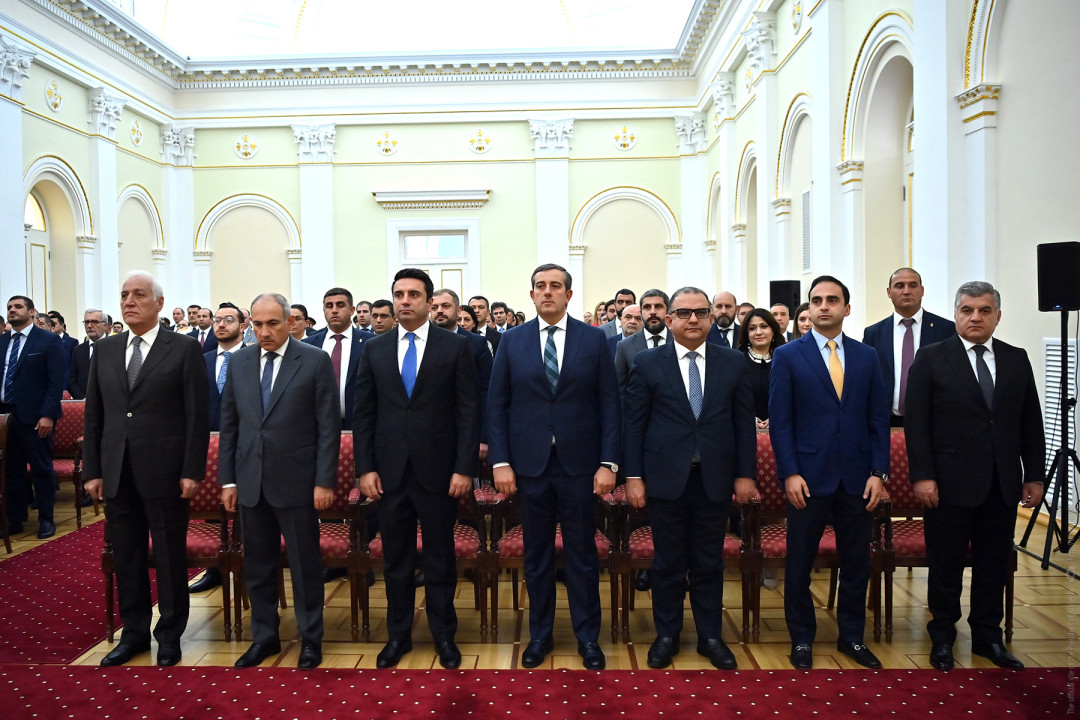
On September 19, 2023, I went to work as usual, with several meetings scheduled for the day. Before midday, a Georgian scholar who was working on a paper about the impact of Russia’s invasion of Ukraine on the South Caucasus came to the office of the Regional Center for Democracy and Security to discuss his research. In the middle of our conversation, my phone began ringing. After ignoring the first couple of calls, I finally realized something was wrong and picked up. It was a friend from Nagorno-Karabakh. He said just two words: “It started.”
Azerbaijan - which had imposed a humanitarian blockade on Nagorno-Karabakh for nine months and, during the last four, had even cut off the limited aid coming through the Red Cross – had launched a full-scale attack on the encircled and exhausted Armenian enclave. From the very start, it was clear there could only be one outcome militarily.
Although the Nagorno-Karabakh Defense Army inflicted significant losses on the advancing Azerbaijani forces - taking some 700 soldiers out of action, killed or wounded – Nagorno-Karabakh was cut into parts within hours. The Azerbaijani military reached the outskirts of Stepanakert, forcing the Karabakh leadership to accept all of Baku’s demands.
The end of hostilities, however, was not the end of the crisis. Virtually everyone I spoke to in those days had one message: “Tell them to open the corridor, so we can leave.” This was not a voluntary decision, as Azerbaijan has tried to claim. It was an existential necessity – the product of decades of animosity, years of creeping ethnic cleansing after 2020, a cruel blockade, and a final, brutal attack that left no doubt about Baku’s intentions.
Sitting in Yerevan and realizing there was nothing I could do to help my family members and friends in these extreme circumstances was emotionally unbearable. I channeled my frustration into angry, emotional Facebook posts. The reaction of international media made it worse: the journalists who reached out seemed interested only in one question – how these events would affect Russia’s standing in the region. After two such interviews, I stopped answering their calls altogether.
Some Armenian media outlets went beyond indifference. Civic.am – a website owned by the ruling party – published pieces vilifying Karabakh Armenian students protesting in Yerevan for the opening of the Lachin corridor, even labeling them “Karabakhtsi pogromers.” After a wave of public outrage, the outlet apologized and deleted the article, but this did not stop them from spreading anti-refugee hate speech later on.
Armenia’s Public TV – which has consistently failed to fulfill the Velvet Revolution’s promise of becoming an independent public broadcaster – was hosting Solovyov-style marathon talk shows, with talking heads whose sole task was to explain that everything happening in Nagorno-Karabakh was everyone’s fault but the Armenian government’s. The coverage of the 2023 Karabakh disaster by Public TV was a personal turning point for me: I pledged never to engage with them again, a pledge I have kept since.
Unfortunately, the September 2023 Karabakh ordeal did not end with Azerbaijan’s military operation. On September 25, thousands of desperate people, in need of fuel for their journey through the Lachin corridor, gathered at a depot near Stepanakert. The complete collapse of state institutions in Nagorno-Karabakh had left everyone to fend for themselves. The tragic explosion at the depot killed 241 people - on top of the 223 servicemen and civilians killed during Azerbaijan’s one-day onslaught. More than 60 others perished during the 30-plus-hour traffic jam in the Lachin corridor.
Two years have passed since this national catastrophe, and not a single high-ranking Armenian government official has ever offered condolences to the families of those who lost their lives in those fateful days. No minute of silence has ever been announced. No official commemoration exists.
On September 19, 2025, Prime Minister Nikol Pashinyan posted a lighthearted video about the start of his working day, accompanied by Armenian jazz music. Later that day, President Vahagn Khachaturyan hosted a ceremony bestowing awards ahead of Armenia’s Independence Day.
This absence of empathy and refusal to acknowledge the grief of thousands can be explained by two factors. First, the government would likely argue that any public statement about the events of 2023 could provoke Azerbaijan and endanger the normalization process. In other words, at a time when Armenia supposedly enjoys “unprecedented levels of sovereignty and independence,” a minute of silence has become a luxury that might “endanger peace.”
Second, the government has attempted to politically and psychologically distance itself from what happened in Nagorno-Karabakh. In the ruling party’s worldview, the grief they should care about is confined to what they call “Real Armenia.” Everything beyond Armenia’s current borders, even the fate of Nagorno-Karabakh Armenians, is someone else’s responsibility. Yet even after the 2020 war and the 2021 snap parliamentary elections, the clause about Armenia being the security guarantor of the people of Nagorno-Karabakh was included in the government’s official program.
This absence of any meaningful reaction and attention to the problems of Karabakh Armenian refugees is not limited to the Armenian government. There seems to be a broad consensus, even within certain political and civil society circles, that the refugees themselves are a potential problem.
Weeks after the forced displacement of 2023, I was part of a group of experts and civil society representatives meeting with a foreign official delegation. I was left speechless when, in those early post–ethnic cleansing days, one of the participants from our group – at a time of ongoing humanitarian crisis – claimed that Karabakh Armenian refugees were a potential threat to Armenian democracy, backing the statement with completely unfounded arguments. Today, the same person is involved in refugee integration projects. This is not an isolated incident, but a reflection of a broader attitude shared by certain political and civil society circles, as well as some international actors.
Ultimately, all stakeholders concerned with Armenia’s future must confront a simple fact: the Karabakh Armenian refugees are already an integral part of the country’s social and political reality. Ignoring their presence or treating them as a problem only deepens alienation and resentment. Harmful narratives that objectify refugees must not be tolerated, as both these narratives and the actors promoting them pose a real threat to Armenia’s democracy.

 Stories