 Karen Harutyunyan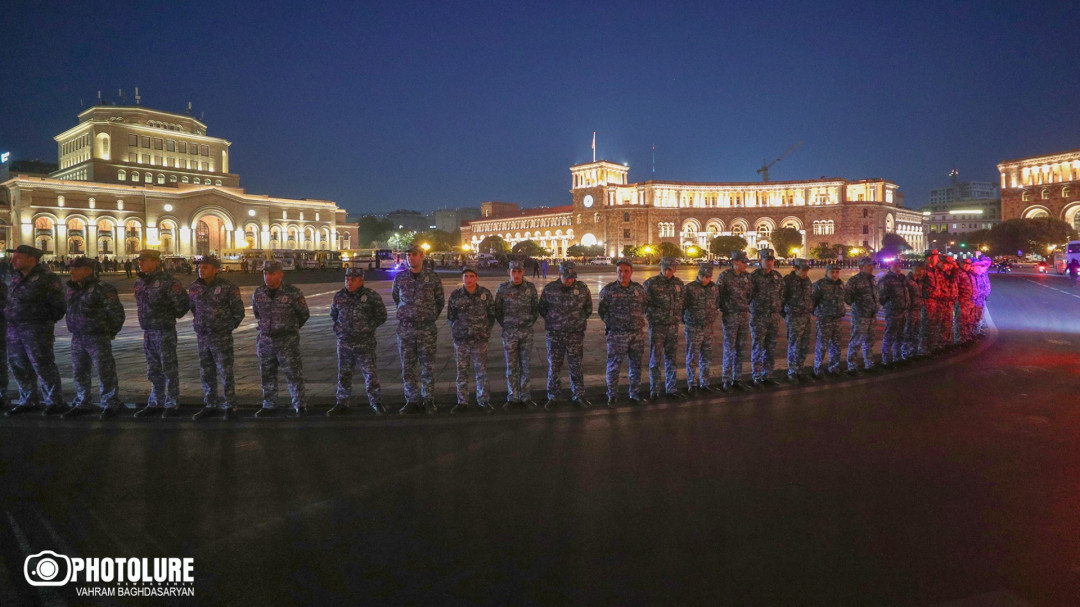
No matter which political force prevails in Armenia’s June 2026 parliamentary elections—Prime Minister Nikol Pashinyan’s Civil Contract or the opposition—the country’s democratic decline is set to continue.
As the vote nears, the ruling party is increasingly abusing administrative resources, directing law enforcement and security agencies, and influencing the judiciary. The promises of justice, equality, and rule of law that animated the 2018 revolution have long been betrayed.
Pretrial detention has become a blunt instrument in the government’s hands. In 2024, more than half of Armenia’s nearly 2,700 inmates were pretrial detainees, according to human rights defender Zaruhi Hovhannisyan. Though 2025 data is not yet available, arrests and raids—often accompanied by the prime minister’s public posts—have hardly diminished. Among the most striking cases are the imprisonment of Archbishop Mikael Ajapahyan, head of the Shirak Diocese of the Armenian Apostolic Church, and businessman Samvel Karapetyan, founder of the Tashir Group, whose companies have faced aggressive state pressure, particularly a government campaign against the Electricity Networks of Armenia launched under Pashinyan’s direct instructions. Similar legal pressure on Archbishop Bagrat Galstanyan of the Tavush Diocese, based on manipulated recordings, raises serious concerns about the legality of the tools used.
The campaign against the Catholicos of All Armenians is a flagrant violation of religious freedom, too. Comparisons made by government loyalists—claiming the Church “entered politics”—are misplaced. The state’s obligation to uphold the rule of law is not comparable to that of the Church.
The ruling party has also consolidated loyal media resources with zero transparency or accountability regarding funding or ethics. The Public Television network, with the largest audience, remains a propaganda tool. CivilNet has already exposed several “mushroom” websites and pages created before elections to target opposition figures—these will likely multiply as the campaign intensifies.
Another sign of backsliding is the government’s growing co-optation of certain parts of civil society. Many activists and organizations act not on principles but preferences: if the target of repression is not one of their own, the abuse is deemed acceptable or even welcome.
A large segment of civil society has effectively turned into GONGOs—government-organized NGOs—devoted not to holding power accountable but to imitating that role. Whenever the authorities face real threats, these GONGOs rush to defend them. Ironically, they are often funded by institutions that champion democracy and human rights.
Many think tanks and policy centers have become propaganda tools, uncritically defending government policies and persistently polishing its failures. To these can be added puppet advisory bodies like the so-called “Public Council,” a relic of the past.
There is a real danger that some political forces will be barred from running in the upcoming elections—perhaps on the pretext of being “undemocratic.” In politics, indeed, there can be both democratic and non-democratic actors. But who decides that, and how democratic is such a practice itself?
Why do I believe Armenia’s democratic decline will deepen after the elections? Because if Pashinyan wins, he will interpret victory as a mandate “to do anything,” just as the loss of Nagorno-Karabakh was presented as “a gain for Armenia’s real independence.” If the opposition wins, it will launch a campaign of revenge—reminding many civil society figures and institutions of their silence or complicity when the rule of law was violated. Democratic and liberal values will come under attack, pitted against “national goals” and “the national state,” with all the consequences that implies.
The real question now is whether there are still forces in Armenia willing to defend democracy when both government and opposition appear ready to sacrifice it for their own ends.


 Stories