 Civilnet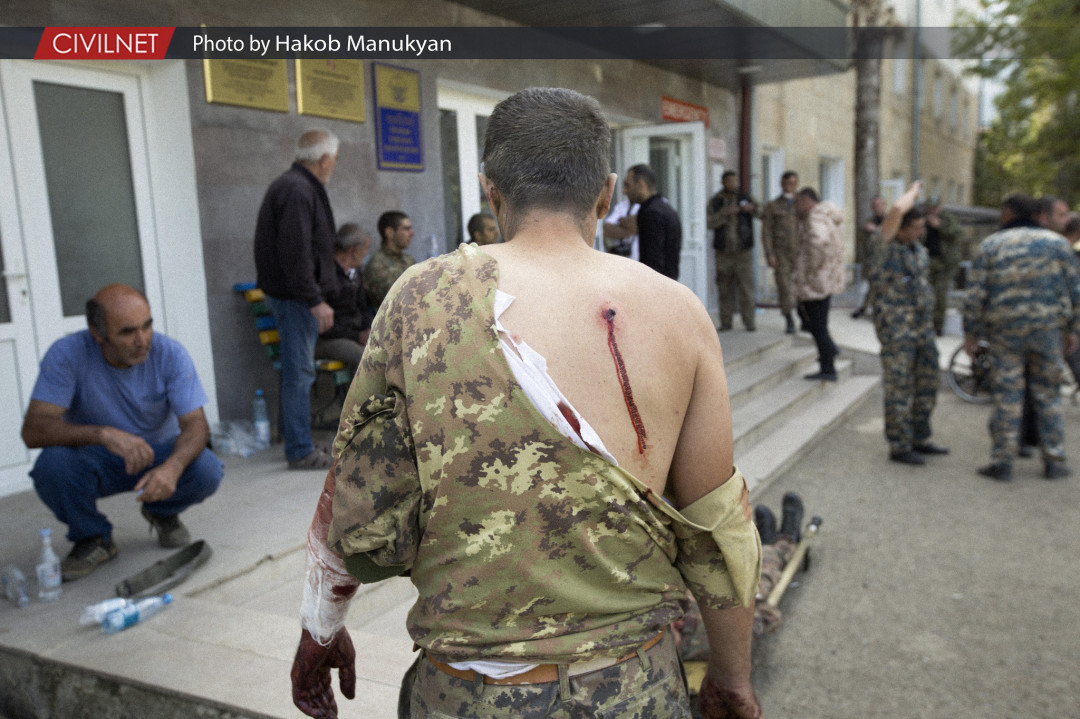
By Siranush Adamyan
Armenia will gradually make public the non-classified sections of its long-awaited parliamentary report on the 2020 Nagorno-Karabakh war, senior lawmaker Andranik Kocharyan said in an interview with Hetq, amid criticism that the authorities are withholding essential details about the country’s wartime failures.
Kocharyan, who chairs both parliament’s defence committee and the inquiry commission, said the report has first been submitted to Armenia’s defence and security institutions, which must “thoroughly study it and draw conclusions” before any parts are released publicly.
The report, which was prepared by a parliamentary inquiry commission established in October 2022, examines Armenia’s military, intelligence, and political decision-making during the 44-day war. Compiled from some 16,000 documents, videos, interrogations, and audio files, it assesses issues including battlefield planning, command readiness, air-defence performance, and coordination between civilian and military leadership. Armenia’s parliamentary opposition rejected the commission from the outset and refused to participate, accusing the government of seeking to whitewash its failures.
The final document, around 200 pages long, was archived immediately after completion in September, limiting access even for MPs without special clearance. Critics say the move shields political leaders from accountability.
Kocharyan said journalists would eventually be permitted to view the non-classified sections to understand key failures, including the October 6 counteroffensive in southern Nagorno-Karabakh. He pointed to shortages of pilots and artillery access, an unprepared mobilization reserve, and conscripts who were unaware of their designated roles. He dismissed the widely repeated claim that the failed operation “broke the army’s backbone,” insisting that the real problem was the collapse of defensive lines that forced untrained units into critical gaps as “cannon fodder.”
He added that Armenia could have blocked the Azerbaijani breakthrough in the Jabrayil district had the military internalized lessons from the 2016 Four-Day War and constructed a second defensive line.
Kocharyan also said Armenia’s pre-war intelligence picture was limited, noting that the General Staff confirmed the likelihood of war only after intercepting a conversation among Turkish officers in Nakhichevan. Other intelligence sources — including Russia — had assured Armenian officials that escalation was unlikely. The commission, he added, had forwarded materials to prosecutors on alleged failures in Armenia’s air-defence systems but has received no response in two years.
Eduard Arakelyan, a military expert at the Regional Center for Democracy and Security, said Armenia’s restrictive handling of the report contradicts international democratic practice. He noted that countries such as Israel and the United Kingdom have historically conducted open, independent post-war inquiries, enabling institutions to learn from mistakes. “Armies and states do not reform by hiding their failures,” he said.
Prime Minister Nikol Pashinyan had previously promised “continuous public communication” about the war and peace process, but no such transparency has followed.


 Stories