 Civilnet
By Zhanna Avagyan
A new report published last week by the Yerevan-based Applied Policy Research Institute (APRI Armenia) suggested that Turkey’s role and ambitions in the South Caucasus have been widely underestimated and warned that Ankara’s current trajectory could complicate efforts to normalize relations with Armenia.
The report, prepared in October by APRI Armenia Senior Research Fellow Benyamin Poghosyan and published last week, examined Turkey’s regional policy after the 2020 Nagorno-Karabakh war, drawing on desktop research, 18 interviews and expert consultations.
The study argued that the South Caucasus holds “strong significance for Ankara from both a geopolitical and geoeconomic perspective,” challenging views that see the region as peripheral to Turkish foreign policy. Instead, it concluded that Turkey’s approach is firmly anchored in its strategic alliance with Azerbaijan and is best described as an “Azerbaijan first” policy.
According to the report, ties between Baku and Ankara go far beyond rhetoric or symbolism. “Azerbaijan–Turkey relations consist of heavy interdependencies in many fields, from political to social and economic,” the report noted, rejecting the notion of a simple “big brother/small brother” relationship.
One of the report’s central warnings concerned regional connectivity. It said that should a land route from Azerbaijan to its Nakhichevan exclave, and onward to Turkey, be established through Armenia’s Syunik region, Ankara may lose any remaining incentive to pursue normalization with Yerevan or to open the Armenia–Turkey border.
The analysis also highlighted Turkey’s view of Russia as a permanent factor in the South Caucasus. Ankara sees Moscow as “an unavoidable evil” and seeks to manage competition through what the report describes as a Russia–Turkey condominium, while “substantially limit[ing] the presence and influence of the U.S., the EU, and NATO in the region.”
The report also offered a set of policy recommendations aimed at strengthening Armenia’s negotiating position and avoiding marginalization.
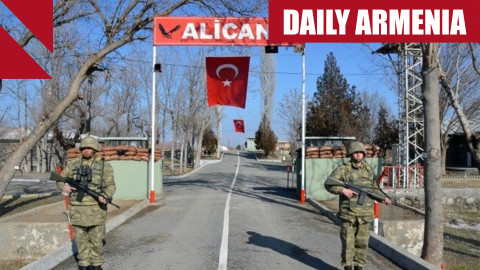
It urged Yerevan to insist that the opening of the Armenia–Turkey border be treated as an integral part of the broader restoration of regional communications, as envisaged in the August 2025 Washington Declaration, and to ensure that it takes place simultaneously with the launch of the TRIPP connectivity project.
The author also suggested that Armenia clearly signaled to Ankara and international partners that the current opportunity for normalization is not open-ended. The report warned that “Turkey’s current policy of procrastination may complicate efforts to bring lasting stability to the region,” especially as regional power balances evolve in the post-Ukraine war environment.
Another recommendation called on Armenia to raise its concerns directly with U.S. counterparts, arguing that a lack of progress in Armenia–Turkey normalization could undermine the full implementation of the Washington Declaration.
Finally, the report stressed the domestic dimension of normalization, saying the Armenian government needs to communicate more effectively with both citizens and the diaspora. It should clearly explain the motivations, benefits and risks of opening the border with Turkey, and outline how it plans to mitigate potential negative consequences so that normalization efforts gain broader public acceptance.
The report concluded that without a more proactive and coordinated strategy, Armenia risks being sidelined by regional arrangements shaped primarily by Turkey, Azerbaijan and Russia, with long-term implications for its security and economic options.



 Stories