 Karen Harutyunyan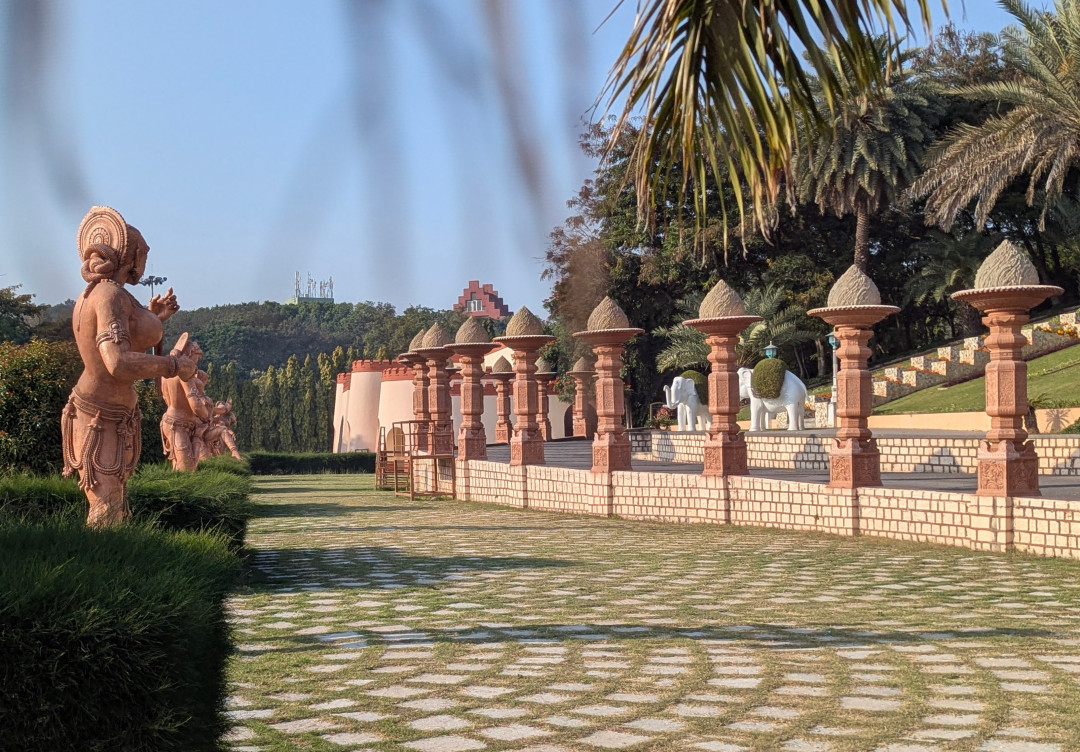
At four in the morning, New Delhi is already in motion. Heavy traffic, constant horns — there is no sign that the city has been asleep. At the entrance of the hotel, mustachioed doormen greet us with the ceremonial politeness of an Indian namaste, palms pressed together in front of a slightly bowed face.
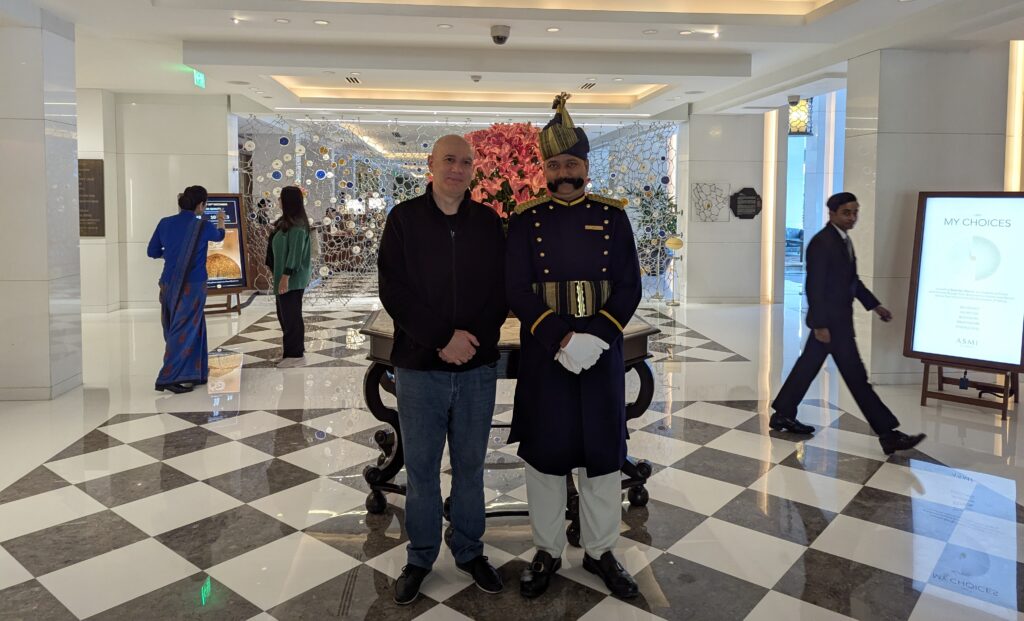
The doorman and me. I’m on the left 🙂
New Delhi, with its roughly 35 million residents, is one of the largest cities in the world and the biggest city in India, the world’s most populous country. The scale of both the city and the country is staggering. Traffic feels chaotic — cars, motorcycles, scooters, bicycles, tuk-tuks, and in some areas even animal-drawn “transport.” Endless movement, overlapping flows, everyone rushing somewhere. The city does not stop. It does not sleep.
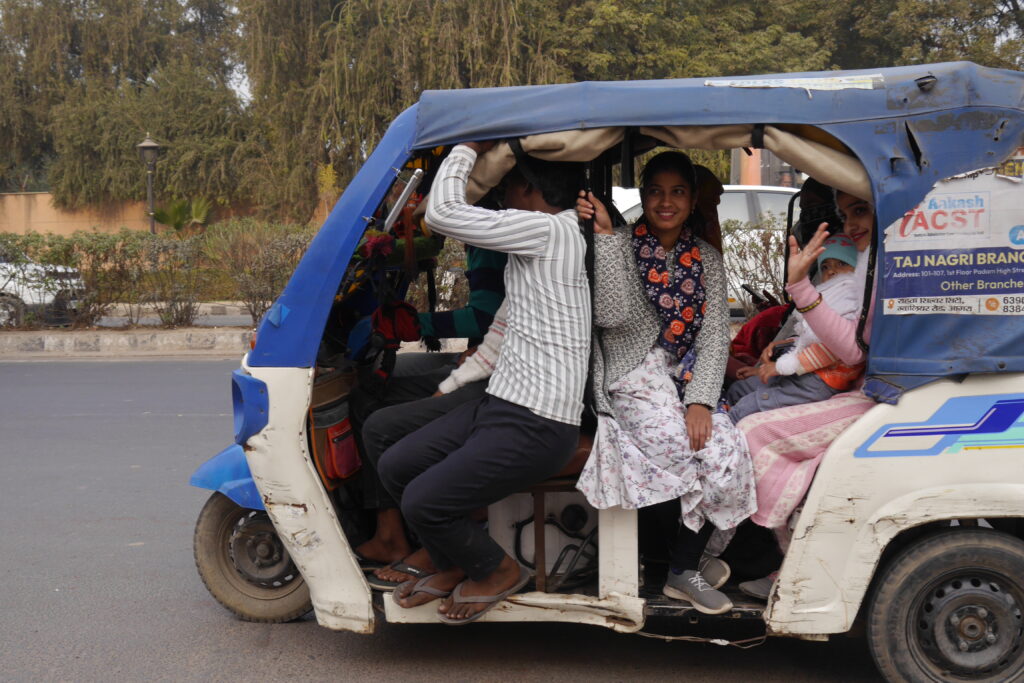
A tuk-tuk is a three-wheeled vehicle that can carry two passengers in addition to the driver. As the photo shows, it can also turn into a “Terem-Teremok,” like in the famous folk tale. Tens of millions of tuk-tuks operate on Indian streets, including as Uber vehicles.
This rhythm defined our entire visit from December 8 to 18. Our group of journalists from the South Caucasus and Central Asia was in India at the invitation of the Indian government. There were journalists from Armenia and Georgia. There were none from Azerbaijan.
Our journalistic program did not resemble a classic guided tour. Instead, it felt like a gradual discovery of how old and new, tradition and technology, intertwine in India — how these two Indias coexist.
Marble and memory
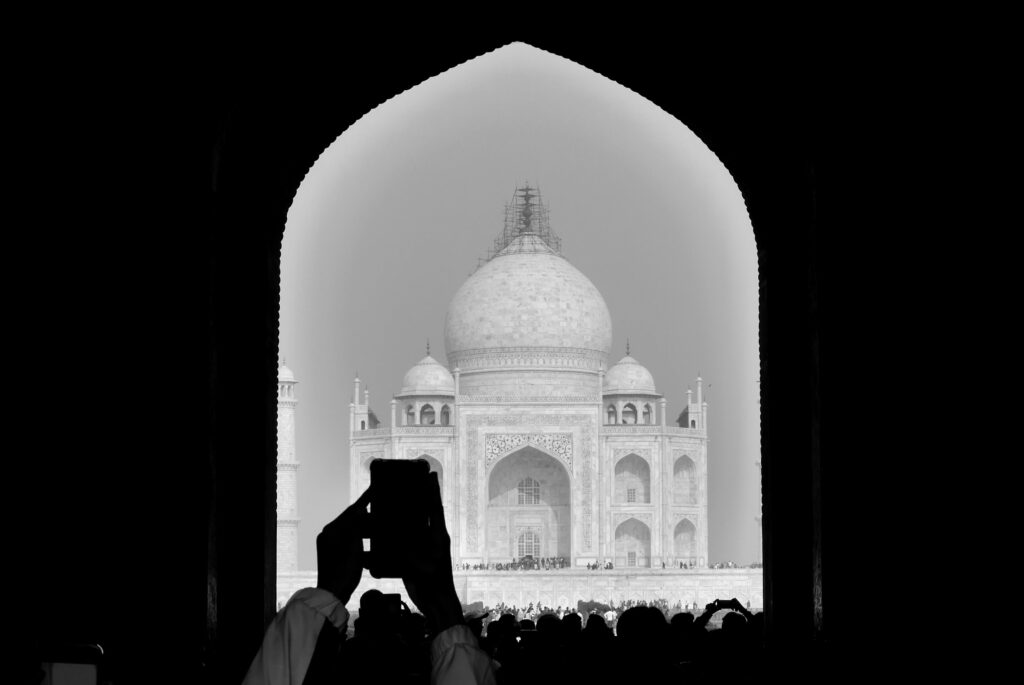
The most obvious symbol of the country’s grandeur and wealth is the Taj Mahal in Agra, about three hours from New Delhi. The Taj Mahal is not merely a mausoleum. It is a vast architectural complex, composed of courtyards, gates, water channels, gardens, a mosque, and a ceremonial entrance.
Thousands of people come here for one main purpose — to take selfies. From every angle, in every possible pose.
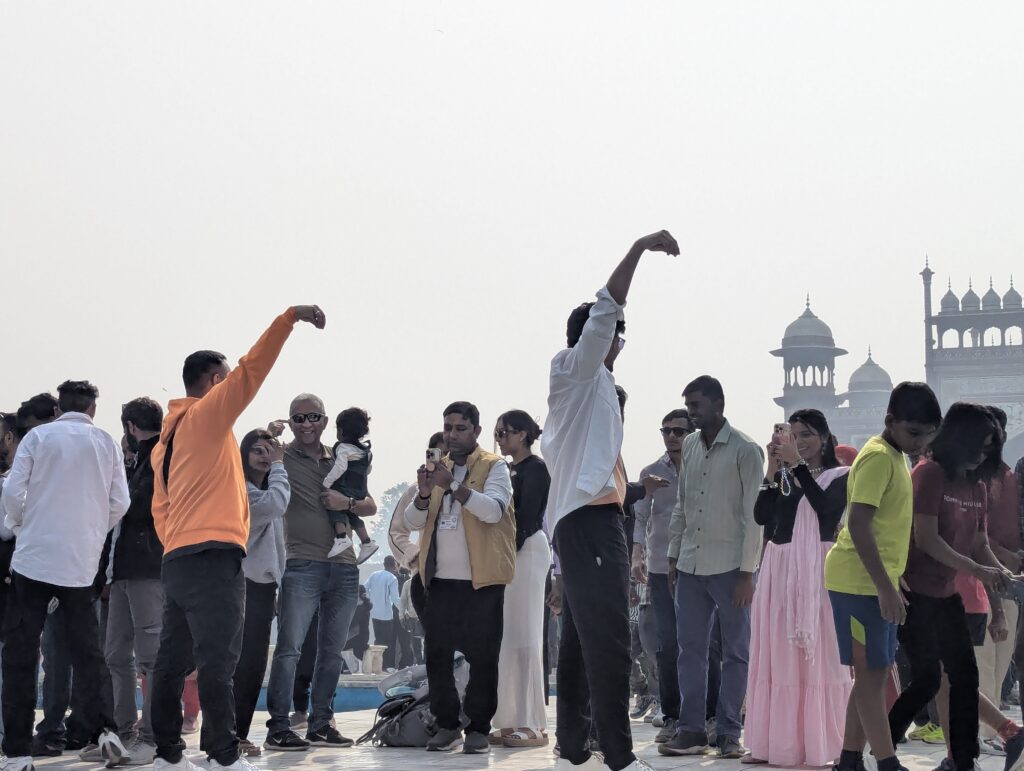
At the Taj Mahal complex, everyone tries to “hold” the dome, just as tourists pretend to hold up the Leaning Tower of Pisa. A bit more improvisation would not hurt.
It is hard not to wonder what Shah Jahan would think of this scene. For those unfamiliar with the history: Shah Jahan was the Mughal emperor who built the Taj Mahal in the 17th century in memory of his beloved wife, Mumtaz Mahal, who died in childbirth.

What interested me most were people. This little girl, Janin, was selling fridge magnets at the Taj Mahal. She said she does not attend school, but she spoke English.
Among Armenians, a widespread belief claims that Mumtaz Mahal was Armenian. I was unable to find any credible source confirming this version. Historical sources are unanimous in describing her as Persian. But this is hardly a matter of fact-checking. People prefer to believe what they want to believe.
Reserved but confident global ambitions
Our meetings throughout the visit pointed to India’s growing global ambitions.
Today, India is the world’s fourth-largest economy and aims to become the third within the next two or three years. The country’s next major goal is even more ambitious: by 2047, the 100th anniversary of independence, India wants to move from the category of a developing country into that of developed nations.
Our meeting with experts and researchers at the Observer Research Foundation, one of India’s leading think tanks, reflected that global ambition as well.
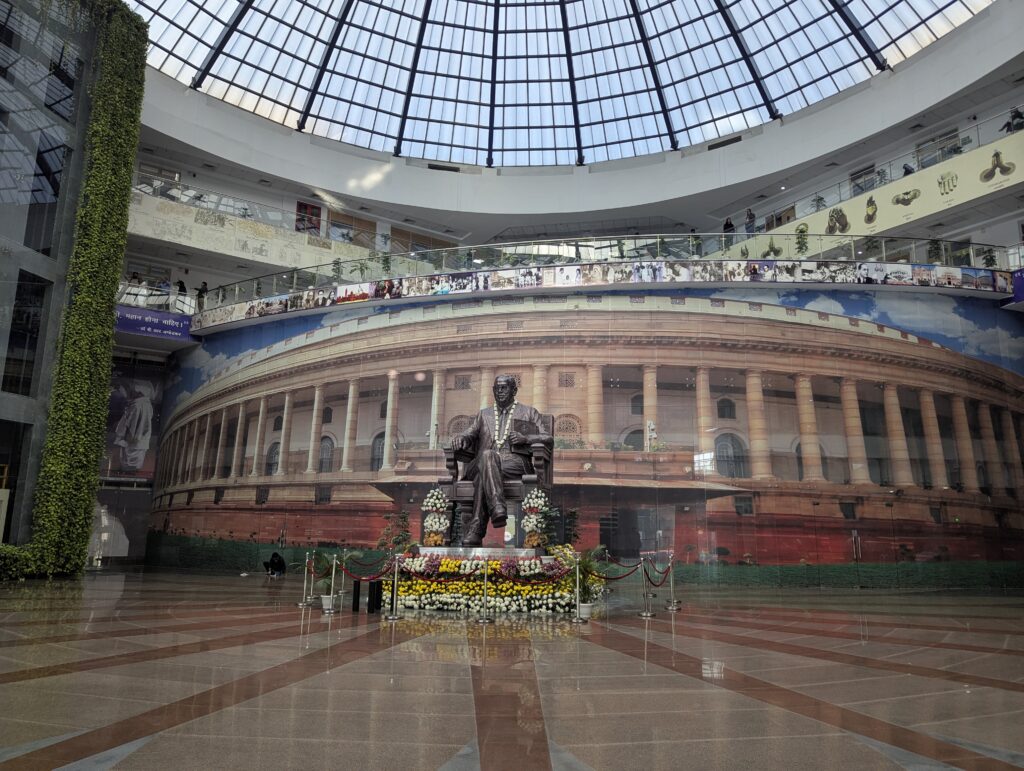
The lobby of the Observer Research Foundation building in New Delhi.
See: New Delhi sees Armenia gaining strategic importance, Indian analysts say
In the Eurasian region, India’s main competitor is China, which also supports India’s rivals, most notably Pakistan. At the same time, India pursues a balanced policy toward all major players. In September, Prime Minister Narendra Modi visited Beijing for the Shanghai Cooperation Organisation summit. In December, he hosted Russian President Vladimir Putin and signed several major agreements, including on energy imports. India is also a founding member of BRICS.
New Delhi is simultaneously negotiating a free trade agreement with the European Union, has invested hundreds of millions of dollars in Iran’s Chabahar port despite Western sanctions, and is discussing cooperation with the Eurasian Economic Union.
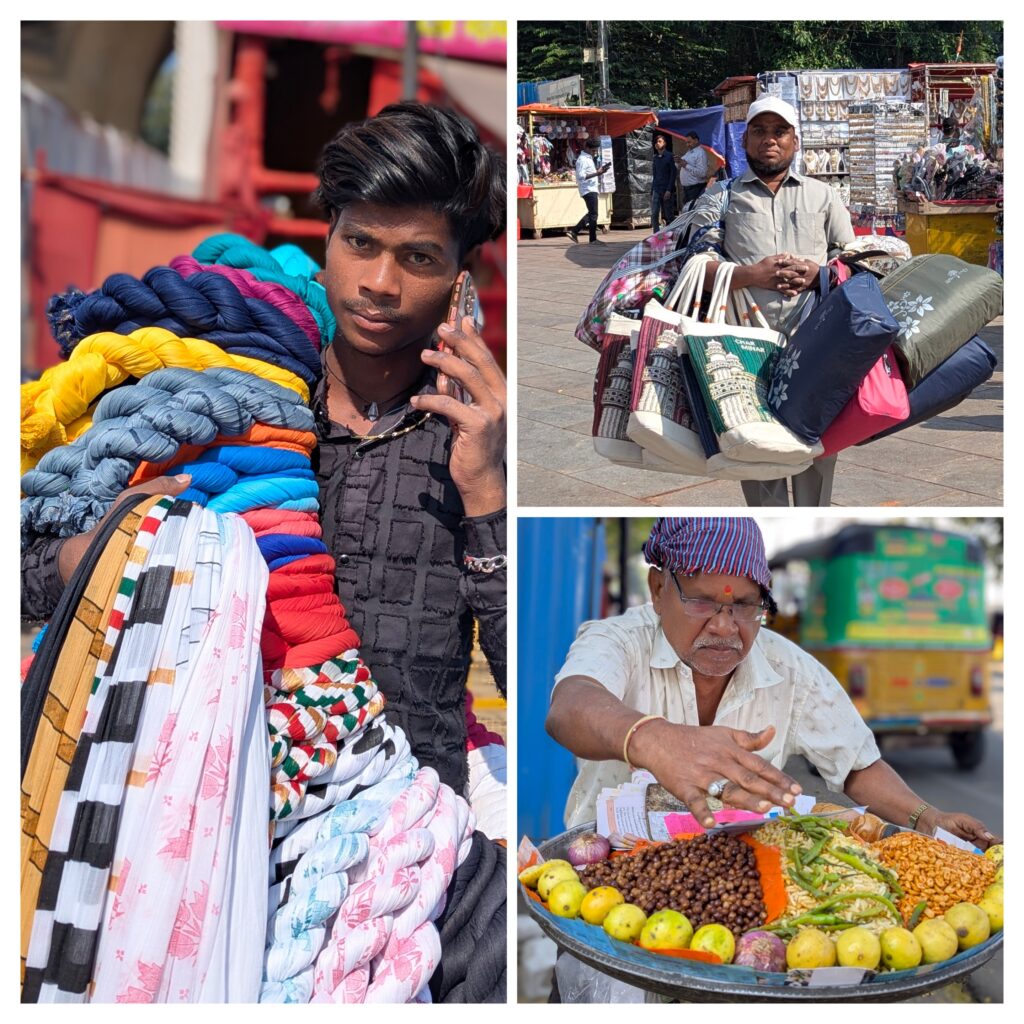
Street vendors remain a defining feature of India’s urban landscape.
Despite the Trump administration’s high tariffs on Indian goods, the United States remains India’s primary technological partner. During our visit, Microsoft signed a new agreement to invest $17 billion in India. Other technology giants are investing as well.
In conversations with Armenian journalists, India’s External Affairs Ministry spokesperson Randhir Jaiswal offered generous compliments — from references to the first Armenian constitution drafted in India to the first Armenian periodical published there, Azdarar. But what matters more to us is not historical praise. What matters are India’s real policy directions, especially its strategic interests in our region — something I focused on in my conversation with Jaiswal.
See: India backs open connectivity corridors as Armenia engages in regional consultations
Throughout the nine-day visit, our group was accompanied by two young Indian officials, Ravi and Ujjwal, both in their early twenties. They organized the program with care and responsibility. Keeping a multilingual group of twenty journalists together and on schedule is no easy task. Only later did we learn that around 3.8 million candidates had applied for the 60 civil service positions that Ravi and Ujjwal competed for. The number speaks volumes about how seriously meritocracy is treated here.
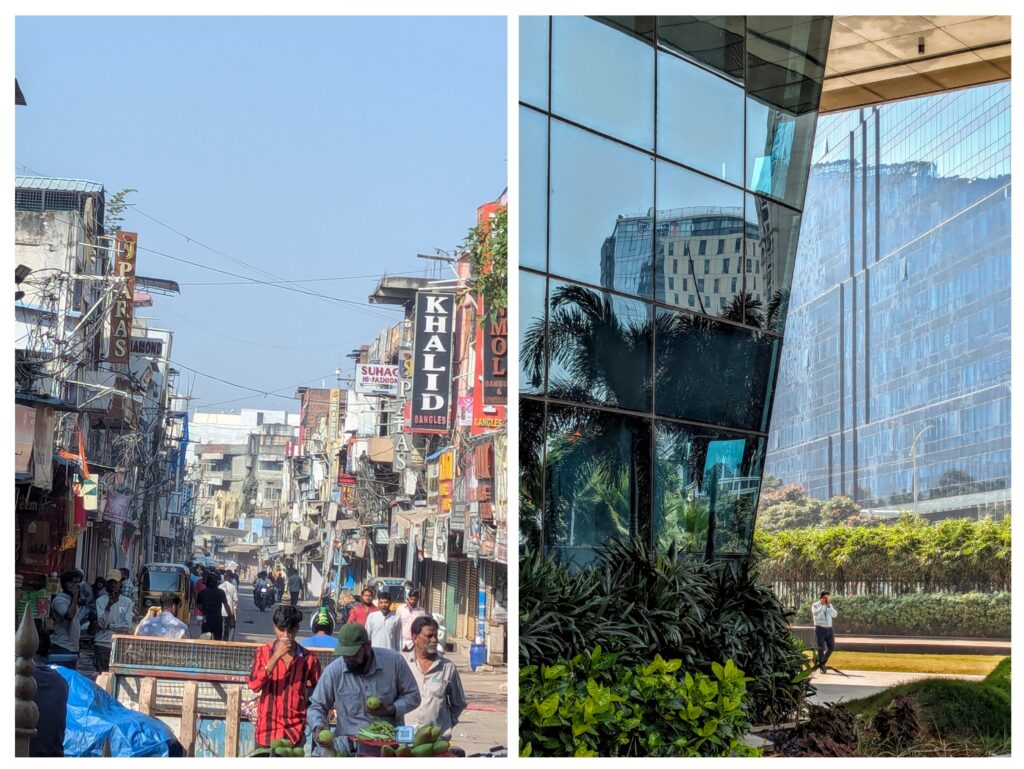
Hyderabad: a blend of the old city and the new.
Hyderabad: where history meets technology
If Delhi embodied motion and Agra embodied memory, the ten-million-strong city of Hyderabad showed how India’s future is being built on these foundations.
One of India’s fastest-growing technology hubs, Hyderabad feels like a hybrid of a medieval city and Dubai. Skyscrapers are changing not only the skyline, but also the rhythm of life.
Across India, developed infrastructure, wide and well-maintained roads, and the sheer scale of construction stand out. Hyderabad’s metro, launched in 2017, already has 56 stations. By contrast, in the 35 years since Armenia’s independence, not a single station has been added to Yerevan’s Soviet-built metro — only promises, repeated from one election to the next.
In Hyderabad, the neighboring T-Hub and T-Works centers have created a genuine startup ecosystem. Many of India’s technology initiatives have passed through these platforms. It was here that India’s first private space company, Skyroot Aerospace, was born.
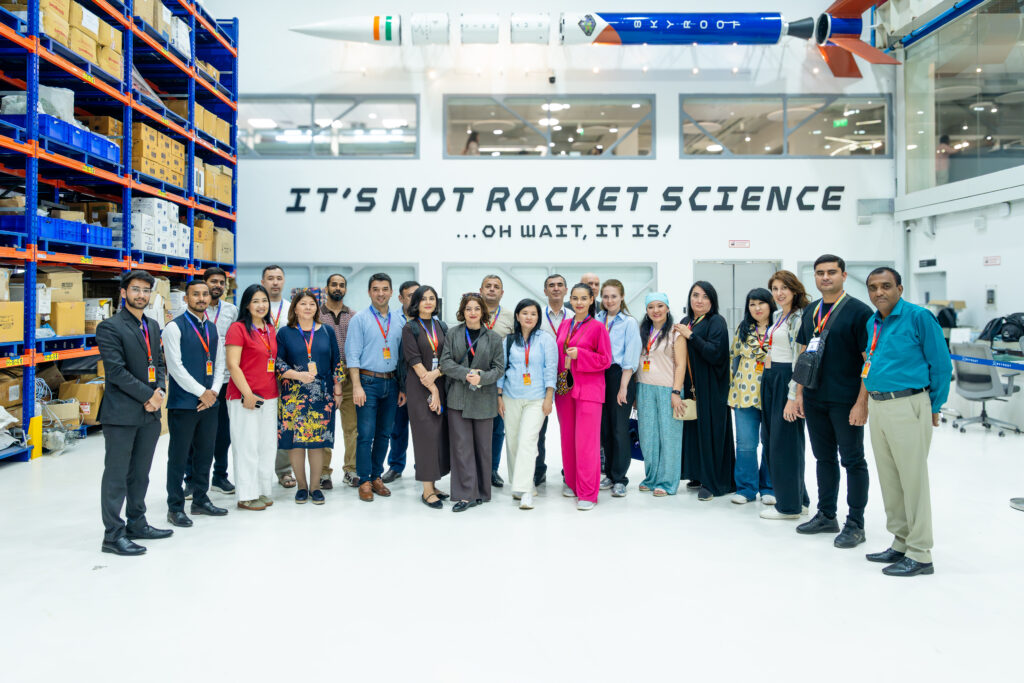
Inside the rocket production facility, a half-joking sign reads: “This is not rocket science… Oh, wait. It is.” On the left are our Indian hosts, Ujjwal and Ravi.
Armenian payload on India’s first private rocket
One of the most memorable moments of our visit came at India’s first private space company.
At Skyroot Aerospace’s rocket production facility, as journalists introduced themselves one by one, the company’s vice president, Sumil Sudhakaran, paused when Armenia was mentioned. “Our first rocket carried an Armenian payload,” he said. Moments that make you feel good as an Armenian have been rare in recent years. This was one of them.
Skyroot Aerospace — often referred to as India’s SpaceX — launched its first rocket in 2022 with the suborbital Vikram-S mission. Our meeting on December 16 took place inside the company’s production facility.
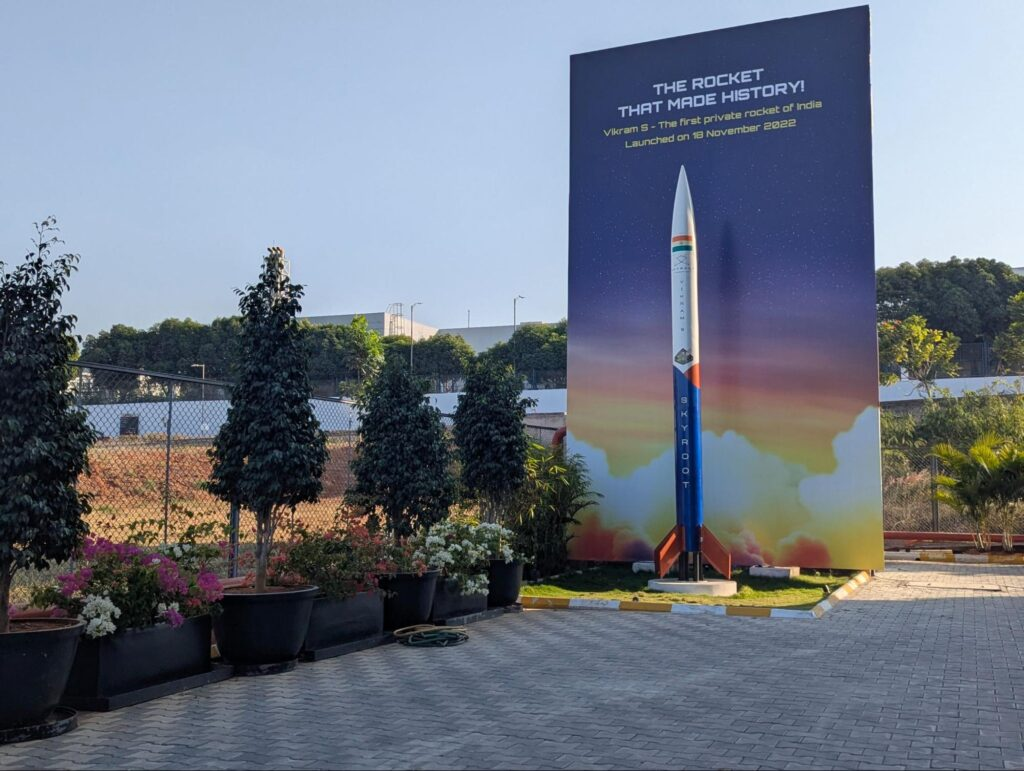
A full-scale model of the Vikram rocket displayed in Skyroot’s courtyard, shown at the same size as the rocket launched into space.
See: India’s Skyroot wants to be the Uber of space launches
Sudhakaran explained the company’s approach with a simple comparison: large rockets are like buses — fixed schedules, shared routes. Skyroot’s vision is closer to Uber — on-demand, flexible launches for small payloads that require precise timing and specific orbital slots. This is not about scale, but about speed and responsiveness.
For smaller countries, this model is a reminder that space can become accessible through such partnerships.
Two Indias
What stayed with me most were the two Indias.
One is ancient — rich in history, color, design, and human warmth. The other is technological, future-oriented, built on infrastructure and industry. They do not contradict each other, but complement one another.
Among the world’s major economies, India currently has the highest average annual growth rate, around 7 percent. Growth is also contributing to poverty reduction: over the past two decades, the share of people living in extreme poverty has fallen from about 55 percent to around 10 percent.
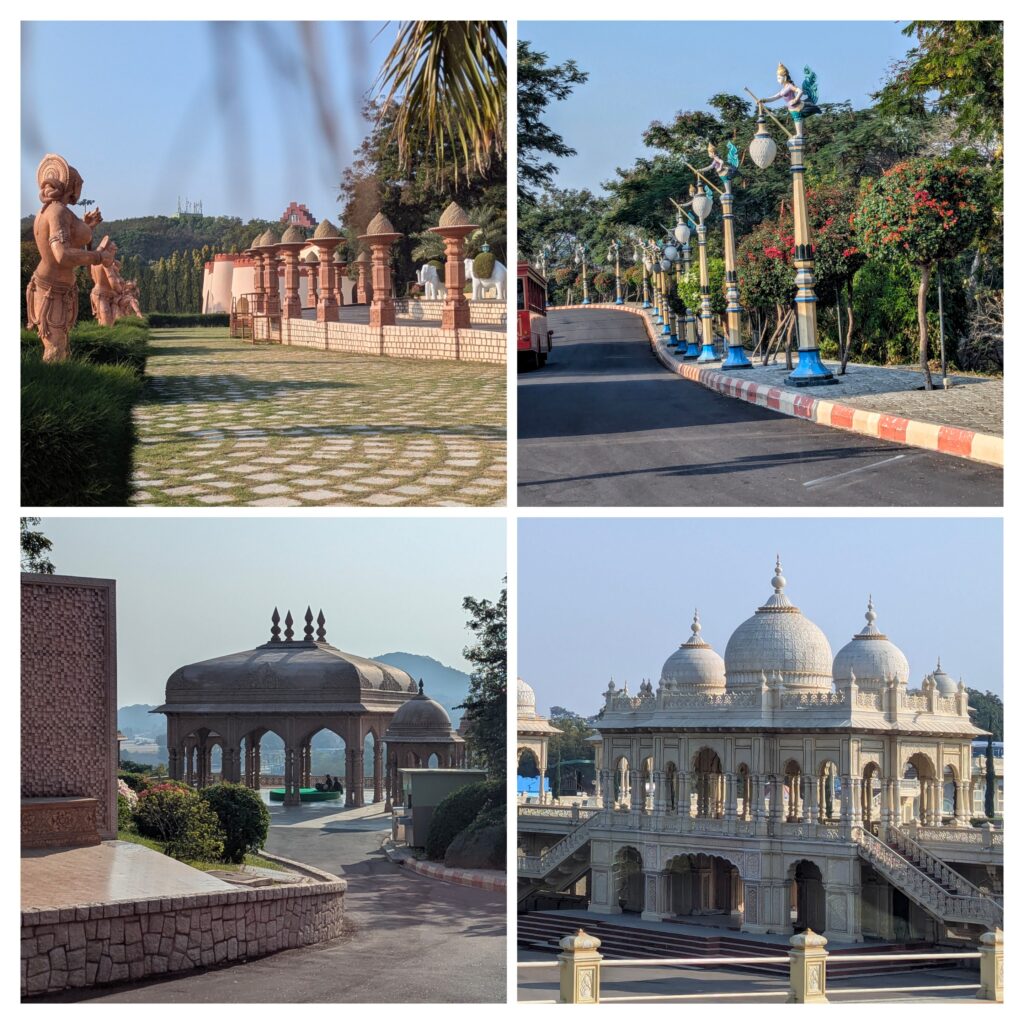
I will end with images from our visit to Ramoji City, India’s major film production complex. Founded in 1998, the studio has already produced more than 3,500 films. I am not a devoted fan of Indian cinema, but the visit to Ramoji was colorful and impressive.



 Stories