 Paul Vartan Sookiasian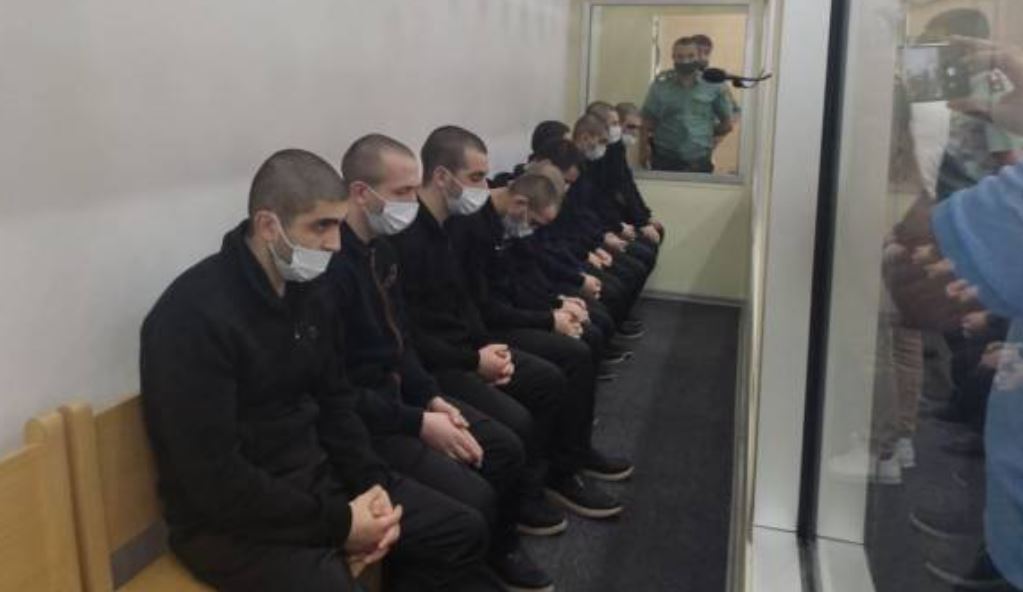
More than five years after the end of the 2020 Nagorno-Karabakh war, Armenian prisoners remain in Azerbaijani custody, internationally recognized Armenian territory is still under military occupation, and Armenian cultural heritage sites continue to be systematically destroyed, according to a new report released by the Center for Truth and Justice.
The Los Angeles–based human rights organization says that key consequences of the war remain unresolved, undermining prospects for a durable peace in the South Caucasus.
The report draws on survivor testimony, satellite imagery, video evidence, and field investigations to highlight the ongoing issues.
While supporting peace efforts between Armenia and Azerbaijan, the Center for Truth and Justice argues that lasting stability is impossible without accountability. “Sustainable peace,” the organization says, “is inextricably linked to justice.”
The combined effects of the 2020 44 Day War, the subsequent blockade of Nagorno-Karabakh, and the September 2023 military assault culminated in the mass displacement of more than 120,000 Armenians. Last month, the last known Armenian residents were transferred out of the region, leaving Nagorno-Karabakh without an Armenian population for the first time in recorded history.
Prisoners still missing, no contact with detainees
Azerbaijan captured more than 300 Armenian soldiers during the 2020 war, the report says. While some were later repatriated, the organization says Azerbaijan continues to deny the existence of at least 80 Armenian prisoners of war, while officially acknowledging only 19 political prisoners and hostages.
The Center for Truth and Justice says it has collected roughly 20 testimonies from families of missing servicemen, supported by video and photographic evidence showing their relatives alive in Azerbaijani custody.
One such case is Alexander Yeghiazaryan, whose capture was recorded on video and corroborated by former prisoners, yet whose detention has never been officially acknowledged by Azerbaijani authorities.
Conditions worsened further in 2025 after the International Committee of the Red Cross suspended its physical presence in Azerbaijan at the government’s request. Families report that since mid-2025, Armenian detainees have been without contact to their relatives or independent monitors.
International pressure has led to limited releases. Last month, Azerbaijan freed four Armenian captives in exchange for two Syrian nationals who fought for Azerbaijan as mercenaries, while 19 Armenian captives are still confirmed held in Azerbaijan.
The report also highlights the case of Ruben Vardanyan, an Armenian philanthropist and former Artsakh state minister, who has been held in Baku since 2023 and is facing a possible life sentence.
In statements from prison cited by the Center for Truth and Justice, Vardanyan describes what he calls fabricated evidence, denial of a fair trial, and proceedings conducted in a military court despite his civilian status. His legal team reports that case files were presented primarily in Azerbaijani, a language he does not understand.
In protest, Vardanyan undertook a 23-day hunger strike in early 2025, demanding a public trial with international observers. Human rights organizations have since cited his case as representative of broader political persecution.
Armenian territory still under military occupation
Beyond detention cases, the report documents ongoing Azerbaijani military presence inside Armenia’s internationally recognized borders.
Since May 2021, Azerbaijani forces have carried out repeated incursions into Armenia, occupying approximately 215 square kilometers across the Syunik, Gegharkunik, and Vayots Dzor provinces. The largest attack occurred in September 2022, killing 224 Armenian soldiers.
Azerbaijani troops continue to fortify their positions overlooking civilian communities and transport routes, creating security threats for local populations. The organization notes that these incursions violate the UN Charter and remain unresolved despite diplomatic initiatives such as the August 2025 Washington Declaration.
Accelerated destruction of Armenian heritage
The Center for Truth and Justice also documents what it describes as an accelerated campaign of cultural erasure following the forced displacement of Armenians from Nagorno-Karabakh.
Using satellite imagery and monitoring reports, the organization details the destruction of war memorials, cemeteries, churches, and ancient archaeological sites throughout 2024 and 2025. These include World War II memorials, village cemeteries, the Tsitsernavank monastery, and entire Armenian villages.
According to the report, these actions violate a 2021 International Court of Justice order requiring Azerbaijan to prevent vandalism and desecration of Armenian cultural heritage.
Armenia’s government reports that more than 108,000 displaced residents of Nagorno-Karabakh have been granted temporary protection status. Tens of thousands have applied for or received Armenian citizenship, but migration data shows a steady increase in those leaving Armenia and not returning.
The Center for Truth and Justice warns that these trends reflect not just displacement, but the long-term dismantling of a population uprooted by force. The organization says its findings underscore a central conclusion: that ceasefires and declarations alone have not resolved the consequences of the war.


 Stories