Civilnet
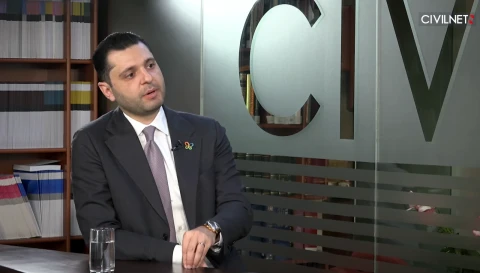
Thomas Blanton, director of the independent non-governmental National Security Archive at George Washington University delivers a lecture on “Freedom of Information and Access to Archives in the Age of Trump and Deep Seek” on July 3, 2025 in Yerevan at the symposium organized by the Monterey Initiative in Russian Studies at the Middlebury Institute of International Studies at Monterey. The 2025 Monterey Summer Symposium on Russia took place in Batumi, Yerevan, and Tbilisi from June 25 to July 13.
Key points from the lecture:
Thomas Blanton, director of the National Security Archive at George Washington University since 1992, describes the current state of archival access as characterized by extreme contradictions. The Archive, founded in 1985 by journalists and historians overwhelmed by declassified documents, has now filed over 74,000 Freedom of Information requests and publishes nearly 900 ebooks of curated declassified materials online without any government funding.
Washington today exhibits what Blanton calls "archival schizophrenia." On one hand, there's unprecedented openness with the current administration releasing CIA files from the late 1950s and early 1960s with minimal redactions, including agent names, operation costs, and detailed information about activities in Mexico, Cuba, Chile, and Central America. This level of transparency is so extensive that Blanton considers it almost reckless, given that some CIA assets are still alive.
Simultaneously, there's systematic destruction of public institutions and data. The Kennan Institute, which led Soviet and Russian studies for 50-60 years, was completely shut down overnight on March 31st, forcing the National Security Archive to conduct an emergency rescue operation to save 165 boxes of irreplaceable research materials. This represents a broader pattern of decimating "globalist institutions" and scrubbing public datasets.
The digital revolution has created an overwhelming challenge for researchers. Government email records have grown exponentially from 250,000 emails during the Reagan years to 32 million under Clinton and 220 million during the W. Bush administration. Obama's White House was expected to produce 220 million emails in just the first year. This creates the opposite problem faced by historians studying ancient civilizations who have too few sources, researchers now confront an almost incomprehensible volume of digital materials requiring new AI tools and methodologies.
Blanton emphasizes that current AI tools applied to declassified documents are largely inadequate, often hallucinating and mixing up historical figures. They only become useful when constrained to closed universes of specific document collections. The authentication of digital records presents particular challenges since they're easy to save but equally easy to manipulate or destroy.
His central message to researchers is to file Freedom of Information requests immediately. While they won't receive responses in time for current dissertations, they will benefit future scholarship and the next generation of researchers. The current moment offers extraordinary opportunities to study security apparatuses across multiple empires, with access to materials approaching the level of openness once found only in Ukrainian KGB files or Baltic archives.
The National Archive's philosophy, borrowed from Jeremy Belknap, founder of the Massachusetts Historical Society, emphasizes active pursuit rather than passive waiting for sources to become available. Blanton advocates "prowling about like a wolf for the prey" in seeking primary documents, and he frames this work as part of a broader "class struggle" for transparency and historical truth.