 Civilnet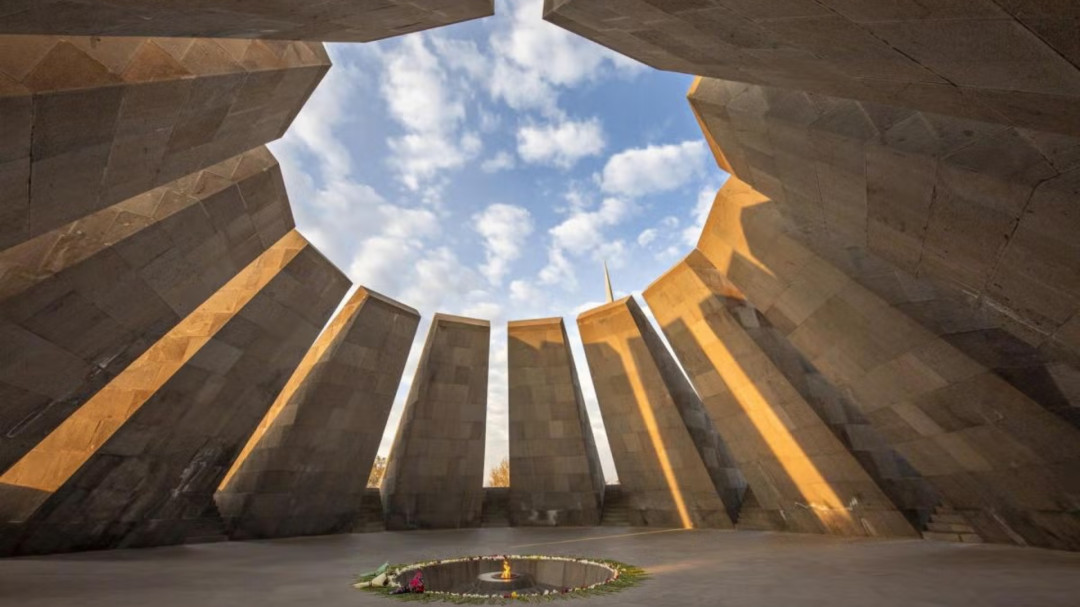
By Lia Avagyan
More than two dozen genocide scholars from universities and research institutions in the United States and Europe issued a joint statement on Friday calling on the Armenian government to reinstate Edita Gzoyan, saying her removal threatens the international standing of the Armenian Genocide Museum-Institute and raises concerns about academic independence.
The statement followed remarks by Prime Minister Nikol Pashinyan, who said he had personally instructed Gzoyan to submit her resignation after her conduct during last month’s visit by U.S. Vice President JD Vance at the Tsitsernakaberd memorial complex.
“We, the undersigned, express deep concern over the recent and troubling developments at the Armenian Genocide Museum Institute in Yerevan,” the scholars said, adding that Gzoyan had resigned “reportedly under pressure from the government rather than by free choice.”
The signatories said Gzoyan had strengthened the institute’s global academic reputation through archival expansion, international conferences, and scholarly publications, and warned that political interference in its leadership would discourage cooperation with researchers abroad.
Pashinyan said that Gzoyan’s presentation to Vance of books related to Artsakh, and her references to anti-Armenian pogroms in Sumgait, Kirovabad, and Baku, contradicted Armenia’s foreign policy line.
“I was the one who asked the director of the Armenian Genocide Museum-Institute to submit a resignation letter; it was done on my instruction,” Pashinyan said at a government briefing. “I considered giving a book about Artsakh to Vance to be a provocative act that goes against the government’s policy.”
Museum staff have protested the move, and genocide historian Raymond Kevorkian, along with several other board members, resigned in protest.
The statement was signed by:
Prof. Bedross Der Matossian, professor of history and Hymen Rosenberg Professor in Judaic Studies at the University of Nebraska–Lincoln;
Prof. Elyse Semerdjian, chair in Armenian Genocide Studies at the Clark University;
Prof. Armen Marsoobian, professor of philosophy at Southern Connecticut State University;
Prof. Keith Watenpaugh, professor of human rights studies at University of California, Davis;
Prof. Melanie Schulze Tanielian, associate professor of history at University of Michigan;
Dr. Simon Maghakyan, faculty member at University of Oxford;
Dr. Boris Adjemian, director of Bibliothèque Nubar;
Mr. Marc Mamigonian, director of academic affairs at National Association for Armenian Studies and Research;
Prof. Vahé Tachjian, Armenian studies chair at Saint Joseph University of Beirut;
Prof. Houri Berberian, professor of history at University of California, Irvine;
Prof. Henry Theriault, vice-chair of National Association for Armenian Studies and Research;
Prof. Ronald Grigor Suny, professor emeritus at University of Michigan and University of Chicago;
Prof. Barlow Der Mugrdechian, Armenian studies coordinator at California State University, Fresno;
Prof. Lori Khatchadourian, associate professor at Cornell University;
Dr. Hilmar Kaiser of University of Bern;
Mr. Michael Bobelian, adjunct professor at Columbia University and Baruch College;
Prof. A. Dirk Moses, professor at City College of New York;
Prof. Hervè Georgelin of National and Kapodistrian University of Athens;
Mr. Gregory Aftandilian, senior professorial lecturer at American University;
Prof. Julien Zarifian of University of Poitiers;
Prof. Fatma Müge Göçek of University of Michigan;
Prof. David Gaunt of Södertörn University;
Prof. Tessa Hofmann, formerly of Free University of Berlin;
Dr. Talar Chahinian of University of California, Irvine;
Prof. Samuel Totten of University of Arkansas.
The scholars said Gzoyan should be reinstated immediately and warned that leadership decisions at the institute should be based on academic qualifications rather than political considerations.


 Stories