 Civilnet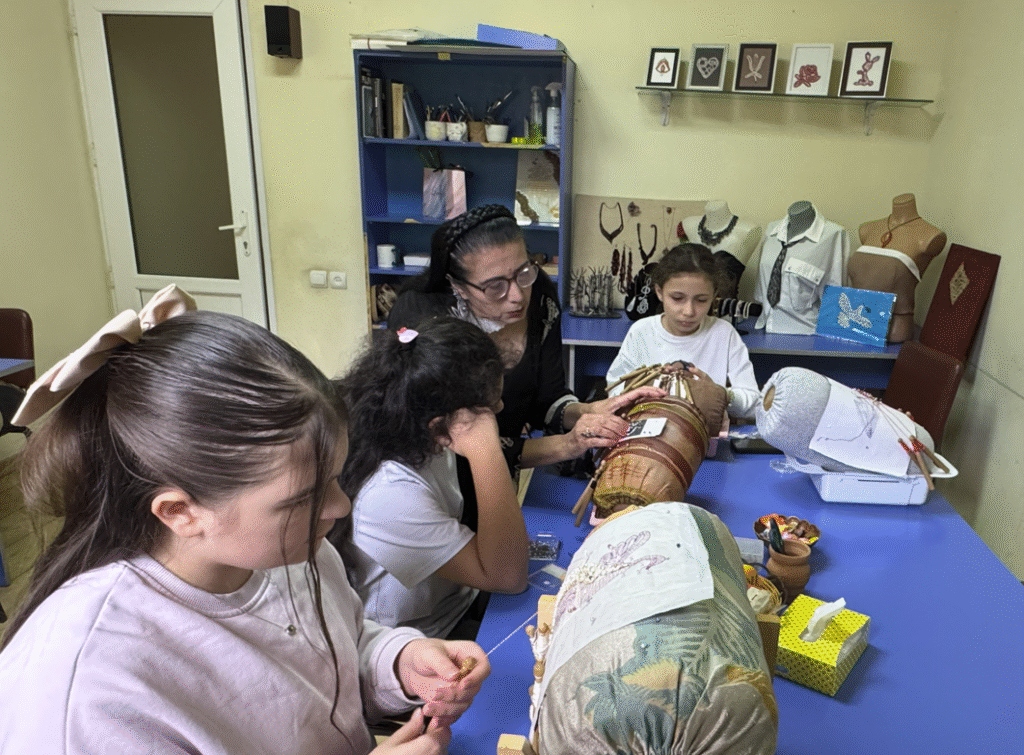
By Stela Asryan, a journalism student at Yerevan Bryusov State University
In a quiet classroom in Yerevan, the first thing you hear is not conversation but rhythm. Wooden bobbins click and cross in steady motion, threads intertwine, and slowly a delicate lace begins to take shape.
Gobelin lace-making is one of Armenia’s lesser-known handicrafts. Though rarely seen today, historical sources suggest similar techniques were once practiced in the Van region, where Armenian artisans produced intricate lacework. Museum collections indicate that some surviving pieces date back to the early 20th century.
Anahit Isunts has practised the craft for more than 30 years. She first encountered it during the Soviet period while working at the National Center of Aesthetics in Yerevan.
“They taught different types of Armenian embroidery there. Gobelin lace had just appeared. A master arrived from Moscow to teach us, and then we began experimenting ourselves,” she recalls.
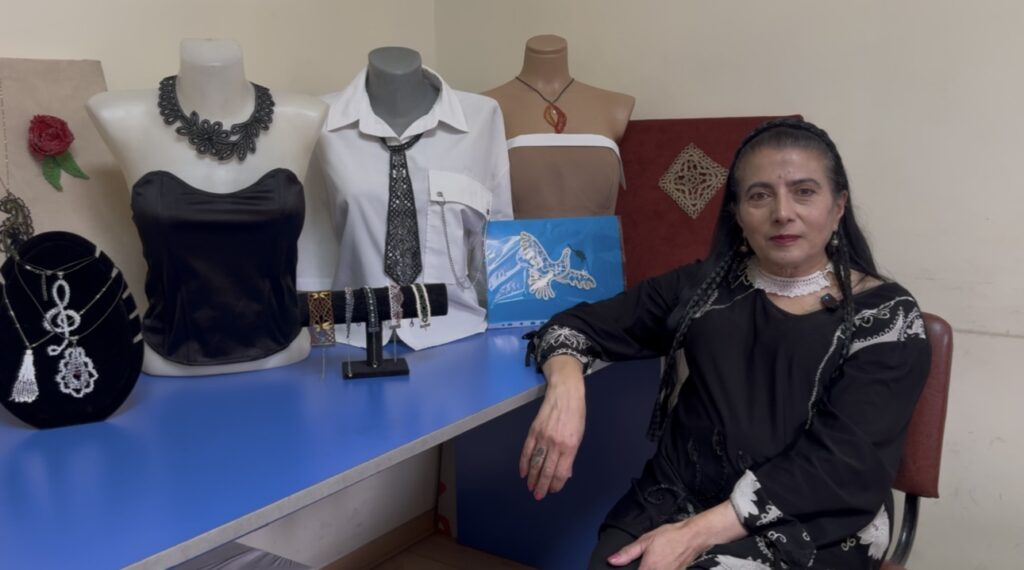
After the collapse of the Soviet Union, the center shut down. At the time, Isunts had not yet fully mastered the technique. She decided to continue on her own.
“There was no Internet then. I learned through patterns, trial and error. I made large pieces, even meter-long works, which were later sold at exhibitions,” she says.
Over the years, the craft became more than a profession. It turned into a mission. Today, Isunts is focused on passing her knowledge to a new generation.
She now teaches at the Henrik Igityan National Center of Aesthetics in Yerevan, where a small, free, gobelin lace group brings together nine students aged nine to 17. During lessons, the room once again fills with the rhythmic sound of wooden bobbins.
“The sound itself creates a melody. Children are drawn to it,” she says. “Depending on the type of wood and the structure of the bobbin, the sound changes. It also develops finger flexibility, attention, and even mathematical thinking. For children, we use smaller bobbins.”
Nine-year-old Amalia is among the youngest students. Her mother suggested that she join the classes to improve hand flexibility. She also plays the santur, a traditional Armenian instrument, and says lace-making helps her in music.
“It makes my fingers more flexible,” she says.
Eleven-year-old Arpi says she was drawn to the beauty of the finished works. At the same time, she notes that many of her peers have never heard of gobelin lace.
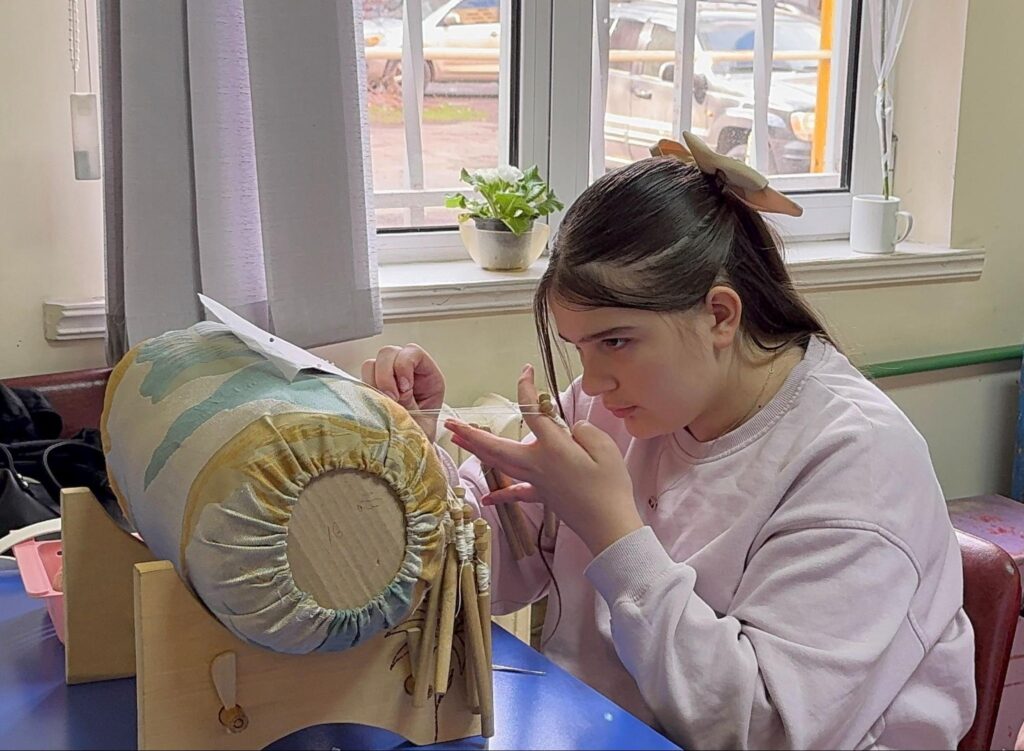
“It makes me sad, because this is a very beautiful art. If people saw it, many would want to learn,” she says.
Another student, Eliza, returned to Armenia from Moscow three years ago. Her father found out about the class and encouraged her to try it. She quickly grew interested and has steadily improved.
For Isunts, the survival of the craft has not been easy. For years, there were few masters to learn from.
“My teacher moved to the United States and never returned. So I continued working and developing what I had learned,” she says.
In recent years, interest has begun to grow. Social media posts featuring gobelin lace have attracted attention, prompting other artisans to explore the technique. Still, it remains a rare practice.
One reason, Isunts says, is that many people seek quick results, while gobelin lace requires time and patience.
“This art shows how delicate, flexible, and sensitive Armenian women are,” she says. “To master it, you need patience, flexibility, and a sense of beauty. Our women have always had that.”
She believes the tradition has survived thanks largely to women passing it down through generations.
“Our women passed this art on to their children. We must do the same for the next generation, not only with gobelin lace, but with all our traditional crafts, so that we do not lose our identity,” she says.
Read the article in Armenian: Գոբենակագործություն․ հայկական քիչ հայտնի արվեստը, որը դեռ ուսուցանվում է





 Stories