By Paul Vartan Sookiasian
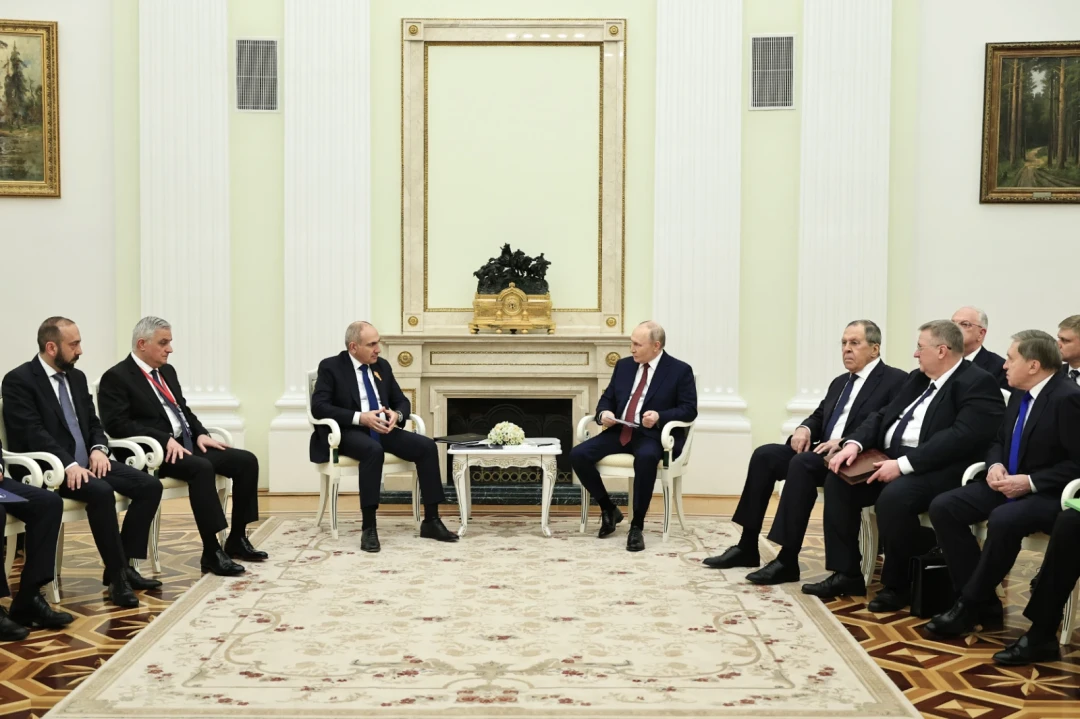
Russian President Vladimir Putin delivered a series of pointed messages to Armenian Prime Minister Nikol Pashinyan during a bilateral meeting in Moscow on Wednesday regarding Armenia’s internal politics, foreign policy direction and economic ties. The meeting came as the Armenian leadership has been gradually reassessing its close alignment with Russia over the past decades.
June’s election in Armenia
At the center of the talks were Armenia’s upcoming parliamentary elections, scheduled for June 7. Putin signaled clear concern over the situation of opposition forces that are seen as sympathetic to Moscow, saying Russia would like “all political parties and politicians” to be able to take part in the vote.
“We have a lot of friends in Armenia,” Putin said, emphasizing the depth of ties between the two countries and noting that more than two million Armenians live in Russia. He added that many political forces in Armenia maintain pro-Russian positions and should not be excluded from the political process.
His remarks appeared to reference the legal challenges of businessman Samvel Karapetian, who holds Russian citizenship and has emerged as a leading opposition figure while currently being under house arrest on allegations of publicly calling for the seizure of power. Armenian law bars dual citizens from serving in parliament or as prime minister, a point Pashinyan reiterated during the meeting, framing it as a constitutional requirement rather than a political decision.
Still, the issue has fueled opposition fears that certain forces could be sidelined ahead of the elections. Those concerns have been amplified by statements from members of Pashinyan’s Civil Contract party suggesting they would not allow opposition forces to gain a parliamentary majority.
Armenia-EU relations
The Armenian government’s request earlier this year for a European Union “hybrid rapid response team” to monitor electoral integrity has further raised suspicions in Moscow. Russian officials have warned of a possible “Moldovan scenario,” in which pro-Russian parties were barred from elections. Yerevan, however, insists the EU mission is intended solely to ensure a fair vote.
Beyond elections, the meeting delved into Armenia’s growing engagement with the EU. Putin reiterated Moscow’s long-standing warning that EU membership is incompatible with participation in the Russian-led Eurasian Economic Union (EEU), a bloc that provides Armenia with significant trade benefits.
He stressed the current economic realities underpinning the relationship, pointing to strong bilateral trade and heavily discounted Russian gas supplies. Russia currently sells gas to Armenia at roughly $177 per thousand cubic meters, far below European market rates, which Putin noted have surged above $600.
Pashinyan acknowledged the dilemma, stating that Armenia will continue balancing its relationships “as long as there is an opportunity,” but conceded that a choice may eventually be unavoidable, and would ultimately be decided by Armenian citizens.
Nagorno-Karabakh issue
Pashinyan used the meeting to defend his government’s shifting stance on Nagorno-Karabakh. He argued that Armenia’s recognition of Azerbaijan’s territorial integrity reflects “new realities” and is essential for achieving lasting peace in the region. Notably, Pashinyan said this recognition came after similar public statements by Russia’s leadership, suggesting shared responsibility for the outcome.
At the same time, he reiterated criticism of the Russian-led Collective Security Treaty Organization (CSTO) defense bloc, stating that its mechanisms failed during Azerbaijan’s 2022 invasion of Armenian territory. Armenia has since frozen its participation in CSTO activities, which has further strained ties with Moscow.
Railway infrastructure in Armenian
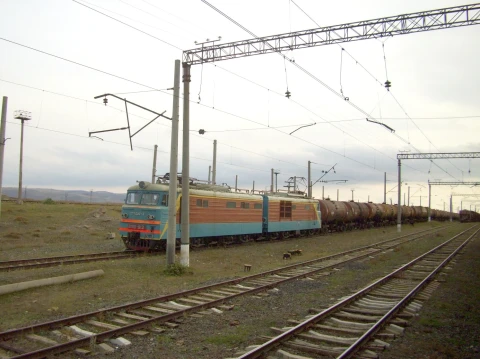
The issue of infrastructure, particularly Armenia’s railway network which is currently managed by a subsidiary of Russian Railways under a 2008 concession. On Wednesday, Russian Foreign Ministry spokesperson Maria Zakharova dismissed reports that Moscow is negotiating to transfer control of Armenia’s railways to a third country such as Kazakhstan. She emphasized that the current concession agreement remains in force and that Russian investments in the network exceed 30 billion rubles (about 375 million dollars).
Pashinyan has previously floated the idea of transferring management to a neutral partner, arguing that Russian control is deterring certain partners from including Armenia in regional transport projects.
That proposal was firmly rejected on Thursday by Russian Deputy Prime Minister Alexey Overchuk, who said there are no “objective reasons” to sell the concession to another country. His comments reinforced Moscow’s position that it intends to retain its role in Armenia’s strategic infrastructure.
Overchuk also warned that Armenia is approaching a point where Russia may need to “rebuild” its economic relationship with the country, citing concerns over Yerevan’s deepening ties with the EU and its approach to foreign investment and infrastructure management.
Russian officials, however, continue to emphasize that decision-making within the Eurasian Economic Union is based on consensus and that no move contrary to Armenia’s interests would be imposed, though hint at potential consequences if Armenia continues its shift away from Russian frameworks.

 Stories