By Siranush Adamyan
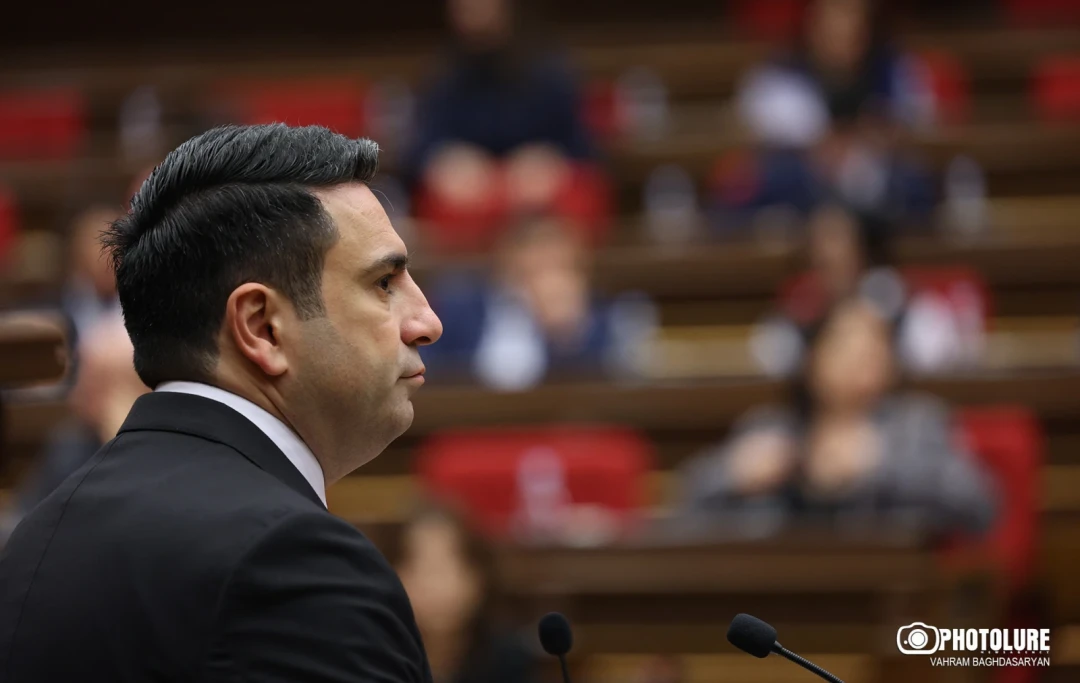
Armenia could withdraw from the Russian-led Collective Security Treaty Organization (CSTO) and other integration frameworks if Moscow imposes economic pressure, parliament speaker Alen Simonyan said on Saturday, underscoring rising tensions following talks between the two countries’ leaders and ahead of parliamentary elections scheduled for June 7.
Speaking to reporters in Yerevan on the sidelines of the ruling Civil Contract party congress, Simonyan said Armenia would respond decisively to any punitive steps from Russia.
“If such a decision is made, the Republic of Armenia will make its own decision and will ultimately leave both the CSTO and the Eurasian Economic Union, and other structures,” he said.
His remarks came in response to questions about the April 1 meeting in Moscow between Prime Minister Nikol Pashinyan and Russian President Vladimir Putin, where the Russian side delivered unusually blunt messages on economic and geopolitical issues.
Also read: Putin warns on Armenian elections, EU shift
Simonyan said such discussions were not new, noting that similar signals on trade and gas prices had been raised over the years. Still, he acknowledged that the tone of the meeting was more direct than usual.
During the Moscow talks, Putin publicly highlighted the gap between the price Armenia pays for Russian gas—$177.5 per 1,000 cubic meters—and the roughly $600 paid by European countries, in what appeared to be a warning that prices could rise.
He also hinted at the possibility of restricting Armenian access to the Russian market and stressed that Armenia would eventually need to choose between closer integration with the European Union or remaining within the Eurasian Economic Union (EAEU), while formally recognizing Yerevan’s sovereign right to decide.
Simonyan downplayed the likelihood of immediate escalation, saying he believed the situation would not reach that point and describing the leaders’ conversation as “working” and “effective.”
“At the same time, yes, such conversations are not something we usually see in the open part of meetings between any two countries,” he said, adding that Pashinyan had also presented Armenia’s position.
Simonyan framed the exchange as part of an ongoing negotiation process, with both sides articulating their interests.
He also pointed to Putin’s remarks about pro-Russian political forces in Armenia, suggesting they clarified Moscow’s preferences in Armenia’s domestic political landscape.
“There is only one approval in Armenia, and that is the approval of the Armenian people,” Simonyan said, rejecting the notion of external influence over domestic politics.
Despite the sharp rhetoric, he reiterated that Armenia does not seek confrontation with Russia.
“We have said, and I repeat: we have not done and will not do anything against the Russian Federation,” he said. “At the same time, we have defended and will defend the interests of the Republic of Armenia.”

 Stories