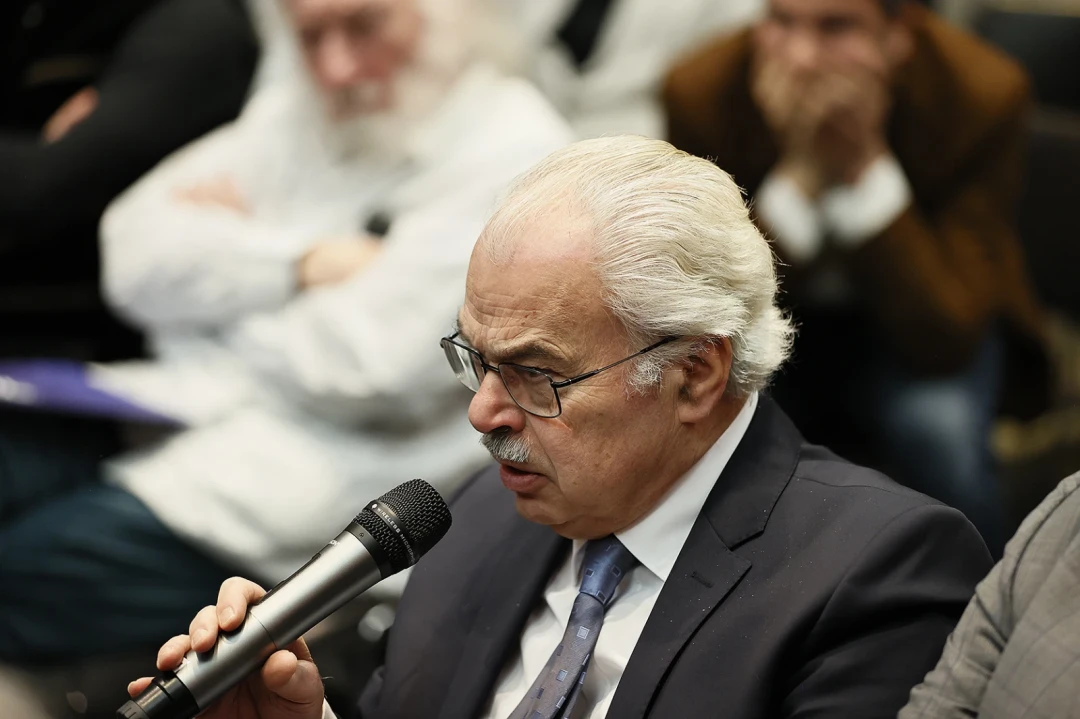
World Energy Weekly (April 7 issue), published by the French energy think tank PETROSTRATEGIES, features an interview with its founder, Pierre Terzian, marking the organization’s 40th anniversary.
- You founded PETROSTRATEGIES in 1986. Where did the idea come from?
I came into oil more or less by accident. In 1972, during my final year studying economics in Beirut, I wrote a thesis on the first round of price negotiations between OPEC and the major oil companies, which had begun in 1971. It was a highly topical subject. I then sent the paper to the French-language daily L’Orient-Le Jour. A few days later, to my surprise, it made the front page of the weekly supplement. That led to a call from Nicolas Sarkis, head of the Arab Petroleum Studies Center, who invited me to join his team. That is how I began my career as a specialist journalist.
In April 1975, I co-founded, with Lucien George—then Le Monde’s correspondent in Beirut—and the Financial Times, a newsletter called Petro Money Report. But the civil war, which broke out almost simultaneously, quickly made it impossible to continue working from Beirut. After traveling extensively across the Gulf, I decided in August 1976 to relocate to Paris. There, I rejoined Nicolas Sarkis on a part-time basis, which allowed me to complete a PhD at Paris I on “price structures in oil E&P contracts.” From then on, I pursued two parallel tracks: specialist journalism and upstream oil consulting.
- What was the oil market environment like in the mid-1980s?
Back then, understanding the oil market was relatively straightforward: the key parameters were stable. Everything changed at the end of 1985 with the outbreak of a “price war” within OPEC. The traditional reference points disappeared. I felt there was a need for analytical oil journalism in French—something that, at the time, was only available in English. That was the starting point for PETROSTRATEGIES.
- Forty years on, how do you assess the current conflict in the Middle East?
- The strategic importance of the Strait of Hormuz makes it an ideal setting for asymmetric warfare. With limited means, it is possible to severely disrupt maritime traffic. The impact is disproportionate to the resources deployed. This goes far beyond energy: shortages and price spikes could destabilize entire countries.
I am struck by the relative restraint of international reactions, given the scale of the risk created by a situation that could—and should—have been handled through diplomacy rather than military action.
- Given this historic shock, has the oil market’s reaction been muted?
- Yes. The rise in crude prices remains limited, with Brent only slightly above $100/b. By comparison, after the 1979 Iranian revolution, prices reached roughly $160/b (in today’s terms), and the 2008 speculative bubble pushed prices above $200/b.
What we are seeing suggests either complacency or political paralysis. One explanation may be that tankers that left the Gulf at the start of the conflict are still delivering oil, meaning the real supply shock may only now begin to materialize.
- Could this crisis have a lasting impact on global energy markets?
- In the short term, consumers may accelerate the shift toward electric vehicles, while companies may increase storage capacity closer to consumption centers.
In the longer term, the fragility of oil and LNG supply chains exposed by this crisis could revive fossil fuel exit strategies—particularly in the EU. Paradoxically, one could argue that Donald Trump may contribute to renewed momentum in the fight against climate change.
- Could the current oil crisis have been avoided?
- In theory, much of the oil transiting Hormuz could have been rerouted through pipelines built since the mid-20th century. However, the legacy of the 2003 Iraq war still limits these alternatives.
The destruction of key infrastructure, halted flows through Turkey, and geopolitical tensions mean the world is still paying the price of that war—both economically and politically. The current conflict risks compounding those imbalances.
- By targeting Iran, is the US pursuing broader objectives?
- The unspoken dimension of the conflict is the US–China rivalry. Control over Hormuz would give Washington leverage over China.
China’s restrained stance may reflect a wait-and-see approach. What Beijing fears most is instability, which threatens its export-driven economy. Meanwhile, the US has become more militaristic and more isolated from many allies.
- This crisis also highlights the fragility of Gulf states. What outlook do you see?
- The conflict raises questions about the viability of post-oil economic models pursued by Gulf monarchies. These strategies depend on stability and security—conditions currently lacking.
Without a durable peace, no viable alternative economic model can emerge. This raises a deeper question: is persistent instability itself part of the system, keeping these countries in structural dependence?

 Stories