By Gevorg Tosunyan
Pashinyan says Armenia must ‘escape the trap’ over Azerbaijan war crimes accountability
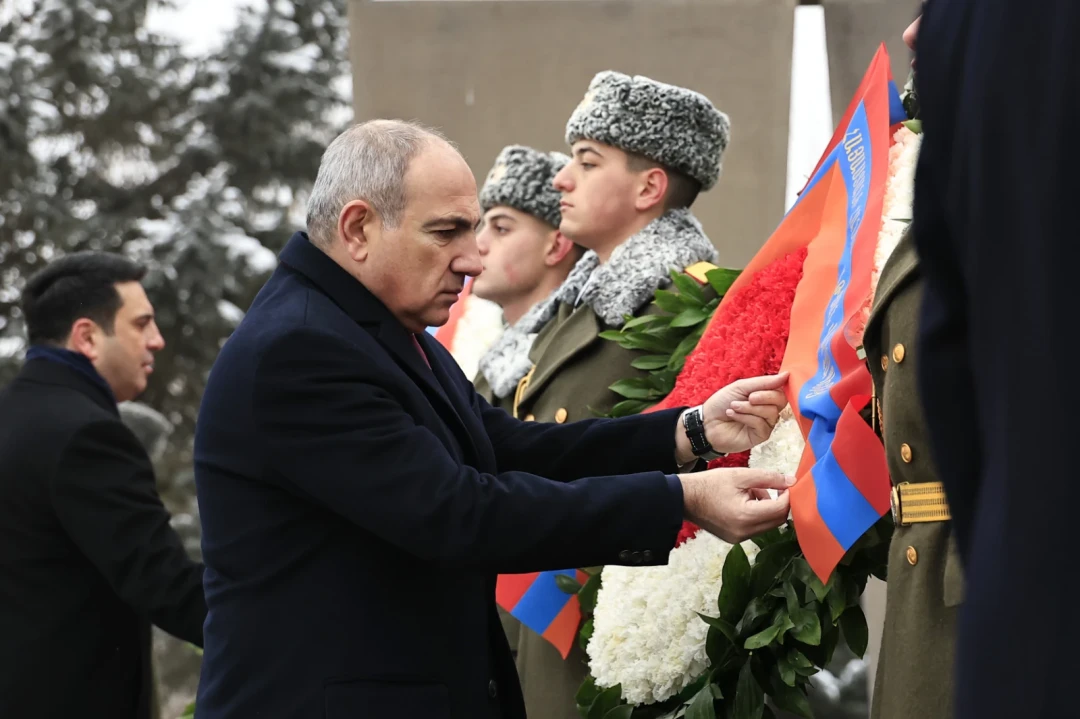
Armenian Prime Minister Nikol Pashinyan said the country must “escape the trap” when addressing calls to pursue accountability for alleged Azerbaijani war crimes committed on Armenia’s sovereign territory.
Speaking to reporters after Thursday’s cabinet meeting, Pashinyan said the issue of wartime abuses, including the possible punishment of Azerbaijani officials and military personnel, should be approached with “maximum honesty.”
Responding to a question from CivilNet, he said no one denies evidence of Armenian prisoners of war being executed, women being raped and tortured, and other documented abuses, but argued that resolving the issue requires a broader perspective.
“I do not agree that you and I should look each other in the eye now and deceive one another, and even more so deceive our people, because that is a double-edged sword,” Pashinyan said. “These narratives exist now, and no one denies the facts, but we must understand what we are talking about. That is the trap we have been unable to escape.”
The prime minister said Armenia was now moving beyond that trap.
“We each must deal with our own burdens, but we must free our state and our future generations from this burden,” he said, adding that “the more we accuse Azerbaijan, the more we are accused.”
Pashinyan made the remarks after being challenged on whether Armenian forces had committed abuses comparable to those attributed to Azerbaijani troops during the September 2022 fighting. He said the issue should be understood in the context of conflict as a whole.
“Going down that road means stepping onto a path where war and conflict become inevitable,” he said. “That is the road to reviving conflict.”
He added that Armenia must confront its own history honestly rather than viewing only one side of events.
“We cannot close half the page of a book and say we will read only the left or right side,” he said. “We must remove the sheet and read the whole page. Do we have that courage? I have that courage.”
Pashinyan said shaping this “new discourse” and a new understanding of reality would be the government’s strategic task over the next six weeks ahead of elections. He said the aim was to pull Armenia out of a decades-long cycle of conflict.
. . .
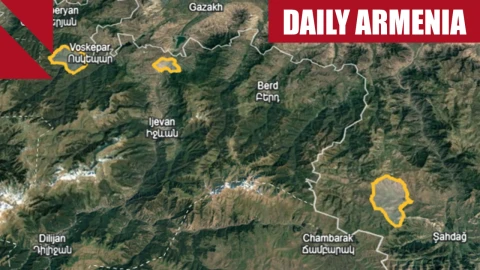
More than 200 people, including civilians, were killed after Azerbaijan launched a military assault on Armenia’s eastern and southeastern regions on Sept. 13, 2022. Armenian officials said Azerbaijani forces also occupied parts of Armenia’s sovereign territory.
Azerbaijani forces tortured and killed captured Armenian service members, including women who were subjected to sexual violence. Cases involving mutilation and abuse of bodies were also documented.
Armenia has filed dozens of cases at the European Court of Human Rights over alleged crimes committed by Azerbaijan during and after the 2020 Nagorno-Karabakh war. Armenia has also brought a case against Azerbaijan at the International Court of Justice over what it describes as the ethnic cleansing of Armenians from Nagorno-Karabakh.
However, a declaration signed in Washington in August 2025 by Armenia, Azerbaijan and the United States committed the sides to withdraw or cancel all interstate legal claims filed against one another in international forums. The document also said the parties would refrain from launching new proceedings or becoming involved in third-party claims.

 Stories