By Ani Paitjan
The International Committee of the Red Cross (ICRC) continues to visit Armenian detainees held in Azerbaijan despite the closure of its office in Baku last year, maintaining one of the few remaining humanitarian channels between Armenia and Azerbaijan.
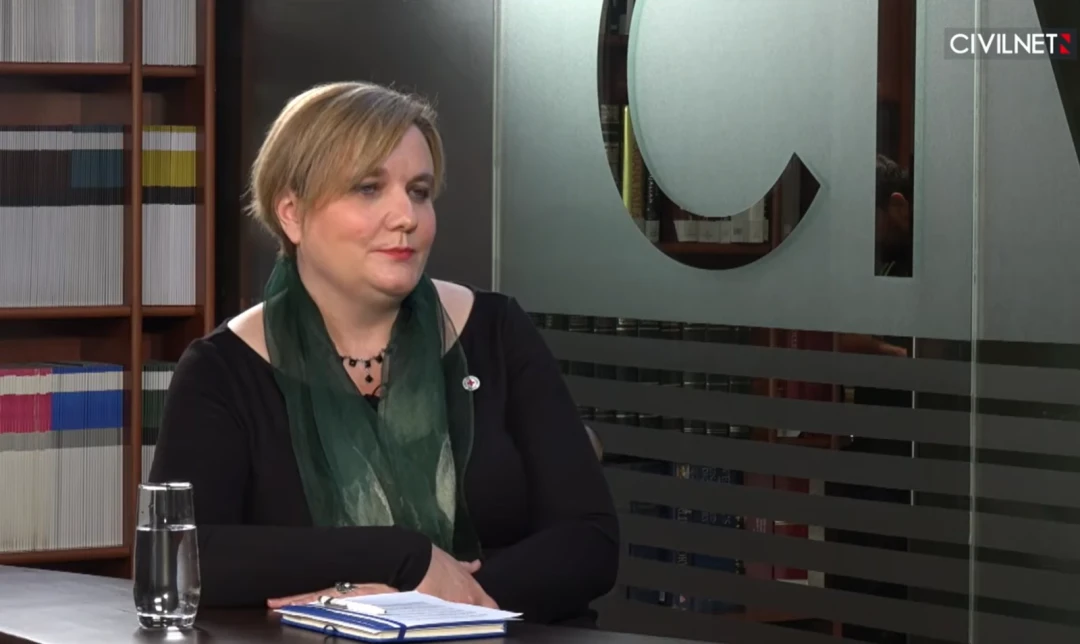
Speaking to CivilNet on Tuesday, ICRC Armenia delegation head Daphné Maret said the organization ended its physical presence in Azerbaijan in September 2025 following a decision by Azerbaijani authorities, but continues working with detainees, missing persons, and civilians affected by the Nagorno-Karabakh conflict.
“Maybe what is important to underline in this context is that this does not diminish in any way our commitment toward the people protected by international humanitarian law,” Maret said.
The ICRC had long played a central role in humanitarian issues between Armenia and Azerbaijan, including detainee visits, family communication, missing persons cases, and the repatriation of bodies after military escalations.
The closure of the Baku office raised concern in Armenia because the organization had been viewed as one of the few neutral intermediaries still operating between the two sides after Azerbaijan’s September 2023 military offensive in Nagorno-Karabakh. That operation resulted in the ethnic cleansing of more than 100,000 ethnic Armenians from the region and the detention of several former Nagorno-Karabakh leaders and civilians.
At least 19 Armenian detainees are currently held in Baku. They include eight former political and military leaders of Nagorno-Karabakh captured during Azerbaijan’s September 2023 offensive.
The trials of Armenian detainees in Baku have drawn strong criticism from Armenian officials, international lawyers, and human rights organizations, many of whom describe the proceedings as “sham trials” lacking due process guarantees.
In February, a Baku military court sentenced seven former Nagorno-Karabakh officials, with five receiving life imprisonment and two receiving 20-year prison terms on charges including terrorism, war crimes, and separatism. Former Nagorno-Karabakh President Arayik Harutyunyan, former Foreign Minister David Babayan, former parliament speaker Davit Ishkhanyan, former Defense Army deputy commander Davit Manukyan and former military commander Levon Mnatsakanyan received life sentences. Former presidents Arkady Ghukasyan and Bako Sahakyan were sentenced to 20 years in prison because Azerbaijani law bars life sentences for defendants over 65.
Former Nagorno-Karabakh state minister and philanthropist Ruben Vardanyan was tried separately and later sentenced to 20 years in prison.
Several Nagorno-Karabakh Armenian civilians captured during the same operation also received prison sentences ranging from 15 to 19 years.
Human rights groups and international organizations have repeatedly raised concerns about Azerbaijan’s judicial system and the treatment of detainees. The European Parliament adopted a resolution calling for the prisoners’ “unconditional and immediate release,” while organizations including Human Rights Watch, Amnesty International, and Freedom House have criticized what they describe as politically motivated prosecutions in Azerbaijan.
Also read: Ruben Vardanyan urges Armenia to arrange family visits for Baku captives
According to Maret, before the closure of the Baku office, ICRC staff visited conflict-related detainees approximately every two months, and sometimes more frequently.
Since September 2025, those visits have continued through teams dispatched from the organization’s Geneva headquarters.
“A team from our headquarters in Geneva visits these detainees and has recently visited them according to the same modalities as before,” she said.
She acknowledged that the absence of a permanent local office makes access more difficult. “It is obviously easier when you are physically present on the ground to visit rapidly and regularly,” Maret said. But she stressed that the closure “has not put an end to our visits as such.”
The ICRC says it remains in contact with Azerbaijani authorities to ensure continued access to detainees. “Our president was in Azerbaijan around 10 days ago and met with the authorities there,” Maret said, adding that while the content of those discussions remains confidential, “this collaboration continues and continues to function under different modalities.”
While declining to discuss the health conditions of individual prisoners publicly, she said the organization continues to monitor detainees and maintain communication with them and their families. “We continue to be able to access these people with health personnel if necessary,” she said. “We ensure follow-up as we did in the past, perhaps a bit less regularly.”
Under the Geneva Conventions, the ICRC has a special mandate to visit prisoners linked to armed conflicts, monitor detention conditions, and facilitate family communication. The organization typically operates confidentially and rarely publishes details of its findings publicly.

 Stories