By Olivia Mouradian
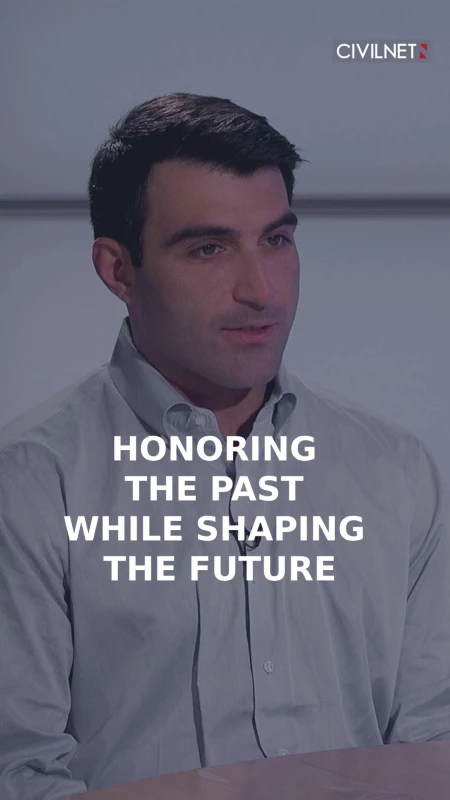
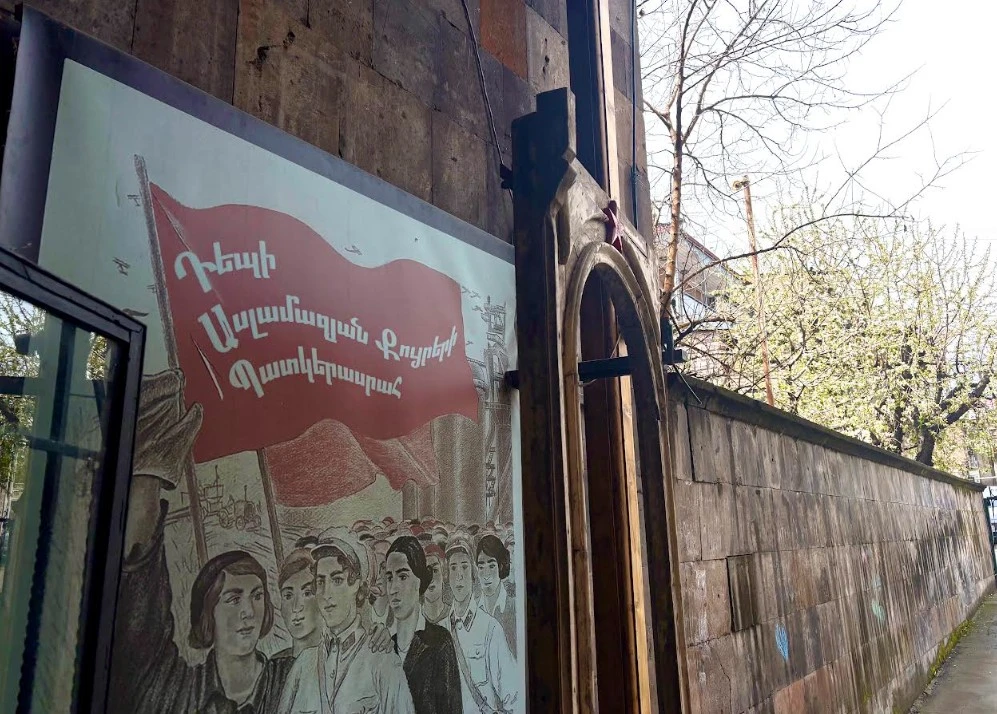
In the heart of Gyumri’s Abovyan Street stands the Gallery of Mariam and Eranuhi Aslamazyan Sisters. Long, vibrant banners lining the building’s exterior reflect the exuberance of the interior. Throughout the year, the museum attracts both local and international visitors who come to see an array of exhibits and events. While the sisters worked across mediums and themes, they are most well known for their paintings. Museum director Karen Barseghyan tells CivilNet that the Aslamazyan sisters’ unique legacy as female Soviet-era Armenian artists stands out.
“In Armenian fine arts, Mariam particularly left her mark,” says Barseghyan. Despite broad restrictions on travel outside the Soviet Union for Armenian citizens at the time, the sisters’ work in the arts and their cooperation with Soviet authorities allowed them to travel extensively throughout their lives. The influences of these opportunities can be seen in their art.
A walk through the museum shows that Mariam devoted much of her art to telling women’s stories. “She focused on the everyday lives of women who were working and learning,” Barseghyan says. Often using softer colors, Eranuhi drew more inspiration from the Armenian landscape. Barseghyan also notes that, similar to other Armenian painters of the time, Eranuhi was heavily influenced by Martiros Saryan.
While the museum opened in the 1980s, the building housing it dates back to the 19th century, when Gyumri was known as Alexandrapol. Barseghyan relays that the building, once belonging to the wealthy Keshishian family, became a public girls’ school for a short time at the beginning of the Soviet era. In the following years, there was a store on the first floor and communal apartments on the second floor. In 1985, Mariam asked the city to give the building to her and her sister in exchange for a donation of 500 to 600 canvases, graphic art, and ceramics. With the city’s approval, the gallery opened in 1987. Shortly after, part of the museum was destroyed in the 1988 earthquake, and the sisters’ pieces were moved to an archive. It was not until 2004, with the support of the Lincy Foundation, that the museum was reopened to the public.
Barseghyan states that this gallery is the only museum in the Transcaucasian region that is exclusively devoted to female artists. By hosting seminars and utilizing their temporary exhibit hall to support new generations of female artists, the museum continues to extend the sisters’ legacies. Barseghyan emphasizes that this outreach is not limited to painters. The museum recently hosted a book presentation by a Georgian poet and collaborated with a local NGO to hold a panel discussion about the limitations of gender norms. The museum’s philosophy is simple: “If a woman is connected with art, we always try to support them,” Barseghyan says.
Directing the museum for the last five years has not stopped Barseghyan from pursuing his artistic interests. This year, he began leading silk printing (aka screen printing) classes. In this practice, which originated in China in the 10th to 13th centuries, artists use a stencil on a mesh screen (in this case, silk) to transfer ink onto a surface (i.e., wood, paper). Some designs that participants have worked with include the door of the museum’s entrance and an image of Gyumri’s Iron Fountain. The class’s first project was transferring sixty prints onto vinyl cases that were sold in April at a concert in Vienna. Barseghyan says the classes have been well received and participants have come to the museum with varying levels of experience, from beginners to experts. He hopes to one day turn the small laboratory they are currently working in into a professional practice.
In thinking about what he’d like to see happen at the museum over the next couple of years, Barseghyan struggles with where to start and where to finish. He says he has plenty of ideas on paper, some of which have been met with roadblocks. In the past, the museum has received funding for projects that were unable to be executed due to a lack of approval from the municipality. One of these projects is to transfer the second floor of the building into two art studios, one for digital technology and one for an artist residency, as well as a contemporary art exhibit hall. He still hopes for that project to be implemented in the future. In the courtyard, he would like to build a temporary cafe to be used for special events and monthly concerts.
The gallery and its staff work to reflect the Aslamazyan sisters’ legacies through new mediums and initiatives. A recent project for the museum was creating three-dimensional replicas of six of the sisters’ paintings and transcripting their descriptions into braille to increase the museum’s accessibility to people with visual impairments. Through their work, the museum's staff both preserves Soviet-era Armenian art and supports the next generation of Armenian artists. Bolstered by its place in Gyumri’s cultural and historical landscape, the museum is sure to continually evolve with Barseghyan’s creative vision for the future.


 Stories