 Alexander Pracht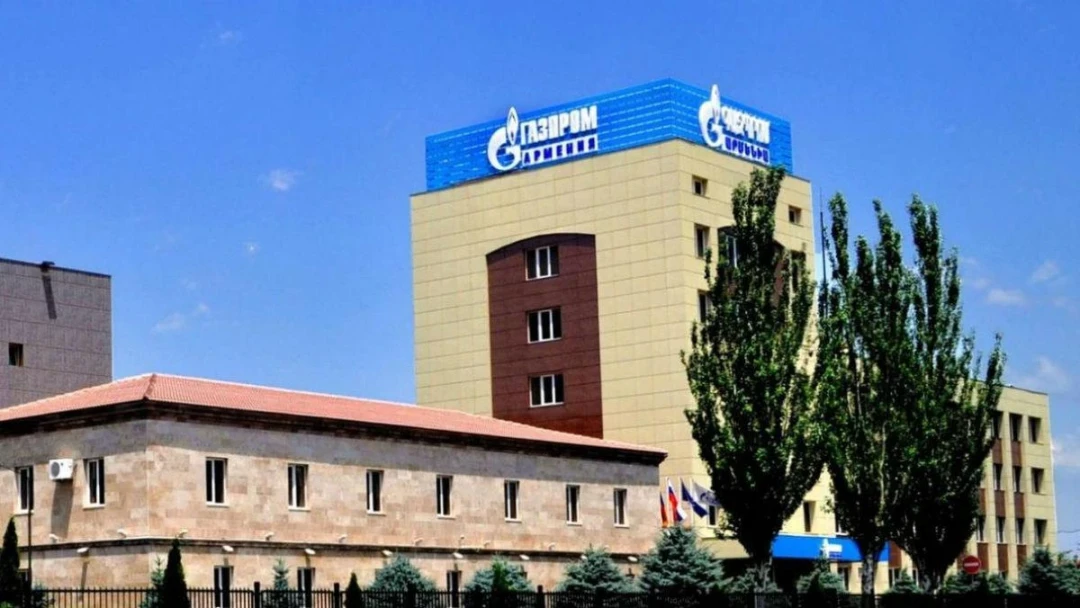
Russia has warned it would suspend key energy supplies to Armenia if Yerevan continues pursuing membership in the European Union.
“If Armenia continues its EU accession process, Russia will suspend or unilaterally denounce the agreement on gas, oil and diamonds supplies with that country,” Russia’s foreign ministry spokesperson Maria Zakharova told the state news agency RIA on Wednesday.
Russia has stepped up pressure on Armenia ahead of the parliamentary elections scheduled for June 7, with multiple senior officials warning in recent weeks that Yerevan’s pivot toward the West is unfriendly to Moscow and cautioning that pursuing European Union membership would have devastating economic consequences. The pressure has also taken tangible form, with Russia imposing bans on several Armenian imports, including flowers, mineral water, and alcoholic beverages such as brandy and wine. Most of Armenia’s exports are destined for the Russian market.
Moscow has previously used energy supplies as a political lever against post-Soviet countries, cutting or threatening to cut gas deliveries to countries such as Ukraine and Moldova in past disputes.
Armenia and the EU
Armenia adopted legislation last March declaring its intention to join the European Union, but the move was largely symbolic and non-binding, and Yerevan has not formally applied for membership. The accession process typically involves years of preparatory work after applying before a country is granted candidate status, followed by lengthy negotiations that can take years or decades, requiring sweeping reforms across financial, legal, environmental, and governance sectors, as well as in human rights and democratic institutions.
Armenian authorities have also said that membership would require approval through a nationwide referendum. Earlier this month, Russian President Vladimir Putin urged Armenia to hold such a vote as soon as possible, asking citizens to choose between the EU and the Russian-led Eurasian Economic Union – although no referendum was held when Armenia joined that organization in 2014.
How can Russia cancel supplies arbitrarily?
Russia’s gas supplies to Armenia are governed by an intergovernmental agreement reached in 2013, during the presidency of Serzh Sargsyan, when Armenia was preparing to join the Russian-led EEU.
Unlike a standard commercial contract, the agreement does not have a fixed expiration date. Instead, it stipulates that the two sides agree annually on the volumes and prices of gas, as well as oil products and diamonds supplied to Armenia.
The document also states that any disputes should be resolved through negotiations, without outlining strict enforcement mechanisms or penalties. In practice, this framework gives Russia significant flexibility, allowing it to suspend or terminate supplies unilaterally.
Why is gas important and how expensive is it?
Natural gas is a cornerstone of Armenia’s energy system, primarily used for heating homes, providing hot running water through gas boilers, and fueling kitchen stoves. More than half of Armenian households rely on gas for winter heating, with the share exceeding 70% in urban areas. The country also uses gas to generate electricity, meaning even households that use electric heating are indirectly reliant on it. Additionally, gas is a key element for Armenia’s greenhouse food production.
At a meeting with Prime Minister Nikol Pashinyan last month, Russian President Vladimir Putin said Armenia benefits from discounted gas priced at $177 per 1,000 cubic meters, compared to roughly $600 Russia’s energy giant Gazprom charges European countries for the same amount. He added that Yerevan could lose that discount should it continue to engage with the EU.
Russia’s energy giant Gazprom also controls Armenia’s gas sector through its subsidiary, which owns and operates the country’s distribution infrastructure. As a result, the $177 figure reflects the internal price at which gas is sold to its own monopoly subsidiary – known as “price at the border.” It does not include taxes, operating costs, salaries, infrastructure expenses, and Gazprom’s markup.
The final price paid by households is significantly higher, exceeding $390 per 1,000 cubic meters – more than double the figure cited by Putin.
Does Armenia have any alternatives?
Apart from Russia, Armenia imports roughly 15% of its natural gas from Iran through a swap arrangement, under which it supplies electricity in return. Yerevan explored diversifying its gas supplies in the 2000s by increasing the share of Iranian imports, but Gazprom strongly opposed the development. According to widely reported accounts, Moscow pressured the administration of then-president Robert Kocharyan to reduce the pipeline’s capacity by half, preventing it from becoming a major transit corridor or a serious competitor, in exchange for maintaining discounted gas prices.
With close political ties between Tehran and Moscow, it is unlikely that Iran would challenge Russia’s dominant position in Armenia’s gas market.
An alternative to pipeline gas is liquefied natural gas (LNG), which can be transported without fixed pipeline infrastructure. This is the route many European countries turned to after Russia’s full-scale invasion of Ukraine in 2022 and the disruption of pipeline supplies, including via the Nord Stream system, sourcing LNG from the United States and other suppliers – or going forward with Russia’s LNG supplies.
However, cost remains a major constraint. A shift to LNG could result in price increases of 100% to 200%.
Whether Russia will maintain this level of pressure after the election, or whether it is deploying such threats now to influence voters by raising fears of sharp increases in living costs, remains to be seen.



 Stories