 Paul Vartan Sookiasian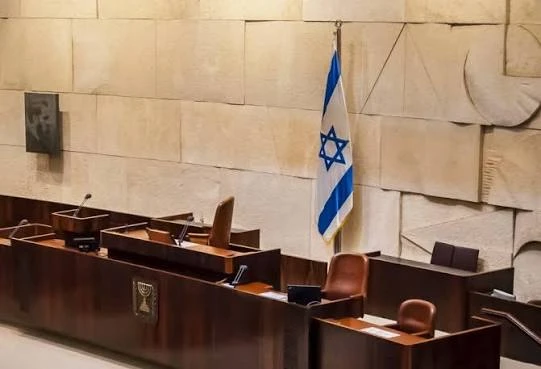
By Paul Vartan Sookiasian and Mohamad Rimawi
Israel’s top diplomat says he has initiated a process for the country to officially recognize the Armenian Genocide of 1915, calling it “a moral and historical duty.” Foreign Minister Gideon Sa’ar tweeted on Thursday that he would submit a draft resolution recognizing the mass killings “against the Armenian people in the final years of the Ottoman Empire” to the government for approval at its next meeting, which would likely occur on Sunday.
Sa’ar added that Israel “must firmly condemn any denial, minimization, or distortion of the historical truth,” and said that, following approval, the resolution would be submitted to a vote in Israel’s parliament, the Knesset.
Long demands for Israeli recognition
For decades, Israel’s official position on the genocide was tied to its strategic relations with Turkey and later Azerbaijan. However, a relatively small group of Israeli politicians, academics, and public intellectuals have long argued that Israel had a moral obligation to make recognition.
Notable Israeli advocates for acknowledgment include Israel Charny, founder of Jerusalem’s Institute on the Holocaust and Genocide, who long criticized Israel’s public policy as a form of genocide denial. He publicly rebuked Israeli Foreign Minister Shimon Peres in 2001 after Peres referred to the 1915 killings as "Armenian allegations," saying they did not constitute a genocide and should not be compared to the Holocaust.
In 2000, Yair Auron, another of Israel’s foremost Holocaust and genocide scholars, published the book The Banality of Denial, which examined the refusal of successive Israeli governments to recognize the genocide over its relations with Turkey, and argued that this policy contradicted Israel’s commitment to Holocaust remembrance and genocide prevention.
Attempts in the Knesset to recognize the Armenian Genocide date back at least two decades, with the left-wing Meretz party playing a leading role. Starting in 2008, then-leader Haim Oron succeeded in placing the issue on a committee agenda for the first time, though years of further hearings had no result.
In 2016, his successor as leader, Zehava Galon, expressed the views of the Armenian community of Israel in stating: "Year after year, we give false hope to those gathered here. It does not befit the Knesset to continue discussing this issue annually without adopting a decision recognizing the Armenian Genocide on behalf of the State of Israel and the Knesset."
That year, the Education Committee finally passed a non-binding acknowledgment of the genocide, though the measure was not taken up by the full Knesset.
Recognition as political leverage
Since the start of the Gaza war in 2023 and Turkey’s repeated accusations that Israel is committing genocide there, some Israeli officials have increasingly referenced the Armenian Genocide in public remarks to rebuke Turkey for its stance.
In January 2024, after Turkish President Recep Tayyip Erdoğan said Turkey was submitting legal evidence in support of South Africa’s genocide case against Israel at the International Court of Justice (ICJ) in The Hague, then-Israeli Foreign Minister Israel Katz responded, accusing Turkey of hypocrisy as “a country with the Armenian Genocide in its past,” adding: “We remember the Armenians, the Kurds. Your history speaks for itself.”
For some Armenians, this sudden rhetorical shift from Israeli officials feels deeply cynical. Setrag Balian, a Jerusalemite Armenian activist who co-founded the SaveTheArQ movement, which advocates for the preservation of the Armenian Quarter of Jerusalem, says that Israel is merely weaponizing the Armenian Genocide against Turkey for its accusations of Israeli genocide in Gaza.
“It’s disgusting to use genocide as a political tool like that for any country, be it Israel or anyone else,” said Balian. “Just imagine somebody treating Holocaust recognition in that way.”
Last year, Prime Minister Benjamin Netanyahu was asked by podcast host Patrick Bet-David why Israel does not recognize the Armenian, Assyrian, and Greek Genocide [of 1915–1923]. Netanyahu said he believed the Knesset had already recognized it, prompting the host to point out that no such recognition had been made by the prime minister. Netanyahu then replied, “I just did, here you go,” raising questions about whether the six-word podcast comment could be considered official recognition by the state of Israel.
Nathaniel Trubkin, an Armenia-based Israeli who runs the Yerevan Jewish Home cultural center, told CivilNet that recognition is “a chance for Israel to improve its relations with the Christian world after repeated attacks on Christians in Jerusalem by some ultra-Orthodox Jews and recent incidents involving Israeli Defense Force soldiers in Lebanon,” which included the destruction of a Jesus statue that sparked global outrage.
Sa’ar’s resolution, if adopted, would mark the first formal recognition of the Armenian Genocide by an Israeli government after decades of political hesitation.

 Stories