By Olivia Law
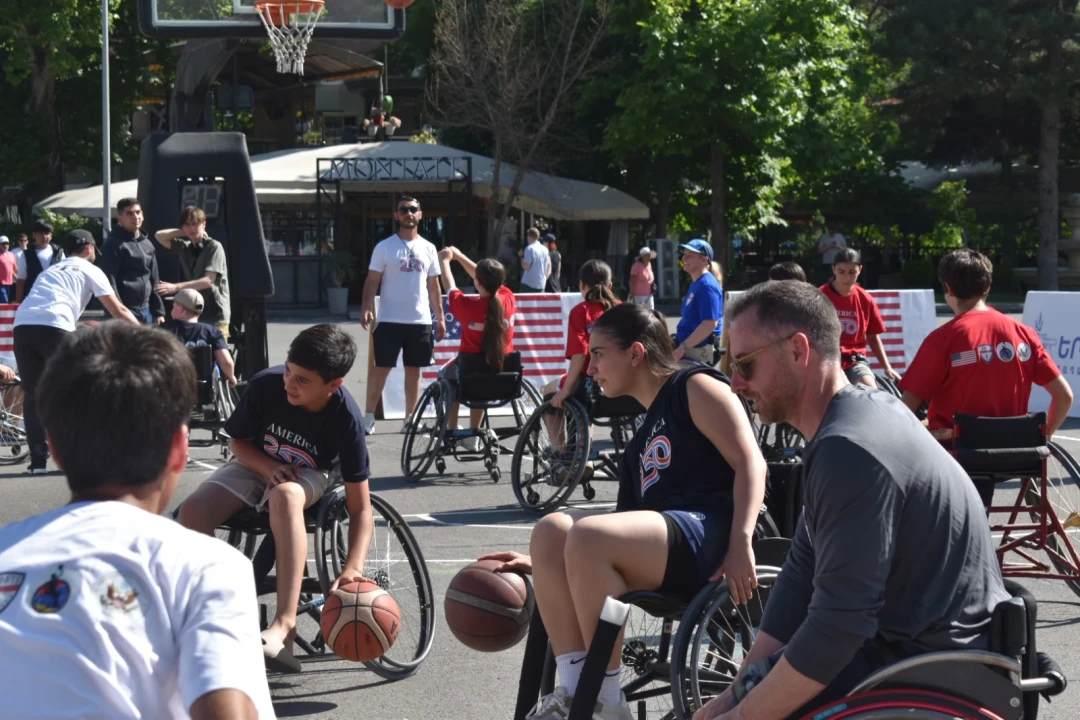
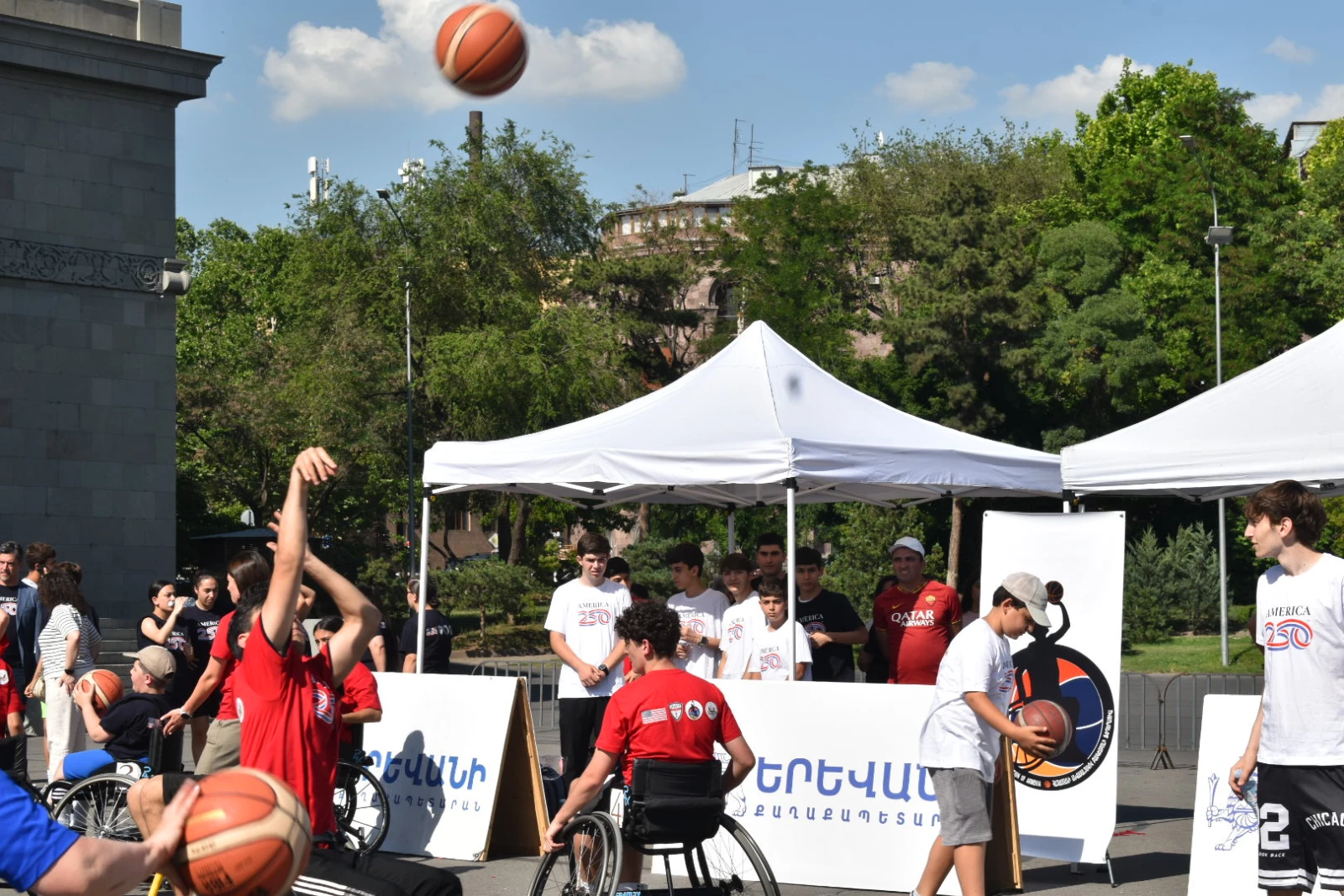
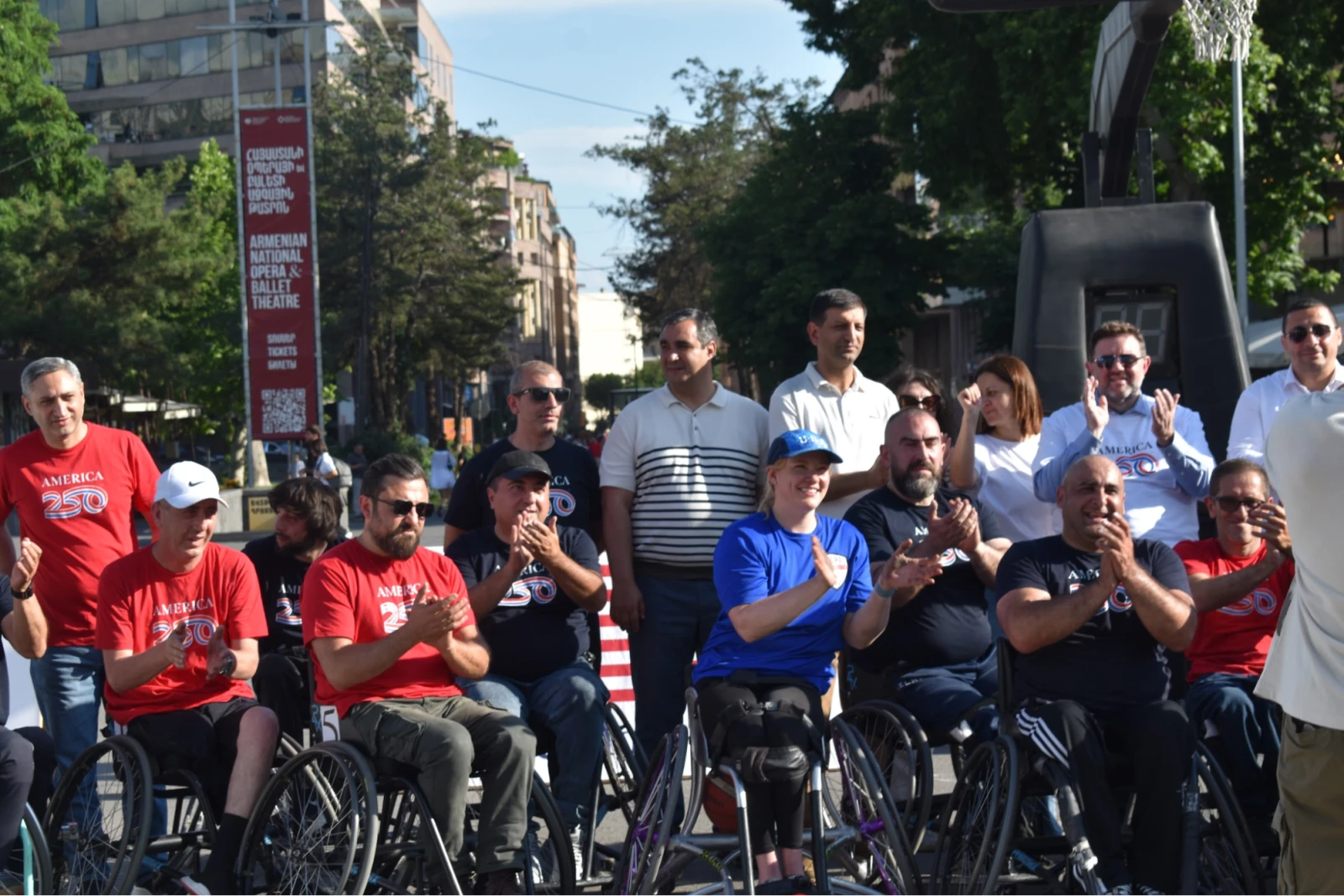
It was hot and sunny on a Wednesday afternoon when a crowd gathered in Freedom Square. Veterans, students, and two Paralympic gold medalists from the US sat down in the blazing sun to play a game of wheelchair basketball.
Leading up to July 4th, the US Embassy has hosted multiple “America 250” events to celebrate United States’ 250th anniversary of independence. As part of their programming, American Paralympians Rose Hollermann and Steve Serio were invited to Armenia to teach a masterclass in wheelchair basketball. Hollermann is a current member of the United States’ women’s national team and four-time Paralympian. Serio, now retired, is a three-time gold medalist.
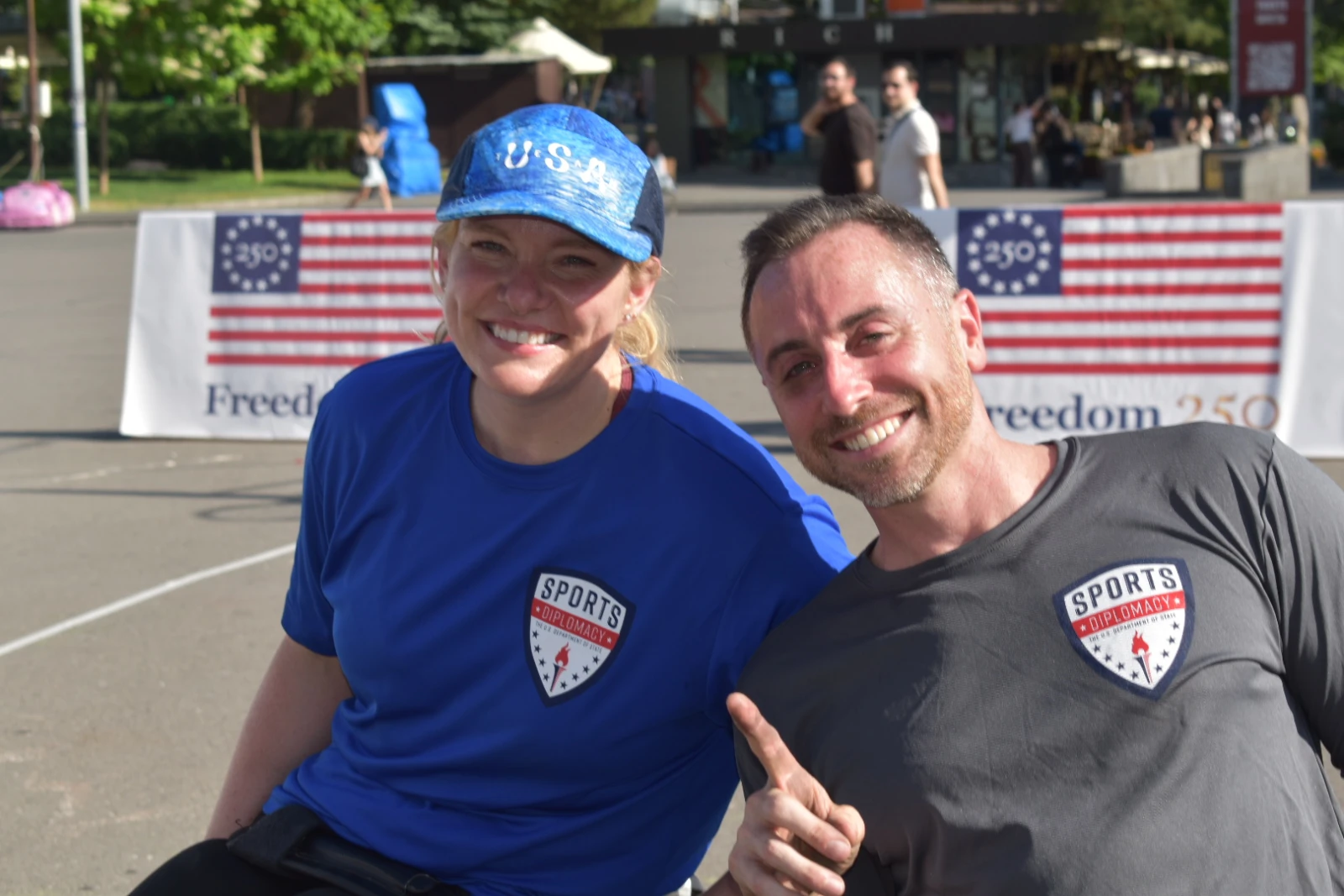
Their event, “Sports Envoy,” is a part of the US State Department’s larger sports diplomacy initative in which American athletes go overseas to coach local students and serve as cultural ambassadors. For Paralympians like Hollermann and Serio, sharing their sport also means spreading a message of inclusion.
“A lot of times when someone becomes disabled, they think that it's the end of the world for them, and I think it's just the next chapter,” Hollermann told CivilNet.
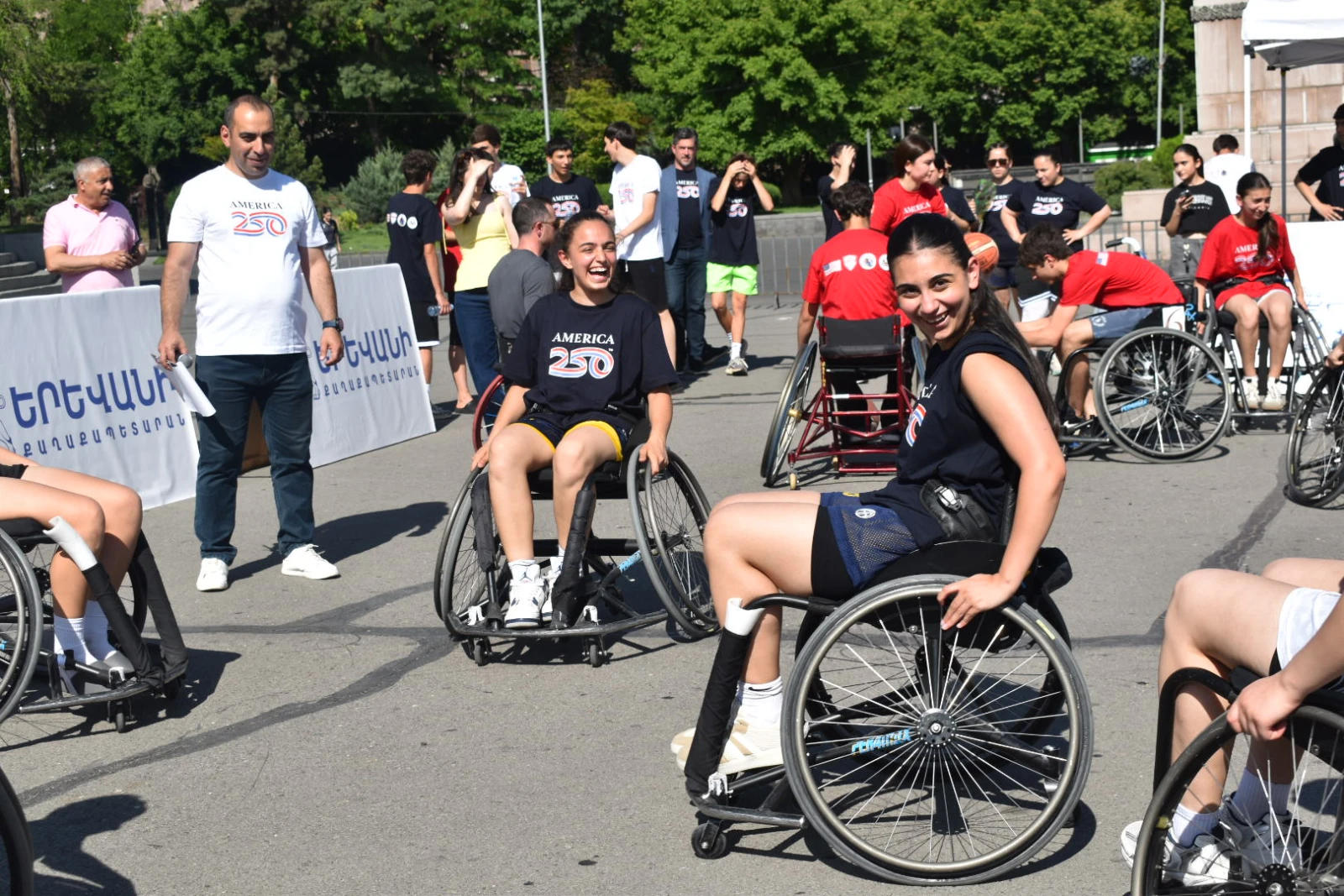
Invented by World War II veterans, wheelchair basketball takes the rules of traditional basketball and makes them accessible for athletes with lower limb disabilities. The paralympic sport uses a classification system, each athlete is assigned a number on a scale from 0.5 to 4.5 — those with less disability are given a higher number. Players’ numbers are then added up to a maximum of 14 points, encouraging teams to have a combination of different mobilities.
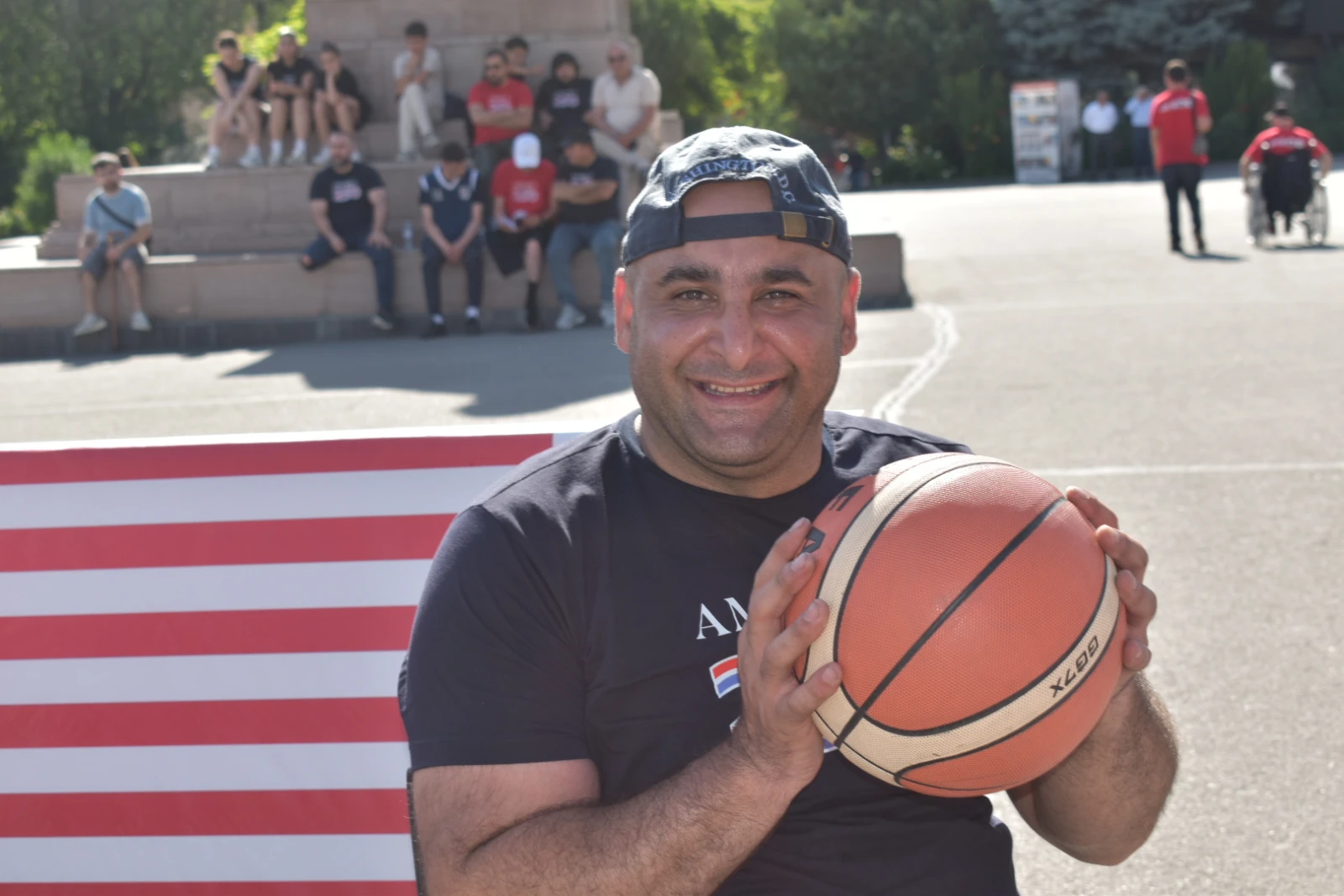
In the past few decades, the inclusive sport has grown into 111 national wheelchair basketball organizations across the globe.
Founded in 2017, Armenia’s Wheelchair Basketball Federation helped lead “Sports Envoy.” Armenian athletes joined Hollermann and Serio on the court to play a demonstration game and teach local students.
As a public event, the US Embassy provided open wheelchairs for passersby to sit down and join.
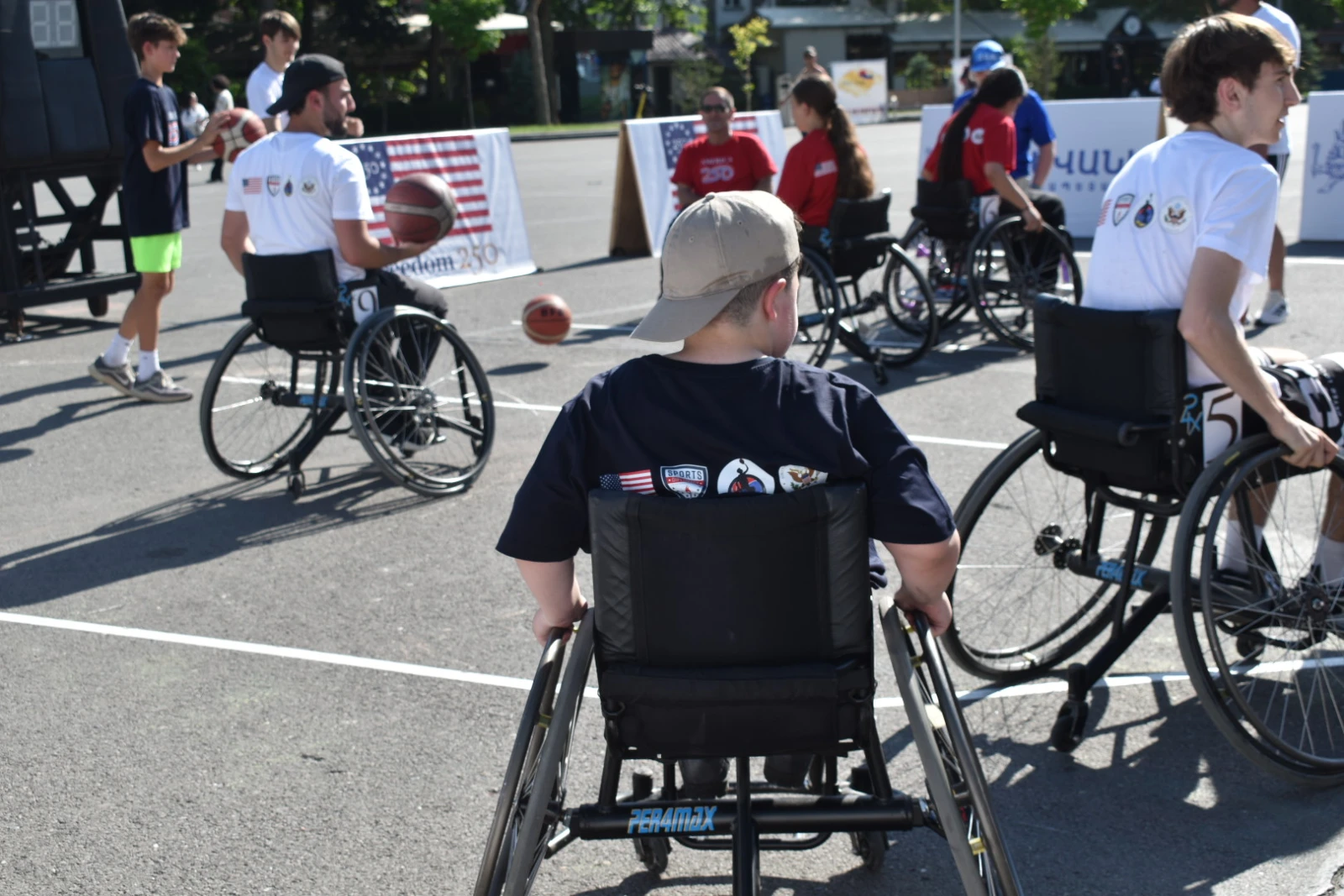
“These kids out here today, we're all athletes.” Serio told CivilNet “We got an opportunity to play a sport that we all love together. Even though we had to do things a little bit differently today, like play basketball in a wheelchair, I hope everybody walks away with a positive experience.”
Both Hollermann and Serio came to Armenia as volunteers.“You don't need to get paid to go do things like this,” Hollermann told CivilNet, “It's rewarding for me, I get a cultural experience and give back to the community.”
Serio and Hollermann spent three days in Armenia, hosting events in Yerevan and Gyumri before heading to Georgia.
Armenia has been an active participant in the Paralympics games since 1996. Armenia's first Paralympians were survivors of the 1988 earthquake, centered in Armenia's northern city of Spitak. Notably, Armenia's paralympians were rarely athletes prior to the onset of their disability, meaning their victories and placements in various sports including sailing, skiing, and power lifting, have been remarkable and the focus of international attention.


 Stories