By Narek Melconian
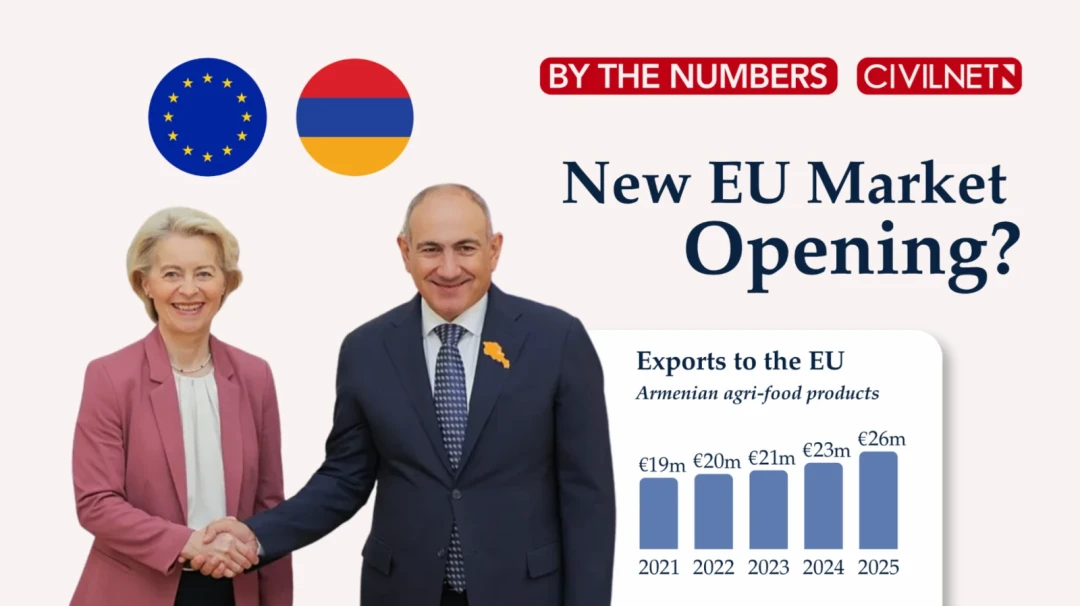
On July 2, European Commission President Ursula von der Leyen announced that proposed trade measures would make almost 80% of Armenian exports to the European Union (EU) tariff-free.
However, existing trade data suggest that benefits to Armenia may be uneven, as some firms (notably beverage exporters) already have an established EU market while other firms (including fruit and vegetable exporters) will need to secure substantially more European buyers.
“These measures will open the European doors for almost 99% of Armenia’s fresh fruit, vegetables, and plants that used to be exported to Russia. And it will open the door to more than 90% of your exports of beverages and spirits,” von der Leyen said on Thursday.
The proposed measures are intended to provide Armenian exporters with a rapid alternative to the Russian market, with Armenian Prime Minister Nikol Pashinyan urging swift implementation because Armenia’s harvest season has already begun. But the bigger challenge is replacing Russia’s 35% share of Armenia’s merchandise exports with an EU market currently accounts for only 8%.
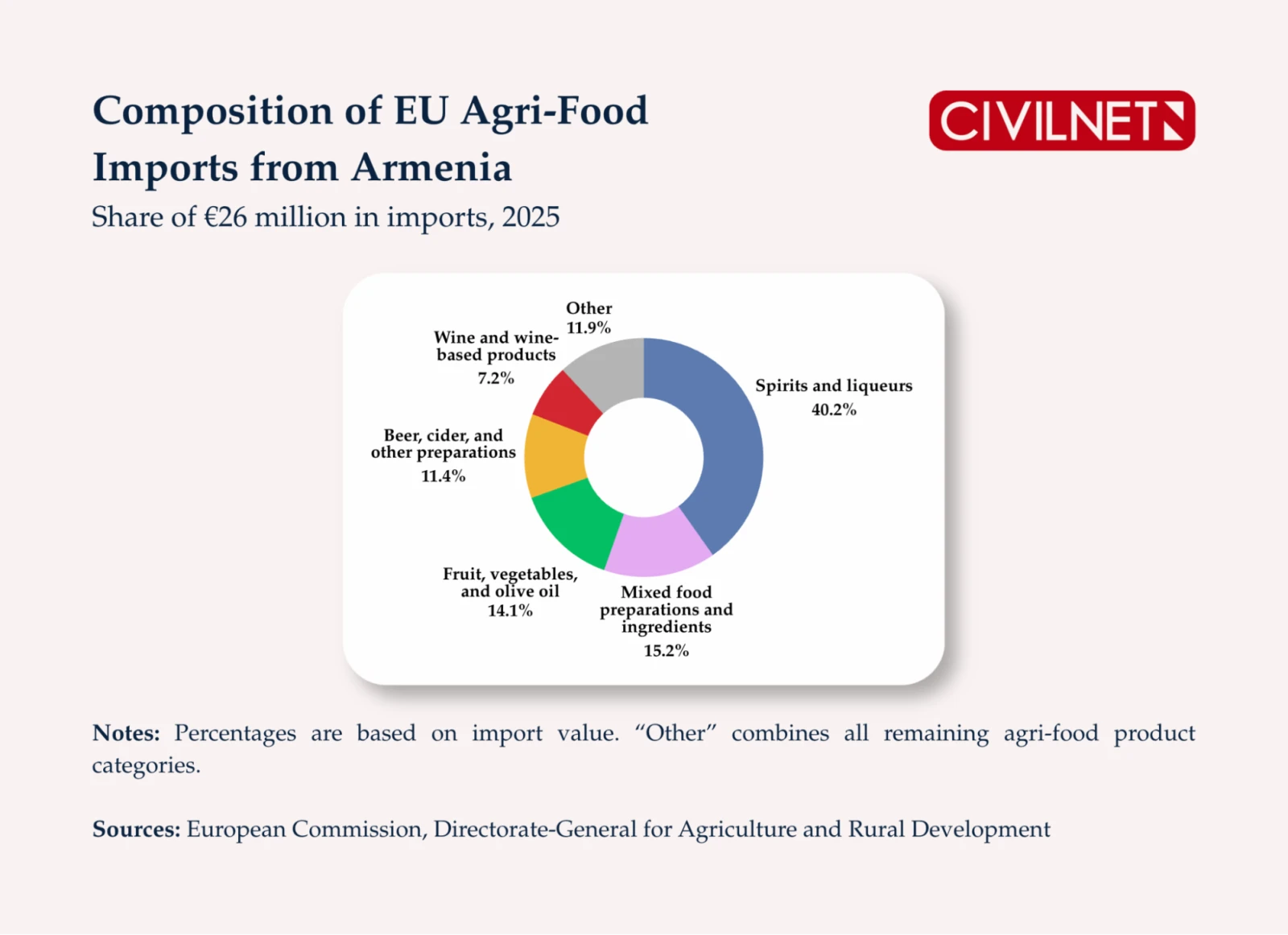
Together, beverages accounted for 58.8% of the EU’s €26 million in agri-food imports from Armenia in 2025. “Spirits and liqueurs” made up 40.2% of the total, followed by “beer, cider, and other preparations” at 11.4%, and “wine and wine-based products” at 7.2%.
By comparison, “fruit, vegetables, and olive oil” accounted for only 14.1%, making the beverage share more than four times as large. Beverage exporters are therefore better placed to benefit immediately from the new tariff relief. Fruit and vegetable exporters, however, will need more than lower tariffs and need to focus on securing substantially more European buyers and orders, especially during the current harvest season.
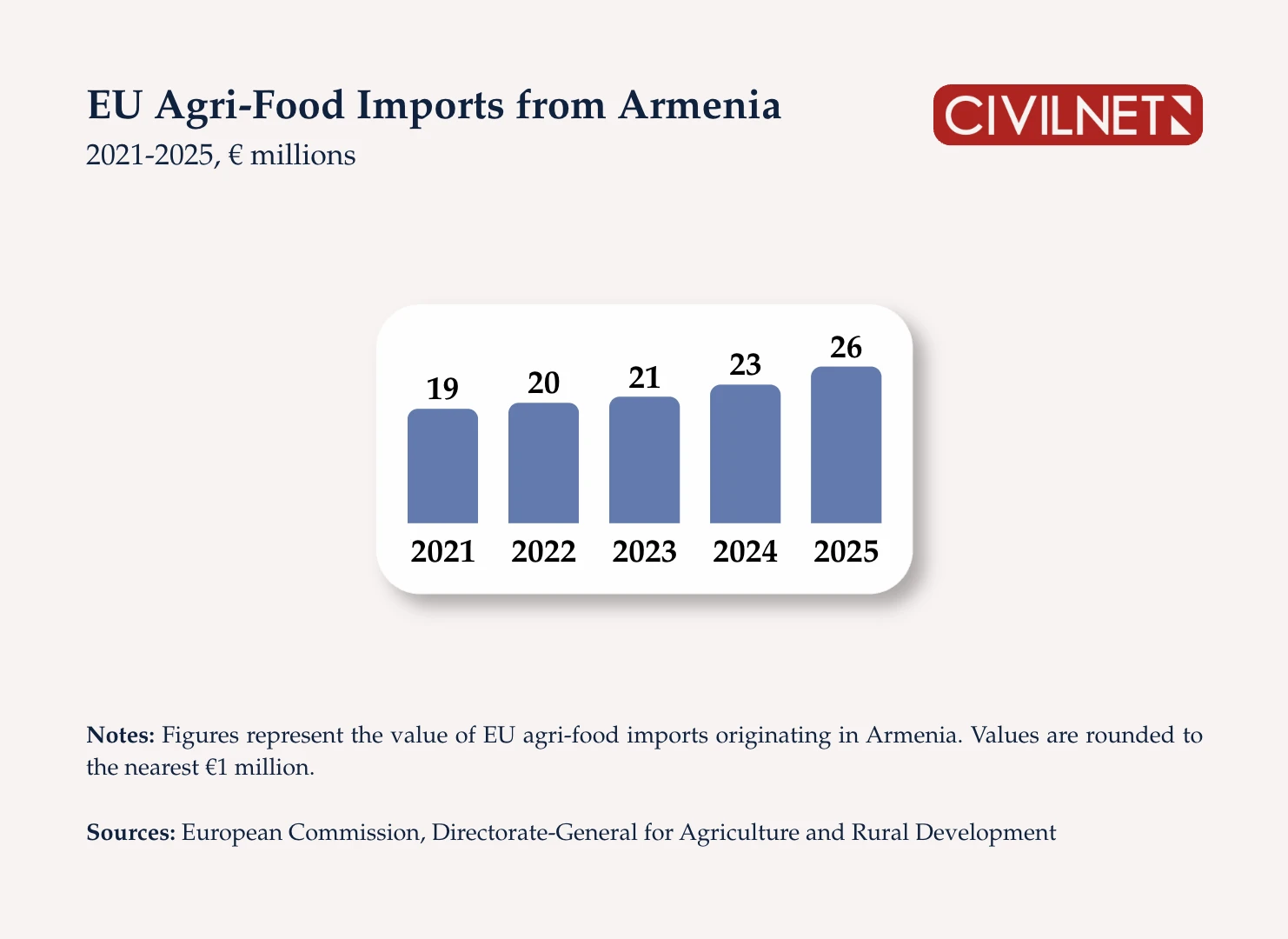
EU demand for Armenian agri-food products has been growing, with annual imports rising from €19 million in 2021 to €26 million in 2025, representing an average annual growth of about 8%.
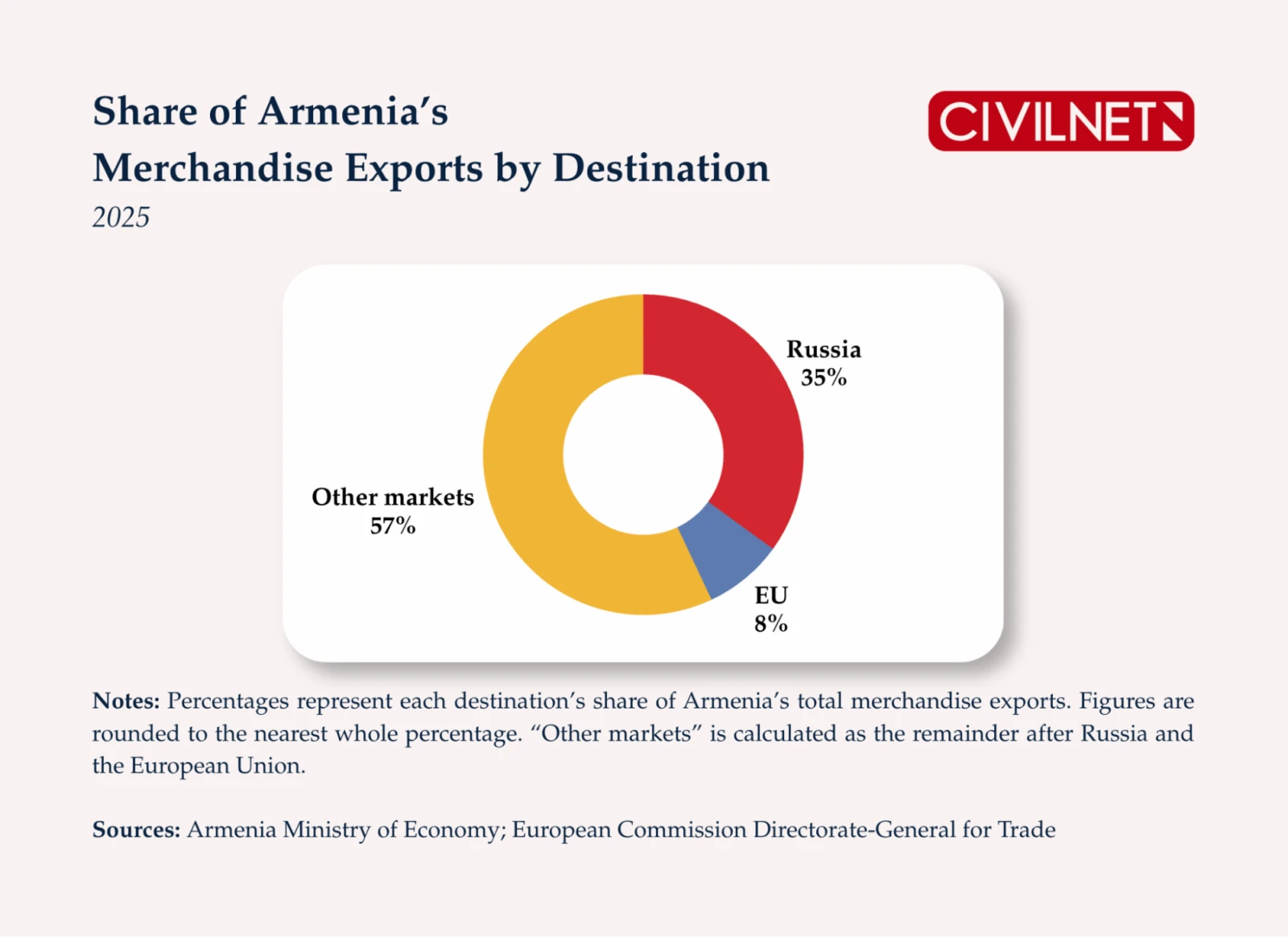
However, growth alone does not show whether the EU market is large enough to meaningfully reduce Armenia’s dependence on Russia. In 2025, Russia accounted for 35% of Armenia’s merchandise exports, more than four times the EU’s 8% share.
Therefore, the new measures would need to quadruple European demand to match Russia’s current share, and assuming an 8% annual growth, EU agri-food imports would take close to nine years to double.
The tariff relief is more likely to create a gradual alternative than an immediate replacement for Russia, especially when considering that the benefit will be uneven between beverage exporters and fruit and vegetable exporters since the latter begin from a much more fragile market.

 Stories