By Siranush Adamyan
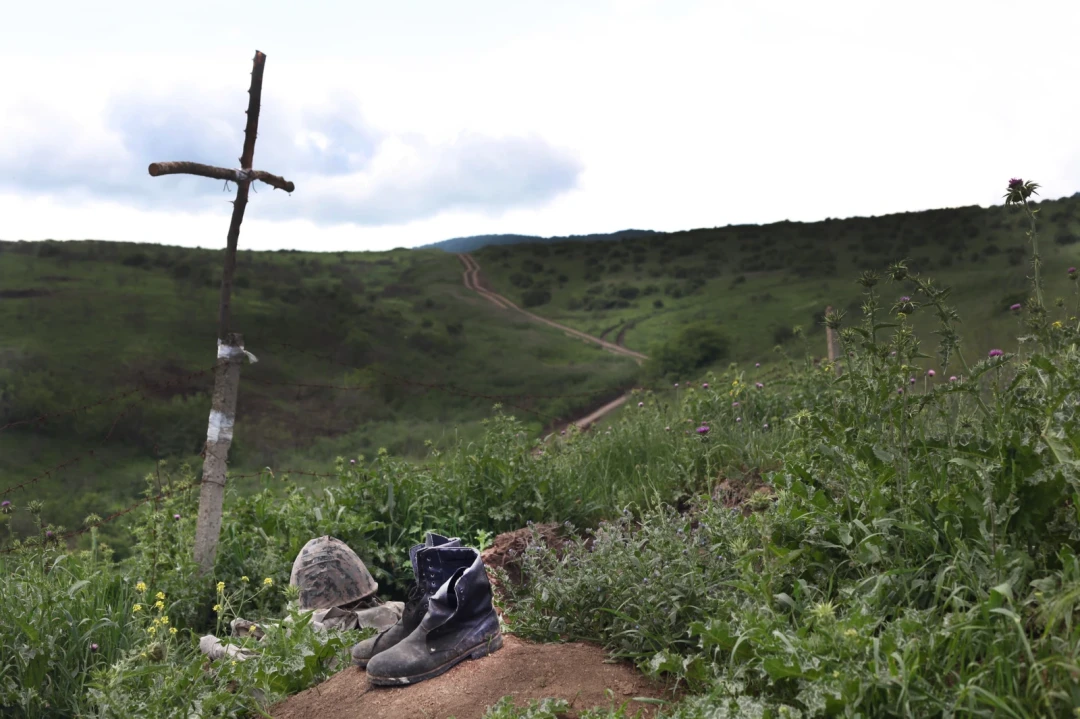
The death of 20-year-old Armenian conscript Narek Torosyan has triggered a wave of public anger in Armenia, reigniting long-standing concerns over violence, hazing, and accountability within the country's armed forces.
Torosyan was found dead on July 21 while serving in the military. Authorities initially released few details about the circumstances of his death, prompting criticism from human rights defenders and the public. Two days later, Armenia's Investigative Committee announced that two fellow servicemen—a junior sergeant and a private—had been arrested and later remanded in custody on charges of incitement to suicide through negligence.
The case has received widespread attention because Torosyan was a journalism student at the Russian-Armenian University who had been conscripted only months before completing his degree. Friends and lecturers described him as an aspiring sports journalist with no known psychological problems before entering military service.
Rights groups warn of systemic failures
More than 20 Armenian civil society organizations issued a joint statement on July 23, arguing that Torosyan's death reflects systemic problems rather than an isolated incident. Signatories included the Helsinki Citizens' Assembly Vanadzor Office, Transparency International Anti-Corruption Center, the Armenian Helsinki Committee, Journalists for Human Rights, and the Public Journalism Club, among others.
The organizations said eight non-combat deaths had already been recorded in Armenia's armed forces in 2026. They noted that most of those cases had resulted in criminal investigations under articles covering murder or incitement to suicide. The groups argued that violence, humiliation, bullying, and abuses of formal and informal authority continue to persist inside the military, while investigations rarely examine the responsibility of commanders.
The statement also criticized senior officials for framing suicides primarily as issues of individual psychological resilience instead of addressing institutional responsibility. According to the organizations, such rhetoric risks obscuring the underlying causes of deaths in military service.
The NGOs called for independent investigations, stronger command accountability, confidential reporting mechanisms outside the military hierarchy, expanded psychological support, and comprehensive reforms aimed at preventing violence inside the armed forces.
Deaths remain a persistent concern
The Helsinki Citizens' Assembly Vanadzor Office has long monitored fatalities in Armenia's armed forces. According to the organization, 35 servicemen died in 2025, while 40 deaths were recorded in 2024. The causes included health problems, traffic accidents, suicides, killings, accidents, and violent assaults.
Also read: Non-combat deaths plague Armenia's military
CivilNet previously reported that human rights advocates view non-combat deaths as the result of broader structural problems, including weak discipline, informal hierarchies inherited from the Soviet military, criminal subcultures, corruption, and inadequate civilian oversight. Experts interviewed by CivilNet argued that reducing such deaths requires institutional reform rather than only criminal prosecutions after individual tragedies.
The latest case has once again focused public attention on whether Armenia's military has made sufficient progress in tackling hazing, abuse, and command responsibility despite years of promised reforms.


 Stories