By Siranush Adamyan
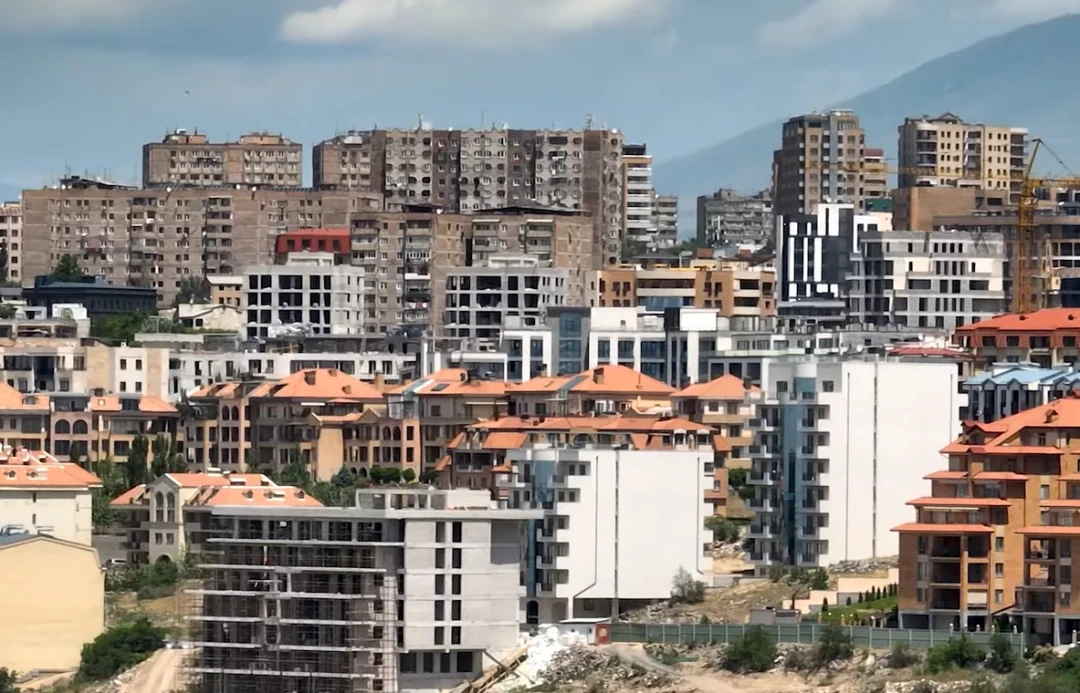
Armenia's housing prices have resumed rising after more than a year of slower growth, while rents are also showing signs of accelerating, Central Bank Deputy Governor Hovhannes Khachatryan said on Tuesday. The comments came as the Central Bank kept its policy rate unchanged at 6.5% and presented its latest Monetary Policy Report, which said that stronger housing demand was being driven in part by increased arrivals from Russia and rising tourism.
"We are seeing a recovery in real estate price growth in the second quarter," Khachatryan said in response to a question about housing demand. "Price growth had almost stopped, or at least slowed significantly, over the past year to year and a half."
The deputy governor said the Central Bank has also observed signs that rents are beginning to accelerate again, although official July data had not yet been published.
"We see inflation in the rental market, but it is not very high yet," he said. "There are indications that it is accelerating in July and August, but we do not want to draw conclusions based on listings from a few internet platforms."
Also read: Armenia's central bank says export headwinds cloud strong economic growth
Tourism and migration supporting demand
The Central Bank's Monetary Policy Report says that strong domestic demand continues to support economic activity, while tourist arrivals rose by about 15% in the first half of the year to a historically high level.
The report also notes that growing uncertainty over Russia's economy and the outcome of the war in Ukraine has recently been accompanied by an increase in arrivals of Russian citizens to Armenia, contributing to stronger demand for real estate, including apartment rentals.
Khachatryan said recent media reports suggesting renewed interest from Russian buyers could indeed reflect broader market trends, although the Central Bank has not yet quantified their impact.
According to Khachatryan, there is probably a trend in which real estate agents are increasingly targeting non-residents to sell apartments. Asked how much this is driving the latest price increases, he said it was too early to say — the extent of the effect, not whether there is one, remains the open question.
He added that capital inflows from both Russian nationals and members of the Armenian diaspora relocating assets to Armenia were clearly contributing to demand, although the Central Bank had not attempted to measure their precise impact on prices.
No signs of overheating—for now
Despite renewed price growth, the Central Bank says it does not currently consider the housing market to be significantly overheated.
Khachatryan recalled that the bank had repeatedly warned in previous years that property prices had become detached from economic fundamentals. Since then, however, rising household incomes combined with a prolonged period of slower price growth have narrowed that gap.
"We no longer placed as much weight on overheating risks in recent months," he said. "Now price growth has resumed. Given the size of Armenia's market, if several tens of thousands of people arrive, that creates significant additional demand and pressure on prices."
If those pressures intensify, he said, the Central Bank has macroprudential tools available, including capital buffers and lending regulations, to address risks to financial stability.
Khachatryan said nationwide housing prices are now rising by more than 10% year-on-year, although developments vary considerably across Yerevan and the regions. Some areas continue to record rapid gains while others have seen prices decline, making broad market conclusions difficult.
Mortgage lending also under watch
The Central Bank is also monitoring the rapid growth of consumer lending, partly because some loans classified as consumer credit are used to renovate and furnish newly purchased homes rather than finance property purchases directly through mortgages.
Khachatryan said the banking sector currently remains well capitalized and the Central Bank sees no immediate financial stability concerns despite stronger credit growth. However, it recently raised the countercyclical capital buffer from 1.75% to 2% to ensure banks remain resilient if credit risks increase.
The broader Monetary Policy Report concludes that Armenia's economy continues to expand on the back of construction, services and strong domestic demand, but warns that external risks—including trade disruptions and export restrictions—have become more significant. The Central Bank therefore kept its policy rate unchanged while continuing to monitor both inflation and financial stability risks, including developments in the housing market.




 Stories