 Alexander Pracht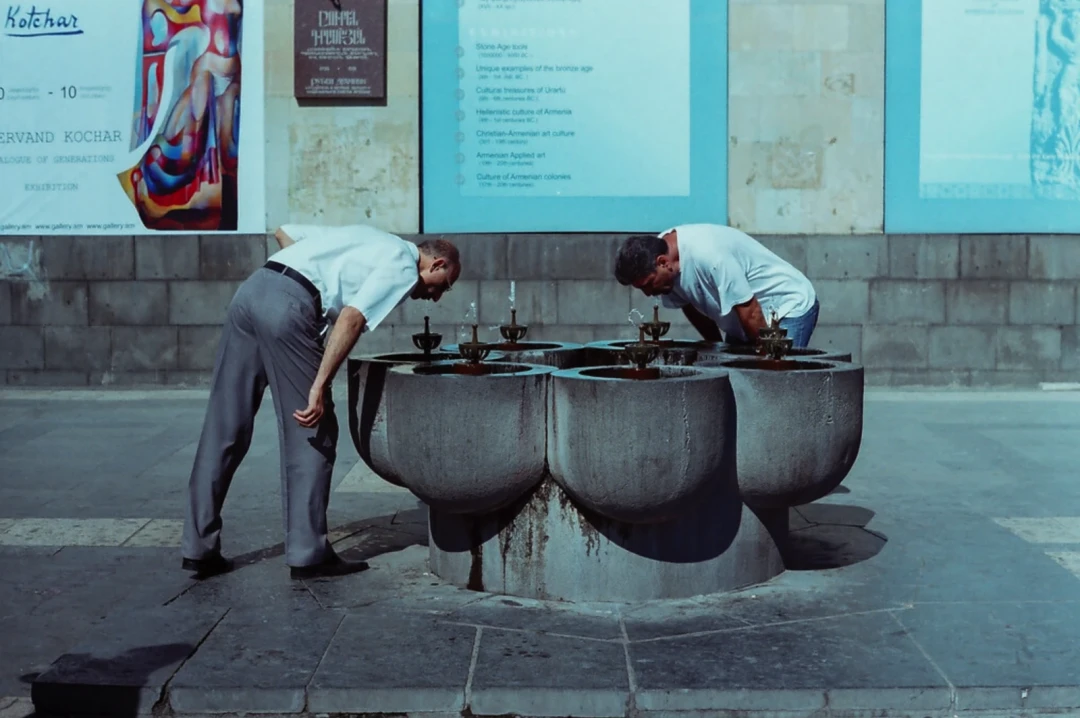
Several days ago, CivilNet published an article by film director Arshile Egoyan, who is contributing to our publication this summer, titled Armenia’s free water fountains face a conservation problem.
Armenia’s ubiquitous drinking fountains dot nearly every corner of the country, offering cold, clean water to anyone free of charge. They are widely seen as one of Armenia’s most recognizable trademarks. Yet, as a recent CivilNet article points out, they come with a problem: the water runs constantly, meaning much of it is never consumed and instead flows straight into the sewers.
Armenia has a huge problem of water wastage: as of last year, drinking water losses amounted to 51.9%, mostly due to old, Soviet-era infrastructure, much of which consists of open channels, so a lot of water simply gets evaporated along the route. Neighboring Iran has an even worse situation at hand, especially in Tehran: last year, the country’s president, Masoud Pezeshkian, even conceded that the authorities might need to evacuate its population due to extreme water shortages. This raises concerns in Armenia as well, with many wondering what could be done to prevent a situation as bad as this.
A possible solution to at least some part of the problem appears obvious: pulpulaks should be equipped with valves, so that water would be available on demand rather than run around the clock getting wasted. Yet, obvious and simple solutions rarely work.
In 2024, Armenia’s total freshwater abstraction (both surface and groundwater) amounted to approximately 3.3 billion cubic meters. There is no recent data on how much of it is used by pulpulaks, but reports from 2019 say annual water losses from drinking fountains amounted to 4.3 million cubic meters (across the entire country), with total water extraction in that year standing at 2.86 billion.
In other words, the share of water used by pulpulaks stood at about 0.15% of all of the country’s production of freshwater in 2019, and since then abstraction has grown by approximately 15%. Water management must be responsible, but the numbers above show that pulpulaks account for only an extremely tiny fraction of overall water use.
Water quality issue
Despite the aging infrastructure, Armenia is a country where water is exceptionally pure. Tap water is completely drinkable (I often test it to make sure), and it is the same water that runs in drinking fountains.
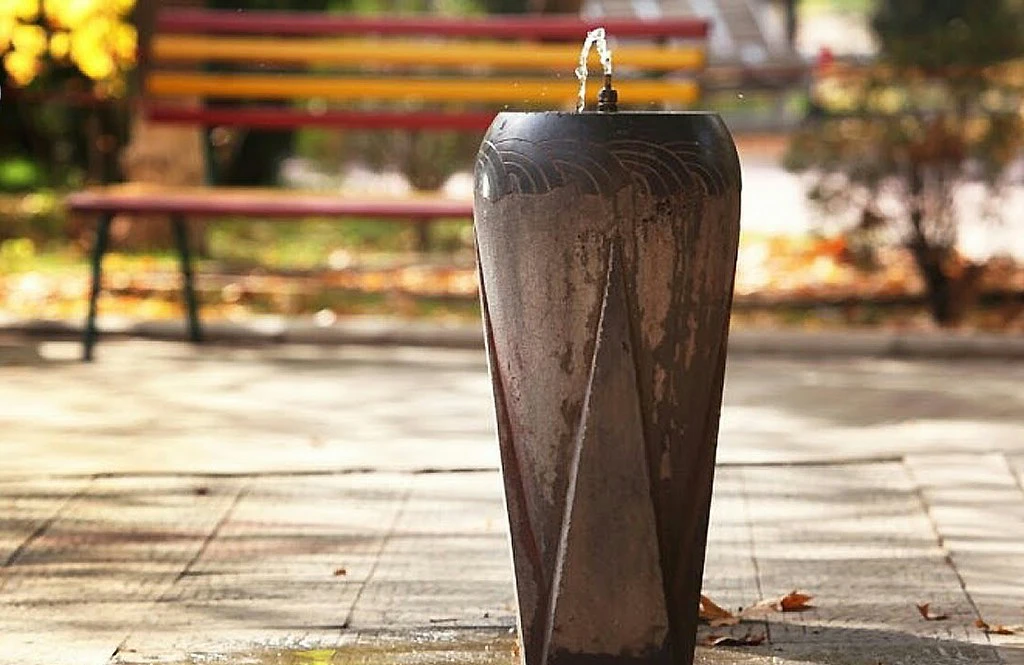
Studies have found that continuously flowing water can be less vulnerable to bacterial contamination than water from intermittent supply systems.
In addition to that, on-demand drinking fountains attract insects that need stagnant liquid to lay eggs, while dissolved minerals in the water can calcify and corrode the infrastructure when the flow is stopped. This probably would not make pulpulak water undrinkable (you can still drink water from a tap at home, which is an intermittent source) but it would certainly lead to a reduction in water quality.
Many pulpulaks could dry out
Drinking water fountains are not unique to Armenia: they exist in most countries. What makes them Armenia’s trademark is their abundance. As someone who moved to Armenia as an adult, I lack the perception that many locals have, taking pulpulaks for granted.
If you travel to Georgia, where there are much fewer drinking fountains and they all have switches, you will find that a fair share of those pulpulaks simply do not work. I believe this happens for two reasons.
First, adding a valve simply makes the system more complex, and complex systems tend to break down more often, all other factors held equal. Broken taps are going to become a constant headache as typically pulpulaks are used hundreds, often thousands of times every day. Does anyone believe those are going to be fixed promptly?
The second reason has to do with behavioral patterns. An on-demand water fountain never looks broken: if someone passes it by and the water is not running, they would simply think that everything is in order and that you just have to push the button.
This, I believe, is what leads to numerous abandoned drinking fountains in Georgia that never get fixed. At the same time, a continuously running pulpulak would immediately attract attention if it is out of operation.
The symbolism of pulpulaks
A pulpulak is more than a source of free water. In the concrete jungle of Yerevan, a city with exceptionally hot summers compared to most other places in the country, each pulpulak is a tiny oasis where those who are out in the scorching sun stop for a minute’s break. Its constantly running water catches everyone’s eye, with people of different social backgrounds (and sometimes even stray dogs) showing mutual respect to each other if there is a line, and sometimes connecting for small talk. An on-demand oasis would still be better than nothing, but it would lose much of its charm.
Moreover, many pulpulaks are installed and maintained by locals themselves rather than the authorities. People usually do that to commemorate their deceased loved ones – often fallen soldiers. The symbolic interpretation is that one has to bow down to drink, paying respects to those who are no longer with us. It is simply natural that at such locations water is supposed to be running at all times, creating an atmosphere of tranquility and peace, and at the same time somewhat offsetting the sad atmosphere of the place, as water is life.
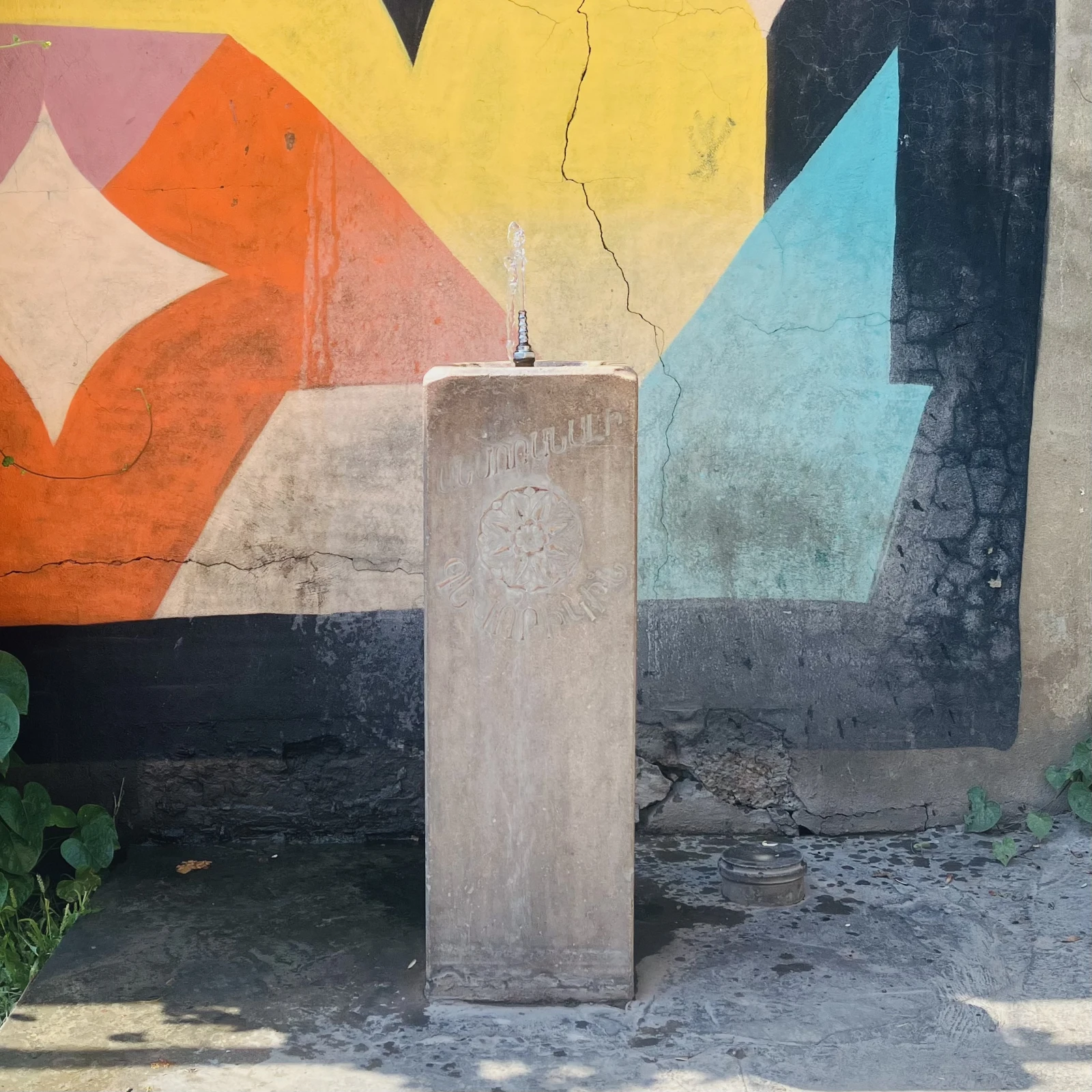
Responsible water management is vital. However, installing switches on pulpulaks is nothing but a completely performative solution. A total of 86% of Armenia’s freshwater is used in farming, especially fish farming, which requires massive amounts of groundwater. In Ararat province alone, fish farming accounts for nearly 80% of local water usage. The amount of water being extracted for fisheries is equivalent to all the water that is being wasted per year in the water distribution system nationwide, despite the industry providing roughly 2% of Armenia’s overall GDP. Additionally, investing in replacing aged infrastructure to curb leakage would be a much more effective solution than focusing on the pulpulaks.





 Stories