By Mohamad Rimawi
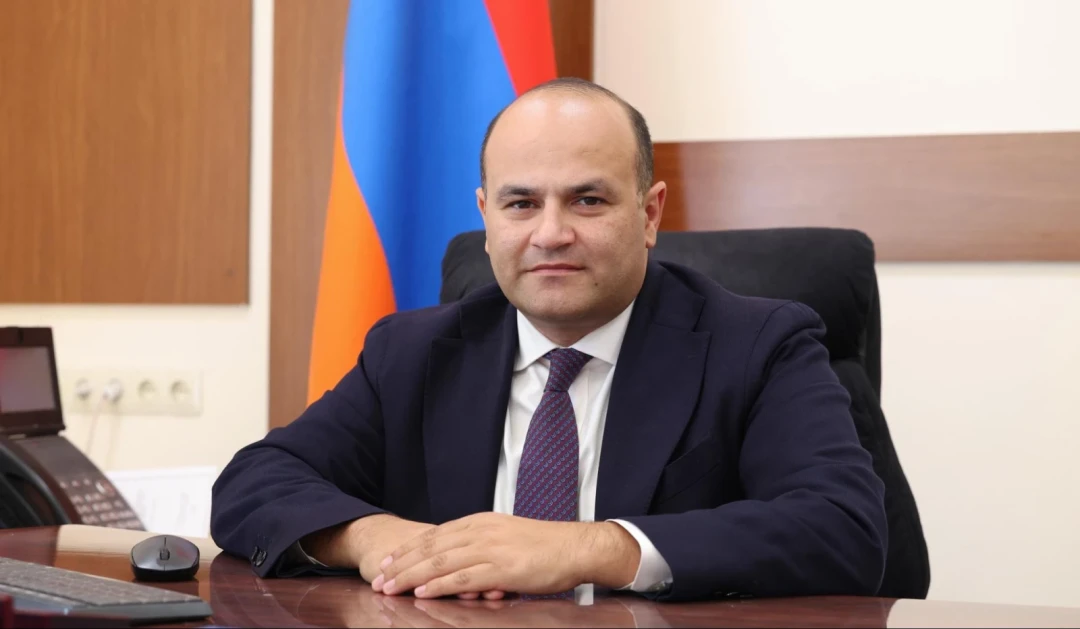
Narek Mkrtchyan, Armenia’s ambassador to the United States, downplayed Azerbaijani obstructions to the Trump Route for International Peace and Prosperity (TRIPP).
In an interview with CivilNet on Wednesday, Mkrtchyan affirmed that TRIPP is a “priority” for Azerbaijan as well as for the U.S. and Armenia. The trade route promises to connect Central Asia to Europe through the South Caucasus while bypassing Russia and Iran.
“We are progressing and there are no serious obstacles,” Mkrtchyan said. “In the very near future we will see the practical construction process of the TRIPP project.”
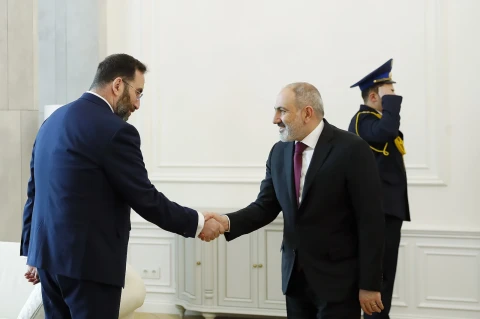
His optimism comes after the U.S. Congressman Abraham Hamadeh met with Armenian Prime Minister Nikol Pashinyan and Foreign Minister Ararat Mirzoyan in Yerevan on Tuesday. Mkrtchyan, who invited Hamadeh and arranged the visit, described the meeting as "positive” and “productive.”
Hamadeh, a former intelligence officer and current Republican member of the U.S. House Armed Services Committee, also met with Azerbaijani President Ilham Aliyev and Foreign Minister Jeyhun Bayramov in June. Bayramov briefed Hamadeh on the Armenia-Azerbaijan normalization process during their discussion.
Although TRIPP is supposed to connect Armenia with Azerbaijan, the plans are complicated by the fact that the two traditional adversaries have no formal diplomatic relations nor have agreed upon border demarcations. Mkrtchyan sees the potential trade route as a gateway toward an ultimate peace treaty.
“We view closer economic ties with Azerbaijan as important incentives for more durable peace,” he said.
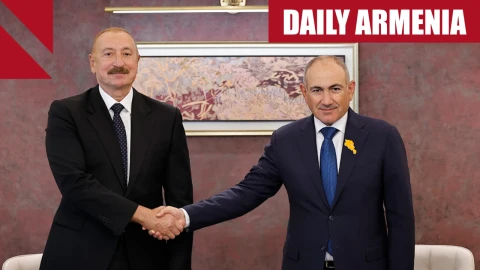
The announcement of TRIPP was central to the August 2025 summit between U.S. President Donald Trump, Pashinyan and Aliyev. It was billed by the Trump administration as a historic breakthrough in Armenia-Azerbaijan relations, but Mkrtchyan said that the trilateral meeting was also a turning point in American ties with his country.
Also read: EXPLAINER: New details behind the ‘Trump Route’ deal
The U.S. had long supported Armenian democratic reforms and aid-based partnerships, he said, but after the summit, “our bilateral relations with the U.S. were finally expanding to include true economic, tech, energy, security, and comprehensive political cooperation.”
Armenia’s relationship with its traditional close ally Russia has strained as Yerevan seeks to move toward the West under the Pashinyan government, opening up greater American partnership opportunities.
This point was made clear with the memorandum of understanding on critical minerals signed during U.S. Secretary of State Marco Rubio’s visit to Yerevan in May. Armenia has substantial mineral wealth, including large deposits of copper, which is key to producing semiconductors needed to power the artificial intelligence boom. In June, Mkrtchyan signed a cooperation agreement with the U.S. which further links the two countries’ AI supply chains.
The San Francisco-based company Firebird launched the first phase of a major AI infrastructure venture in Armenia this month, with a planned total investment of $4 billion. Mkrtchyan hinted that the supercomputer project, which leverages equipment from U.S. firms Nvidia and Dell Technologies, could have strategic uses beyond commercial applications.
“You tell me if this has a security dimension or not,” he said.


 Stories