By Lia Avagyan
Yerevan is considering new restrictions on car use, expanding bus lanes and building new road infrastructure as Armenia’s capital struggles with worsening congestion.
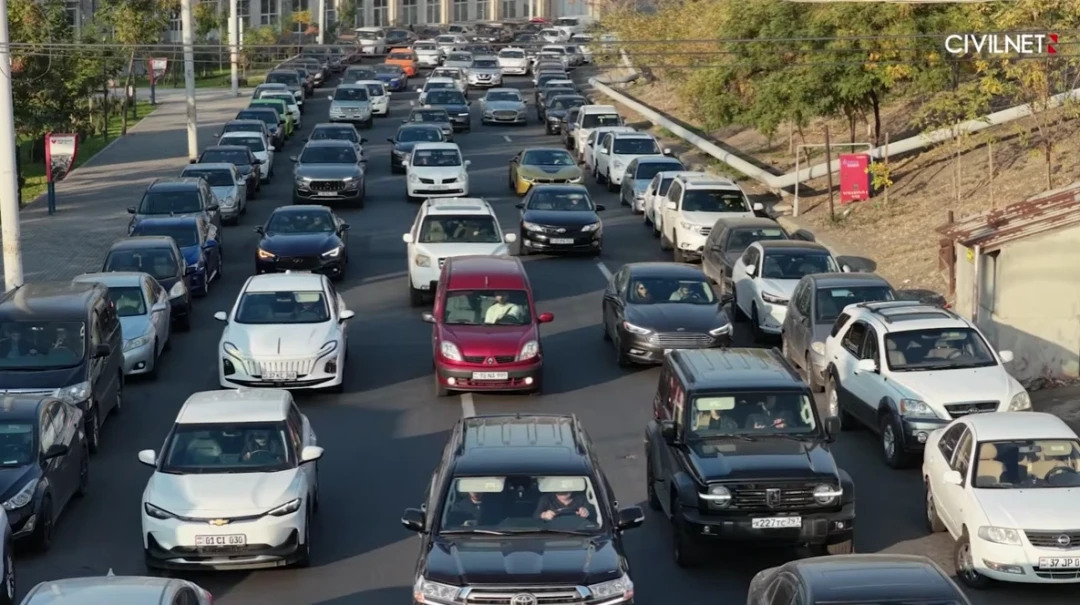
The number of registered vehicles in Armenia doubled between 2014 and 2025 to around one million, increasing pressure on Yerevan’s road network. Traffic slows sharply during morning and evening rush hours and can come close to a standstill on some major streets.
“We have to make decisions — one could say painful decisions — particularly when it comes to certain restrictions,” Armen Galjyan, head of the ruling Civil Contract faction in the Yerevan City Council, told Public Television on Sept. 9.
Measures under discussion include limiting how long vehicles can park in central Yerevan, restricting car access at certain hours and possibly introducing different rules for vehicles entering the capital from outside the city. Galjyan said no final model had been chosen.
One option would use cameras at city entrances to record when a vehicle enters and leaves Yerevan, with drivers potentially charged according to how long they remain in the city. Galjyan stressed that the proposal was only one of several being considered.
The city says it first needs better data.
For the first time this year, Yerevan plans to systematically count vehicles entering and leaving the capital to establish daily traffic flows. Cameras are being installed at city entrances as part of the effort.
A city transport official said the data could eventually lead to changes in traffic organization, including making some streets one-way or closing certain roads to cars.
“Organizing and regulating traffic is a process that takes time, and we have to go through it,” the official said in CivilNet’s video report. “Once we have the figures for entries, exits and traffic flows, it will become clear where we may need to make streets one-way or even close certain streets.”
Congestion is not driven by the growing number of cars alone. Roadworks, construction and utility repairs have also narrowed or closed sections of major streets in recent months. Kievyan Bridge was recently under repair, while the Lambada Bridge was closed to traffic for about six weeks from Sept. 10.
Minor traffic accidents can also cause prolonged disruption. Mayor Tigran Avinyan said in 2024 that the city was working to ensure crashed vehicles were removed from roads within 15 minutes, but vehicles involved in small accidents can still remain in traffic lanes for extended periods, causing congestion that can last much longer.
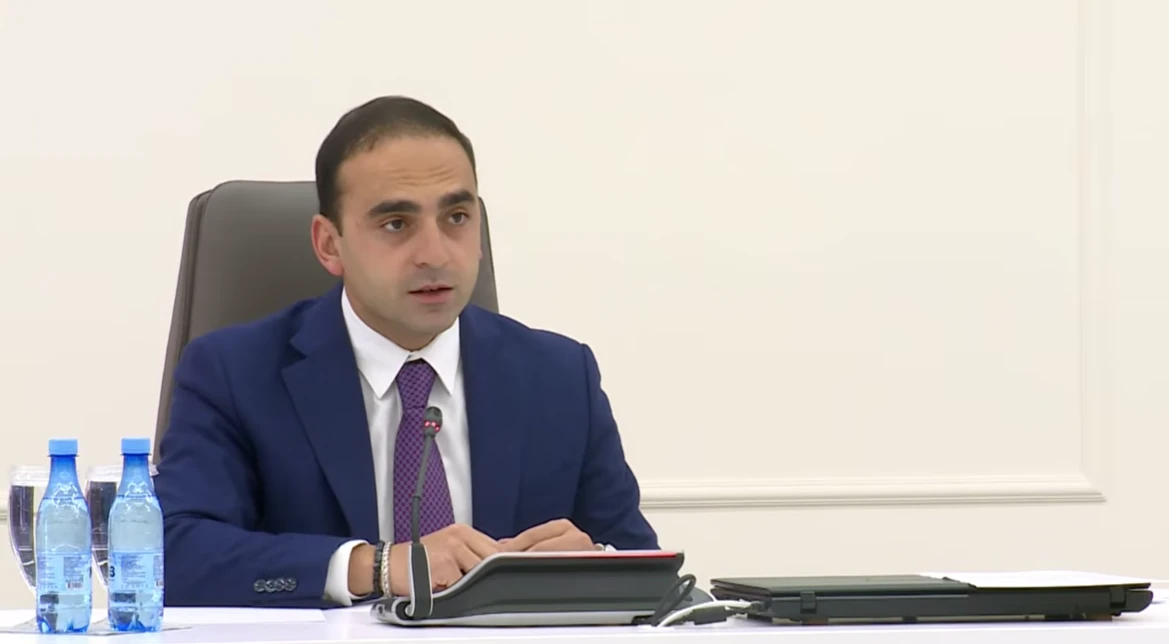
The problem drew wider attention last year when Prime Minister Nikol Pashinyan encountered a traffic jam while cycling from the government headquarters to Baghramyan Avenue. He described the situation as “terrible chaos” and ordered the creation of a crisis group to look for solutions.
Since then, the city says it has begun removing garbage containers from traffic lanes and reviewing roadside parking. Parking spaces that obstruct traffic are expected to be removed in some areas to free up road capacity.
Buses get priority
A central part of the municipality’s strategy is to make public transport faster and more attractive than driving.
The city plans to expand dedicated bus lanes, even though officials acknowledge that taking road space away from private cars could initially worsen congestion for drivers. The aim is to allow buses to move more quickly and reliably through traffic. Yerevan also plans to purchase another 200 buses.
Officials argue that adding more buses would have limited effect if they remain stuck in the same traffic as private cars.
The municipality is also considering park-and-ride facilities near entrances to Yerevan, allowing commuters arriving from other parts of Armenia to leave their vehicles there and continue by public transport.
City authorities are also discussing a licensed urban taxi system. Vehicles meeting specific standards could receive certain traffic privileges in exchange for a local fee, potentially including access to dedicated bus lanes.
Roads and smarter traffic lights
Yerevan is also moving ahead with several major road projects.
Avinyan said on Sept. 7 that work had begun or was advancing on three projects: an overpass on the North-South highway near Noragavit, the Isakov-Arshakunyats junction and an unfinished road linking Babajanyan Street with the Ashtarak highway.
But city officials acknowledge that new roads alone are unlikely to solve congestion in central Yerevan.
Valerik Harutyunyan, dean of the Faculty of Urban Economy at Armenia’s National University of Architecture and Construction, said a medium-term solution would be to change how traffic lights operate.
Most signals currently run on preset cycles, even though traffic intensity changes throughout the day, he said. Harutyunyan proposes several signal programs for different times of day and better coordination between neighboring intersections.
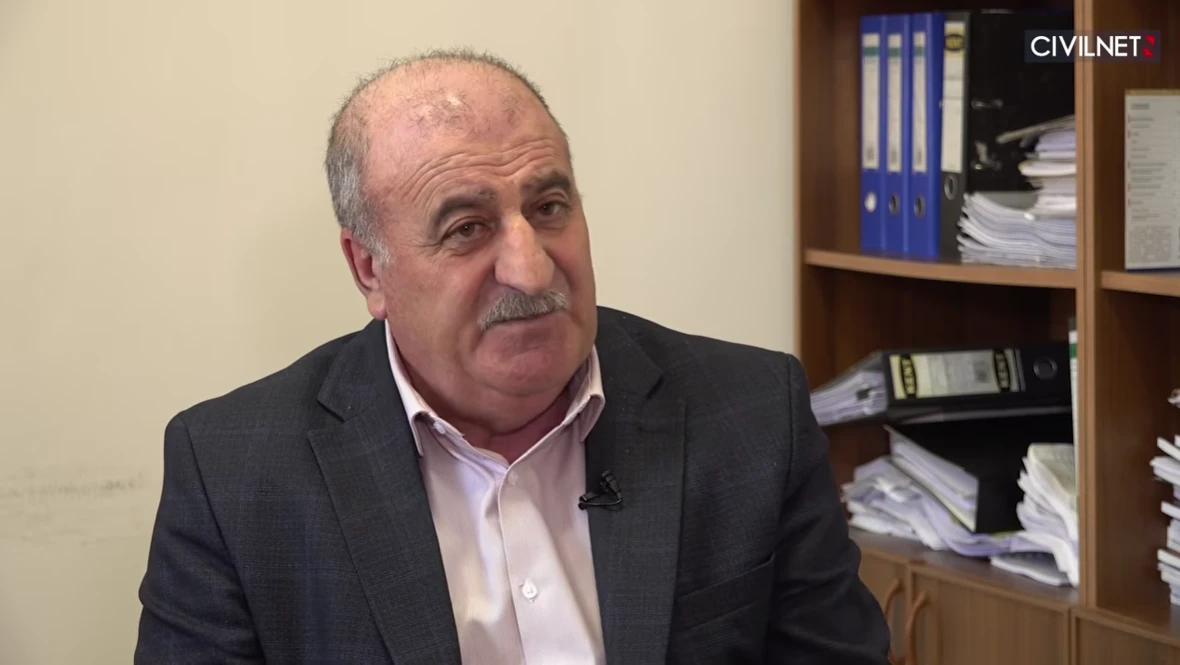
“If I see that traffic is moving at 25 to 30 kilometers per hour, I can calculate the signals so that a car passing one intersection on green reaches the next one when it is also green,” Harutyunyan said.
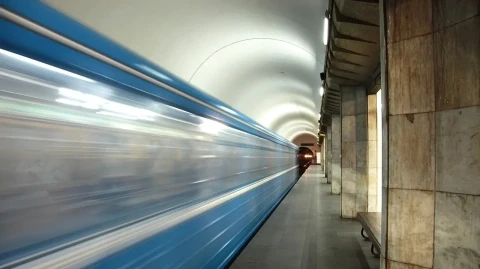
In the longer term, he said, Yerevan will need more grade-separated junctions, an expanded metro system and bypass roads that keep through-traffic and heavy vehicles out of the city.
“Without a bypass road, we cannot solve the problem in the end,” Harutyunyan said, pointing to Tbilisi as an example of a city that has kept much of its heavy through-traffic away from central areas.
For now, city authorities say they could first test some of the tougher measures in central Yerevan, where congestion is most severe, before any wider rollout.

 Stories