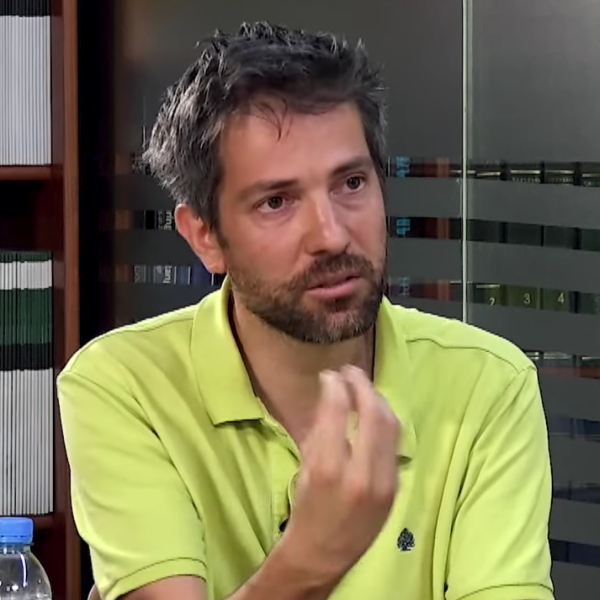
 Tigran Yegavian
By Tigran Yegavian
The Armenian Diaspora has spent decades asking what it can do for Armenia. Perhaps it is time to ask another question: What must the Diaspora do for itself?
Since independence, Armenia has naturally become the political center of gravity of the Armenian world. But this has also encouraged a dangerous assumption that the Diaspora exists primarily as a resource for the Armenian state.
That approach is too narrow. Armenia and the Diaspora need each other, but they are not the same thing. Nor should one be expected simply to dissolve into the other.
For much of the 20th century, Armenian communities across the Middle East, Europe and the Americas built institutions of their own: schools, churches, cultural organizations, newspapers, political parties and intellectual centers. These institutions were not temporary waiting rooms until everyone eventually moved to Armenia. They were societies in their own right.
Today, many of them are weaker. Some communities have shrunk dramatically. Others are changing through migration and assimilation. Leadership has often failed to keep pace.
The answer, however, cannot simply be: Move to Armenia.
There is no Armenian equivalent of Zionism capable of bringing the overwhelming majority of Diaspora Armenians to one state. We should accept this reality rather than build policy around an idea that is unlikely to materialize.
The Armenian world is, and will remain, polycentric.
Yerevan is one center, but it cannot be the only one. Beirut, Paris, Istanbul, Los Angeles, Montreal and other cities have developed their own Armenian cultures, institutions and experiences. Some of these centers need to be revived. Others need to be reinvented.
A healthy Diaspora should not be measured only by how much money it transfers to Armenia or how effectively it supports Yerevan's diplomatic priorities. Its first responsibility is also to remain viable.
That means investing in schools and culture. It means producing writers, filmmakers, journalists, teachers, clergy and intellectuals. It means giving younger Armenians something meaningful to inherit.
Assimilation itself is not the only danger. People assimilate, identities evolve and languages disappear. The greater danger is reaching a point where Armenian identity has nothing substantial left to transmit.
Why should a young person remain Armenian? The answer cannot be ancestry alone.
We need to explain what Armenian identity offers in the 21st century: a cultural tradition, historical experience, religious heritage, a capacity for creativity and a particular relationship with multiple societies. Armenians have often acted as intermediaries between cultures. That experience should be treated not as a relic of the past but as a resource.
This also requires a different relationship with Armenia.
Diaspora Armenians should understand that Armenia is a sovereign state with citizens who vote, pay taxes, serve in the military and bear the direct consequences of political decisions. Living abroad does not automatically give us the right to dictate Armenia's domestic politics.
But Armenia, in turn, should not see the Diaspora merely as a source of investment, lobbying or demographic replenishment.
The two sides need a more mature division of responsibilities.
Armenia must build its state. The Diaspora must build and renew its communities. Where their interests overlap, they should cooperate. Where they differ, each should have the confidence to pursue its own priorities without treating disagreement as betrayal.
This is particularly important because there is no longer one Diaspora.
Historic communities were shaped by the Ottoman Empire and the Middle East. There are post-Soviet Armenian migrant communities. New waves of migration are coming from Armenia itself. Their relationship with the Armenian state, language and identity can be very different.
A single centralized model cannot represent all of them.
The displacement of the Armenians of Nagorno-Karabakh has added another community struggling to preserve its distinct identity and collective voice. The wider Diaspora has a responsibility to support them, materially and culturally, without absorbing or erasing that identity.
But this is part of a larger challenge.
For decades, the Armenian world organized much of its collective imagination around three pillars: Armenia, Artsakh and the Diaspora. That framework has been shattered. Repeating the old slogans will not rebuild it.
What we need now is a new Armenian narrative, one that accepts political realities without abandoning cultural ambition.
The Diaspora will survive only if it stops thinking of itself as temporary. Its task is not merely to preserve memories of what once existed, nor simply to serve Armenia from abroad.
It must again become capable of producing ideas, institutions and culture of its own.
A strong Armenia needs a strong Diaspora. But the reverse is equally true: a strong Diaspora cannot exist unless it first believes that its own continued existence matters.


 Stories