 Arshaluis Mgdesyan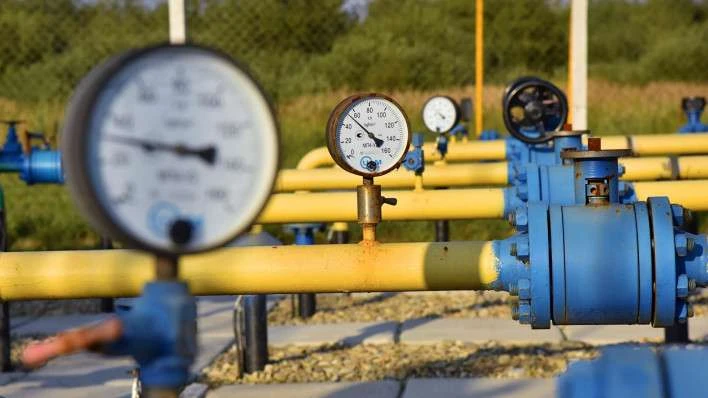
A possible increase in the price of Russian natural gas for Armenia would be an exceptional economic shock requiring a stronger-than-normal policy response, Central Bank Governor Martin Galstyan said on Sept. 15.
Speaking at a news conference at the Central Bank’s headquarters in Yerevan, Galstyan said the bank had discussed the risk in its scenario analysis after a question from CivilNet. He described it as an “X-type” scenario, outside the two main cases outlined in the Central Bank’s quarterly monetary policy statement, released the same day.
“It could have a primary effect in terms of raising the overall level of inflation,” Galstyan said. “And it could also have a secondary effect, because the price of gas can feed into other products, such as greenhouse production.”
Such a chain reaction could also raise the risk of economic contraction, he added.
The Central Bank raised its policy rate by 0.25 percentage point to 6.75% on Sept. 15, citing inflationary pressures. Annual inflation stood at 4.4% in August, while core inflation was 4.8%, both above the bank’s 3% target.
Also read: Armenia raises policy rate as demand fuels inflation
The bank’s report presents two illustrative scenarios rather than a forecast. Its A-type scenario assumes stronger domestic and external demand, including a rise in visits by Russian citizens, which could push up rents, services prices and inflation expectations. Such a development would require a higher interest-rate path than markets currently expect.
Its B-type scenario centers on restrictions on Armenian-origin exports to Russia. The Central Bank said prolonged restrictions could cut export revenues, weigh on agriculture and employment, and weaken consumer and investment activity. That outcome could require lower interest rates.
Galstyan said a sharp increase in gas prices did not fit either category.
“We have kept that scenario in mind, but from our perspective it is an X-type scenario. It implies something more apocalyptic,” he said. “Our response would have to be stronger and outside these normal scenarios.”
The comments come amid deepening political differences between Yerevan and Moscow. Russia has restricted imports of Armenian agricultural products, while Russian officials have repeatedly raised the prospect of higher gas prices if Armenia leaves the Eurasian Economic Union.
Armenia says it has no plans to leave the bloc. Russia supplies about 86% of Armenia’s natural gas needs, while Iran provides additional volumes through a gas-for-electricity barter arrangement. Gazprom Armenia, a subsidiary of Russia’s Gazprom, holds a monopoly over gas supply and distribution inside Armenia.
Russian gas costs $177 per 1,000 cubic meters at Armenia’s border, though end consumers pay more than twice that price.



 Stories