By Lia Avagyan
Russia could be the most suitable partner to build Yerevan’s long-planned Ajapnyak metro station because Armenia no longer has the expertise needed to undertake such a project on its own, Prime Minister Nikol Pashinyan said.
Pashinyan made the remarks in an interview with BOON TV published on Saturday evening, renewing the possibility of Russian involvement in the first substantial expansion of the Yerevan Metro since the collapse of the Soviet Union.
“We assess that the Russian Federation could be our best partner in building the Ajapnyak metro station,” Pashinyan said.
He said the planned extension was being designed to technical specifications connected to those used for the existing Soviet-built system. “We need Russia’s support to build the Ajapnyak station and ensure its further continuation,” he said. “At least with Russia, we will be able to implement it with the fewest possible complications.”
Pashinyan added that the project would be difficult regardless of the partner selected. “There is no doubt that we will face complications in implementing it,” he said.
Armenia and Russia were already discussing possible Russian involvement in the project. Pashinyan said earlier in September that Moscow had extensive experience in metro construction and that Armenia would welcome its support.
A team of Russian specialists had also visited Yerevan to study the project and its technical requirements.
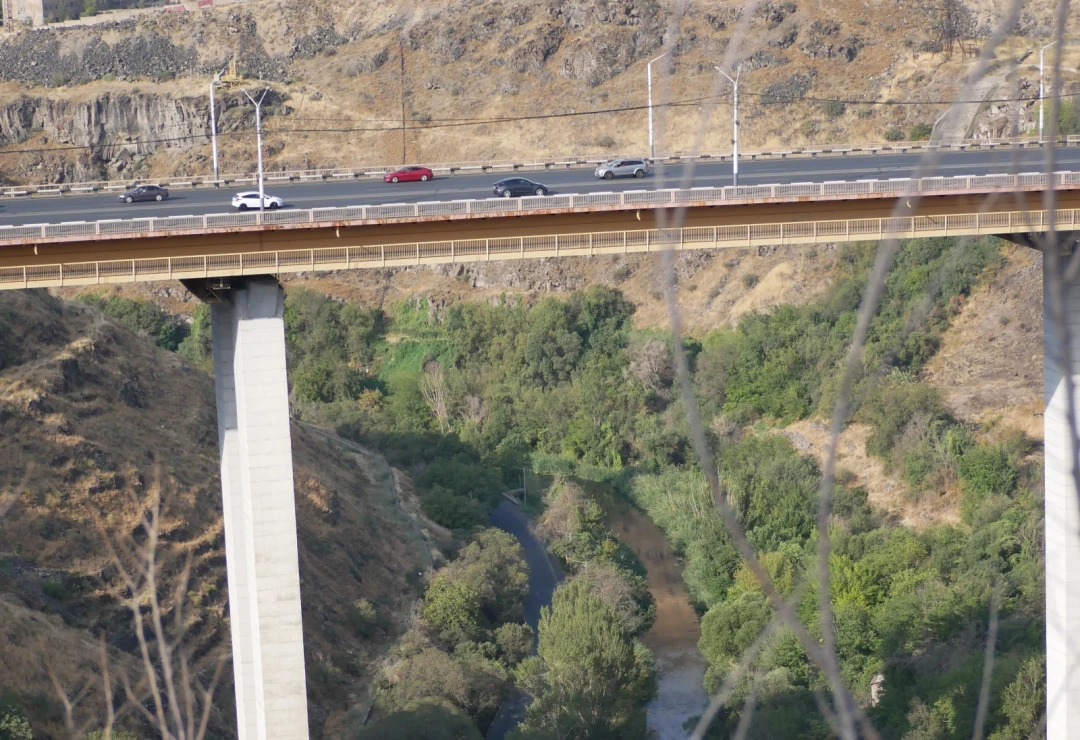
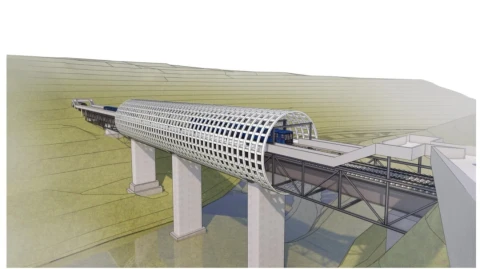
Russian engineering company Metrogiprotrans won a municipal tender in 2021 to prepare the design documentation. Its plans involve extending the existing line from Barekamutyun, crossing the Hrazdan Gorge on a new metro bridge and reaching the Ajapnyak district on the western side of the river.
Pashinyan said Armenia had lost much of the engineering and construction capacity developed during the Soviet era.
“Today, there is not a single company in Armenia where we could announce a tender, say ‘come and build the metro,’ and they would come and build it,” he said.
The government approved the Ajapnyak project earlier this summer. Yerevan Mayor Tigran Avinyan said in July that the construction plan and cost estimate had been completed and that the implementation model would be determined within one or two months.
The estimated cost rose to $287 million this year, up from an initial projection of about $50 million in 2022. Much of the cost is linked to the bridge across the Hrazdan Gorge, associated tunnels and redevelopment around the planned route.
The project is expected to be divided into three sections: a tunnel from Barekamutyun to the Hrazdan Gorge, the bridge and connecting tunnel on the western side, and the station itself.
Little expansion since the Soviet era
The Yerevan Metro opened in March 1981, when Armenia was part of the Soviet Union. Most of its stations and infrastructure were built during the 1980s.
The system’s development effectively stopped after the Soviet collapse. Charbakh, a small surface station served by a shuttle from Shengavit, opened in 1996, but no station has since been added to the main line.
The network currently has 10 stations and extends for about 12 kilometers. Ajapnyak would be its first extension west of the Hrazdan Gorge and the first major addition to the system in independent Armenia.
Plans to build the station have been announced and postponed repeatedly. In 2022, Pashinyan said construction would begin in 2024, while city officials later pushed the expected start date to 2026. A review of the project’s history found that successive municipal administrations had promised an extension toward Ajapnyak since at least 2007.
The project suffered another setback in late 2025 when city authorities redirected funds allocated for the station to the purchase of 45 trolleybuses. Avinyan attributed the delay to the station’s technical complexity and said funding for preparatory work would be restored.
Pashinyan said the Ajapnyak station could form part of a broader expansion of the network. The government has discussed adding further stations through Ajapnyak and the planned Academic City before eventually connecting the route to Charbakh, creating a circular line.


 Stories