By Lia Avagyan
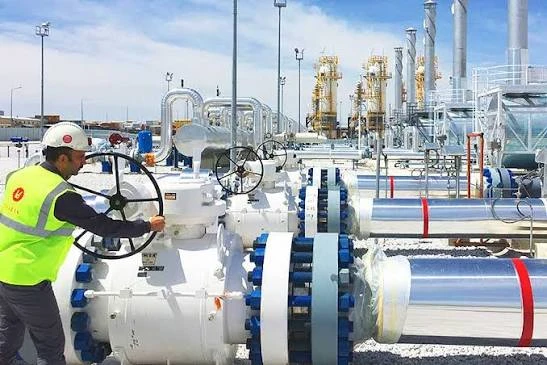
Turkey has spent more than two decades building gas routes that give Ankara leverage over both suppliers and European buyers, while generating transit revenue and helping Turkish industry secure competitively priced energy, according to an analysis by Didier Holleaux.
The article, “Turkey turns gas transit into a tool of power,” appeared in the September 14 issue of The World Energy Weekly, a publication of Petrostrategies, a French think tank specializing in energy and geopolitics. Holleaux is the author of Gas: The True Story, published in 2024.
His central argument is that Turkey’s ambition to become a gas hub serves economic and political goals. Transporting gas can generate reliable returns, while access to supplies passing through the country can give Turkish manufacturers a price advantage over competitors farther along the route.
The diplomatic benefit is equally significant: “Both customers and suppliers want to maintain good relations with transit countries,” Holleaux writes.
Building routes from Russia and the Caspian
Ankara pursued this strategy across several regions, positioning Turkey as an outlet for Iranian gas, a potential extension of Egypt’s export network and a transit route for supplies from Russia and Azerbaijan.
As early as the 1990s, Turkey presented itself as a natural export route for Iranian gas. Ankara later proposed extending the Arab Gas Pipeline, which supplied Egyptian gas to Jordan, Syria and Lebanon, through Turkish territory and potentially onward to Europe. Egypt’s declining export capacity ultimately undermined that ambition, Holleaux writes.
Other projects strengthened Turkey’s position. Blue Stream brought Russian gas across the Black Sea for the Turkish domestic market, while TurkStream created a route through Turkey to southeastern Europe.
Azerbaijan’s gas discoveries, particularly at the Shah Deniz field, opened another opportunity. Turkey became a central participant in the Southern Gas Corridor, with the South Caucasus Pipeline and the Trans-Anatolian Pipeline, known as TANAP, forming key parts of the route carrying Azerbaijani gas toward Europe.
Together, these projects gave Ankara a role in transporting supplies from competing producers, reinforcing Turkey’s importance to regional energy trade.
Resistance to routes bypassing Turkey
Holleaux identifies the eastern Mediterranean as a setback for Ankara’s ambitions — and an example of its determination to resist exclusion.
Regional gas producers favored export options that bypassed Turkey, including proposed subsea pipelines and liquefied natural gas shipments through Egypt’s Idku and Damietta plants, rather than Ankara’s proposed overland route.
Holleaux describes Turkey’s subsequent deployment of exploration vessels accompanied by military ships in disputed waters as a campaign of intimidation. He also criticizes Ankara’s November 2019 maritime delimitation agreement with Libya, arguing that the agreement infringed on neighboring countries’ sovereignty and sought to strengthen Turkey’s ability to obstruct alternative export routes.
“The message was clear: no gas pipeline to Europe could be built without Ankara’s approval,” he writes.
The dispute illustrates the broader struggle described in the column: control over export routes can give a transit country influence even when that country does not produce the gas itself.
Holleaux also points to Turkey’s efforts to secure access to Turkmen supplies. After an earlier swap arrangement involving Turkmenistan, Iran and Azerbaijan was halted, Ankara backed a new arrangement in 2025 under which Turkmenistan supplies gas to Iran, which then delivers gas to Turkey.
For Holleaux, that agreement reinforces the same long-term strategy. Over two decades, he concludes, Turkey has turned gas transportation into “an instrument of geopolitical power.”



 Stories