By Lia Avagyan
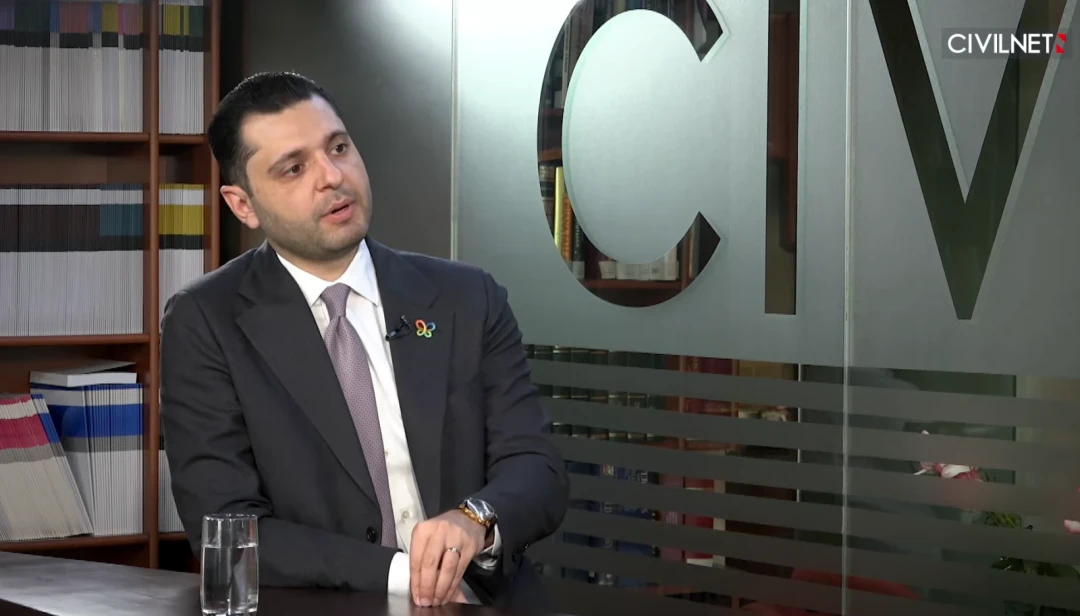
Armenia expects the upcoming COP17 biodiversity conference to strengthen its international role and help countries accelerate efforts to meet conservation targets they cannot reach at the current pace, Environment Minister Hambardzum Matevosyan told CivilNet.
In an interview recorded on Friday, Matevosyan said the gathering would offer opportunities to develop international partnerships and draw attention to Armenia’s environmental challenges.
The main negotiations will take place on October 19–30, preceded by a leaders’ summit beginning on October 15. Matevosyan said around 50 participants had confirmed their attendance at the leaders’ gathering, including more than a dozen heads of state or government, alongside heads of major international organizations and leaders in other fields. He declined to name them, citing protocol considerations.
The conference brings together parties to the UN Convention on Biological Diversity. Matevosyan said biodiversity was linked to economic development, agriculture, health and human rights, giving the gathering significance beyond environmental policy.
“COP17 is a global platform that will strengthen Armenia’s political role in the world,” he said.
Reviewing progress toward 2030
A central task in Yerevan will be reviewing progress under the Kunming-Montreal Global Biodiversity Framework and identifying what countries must do to reach its 2030 targets.
Matevosyan said reports collected from nearly all countries showed widespread difficulties.
“It is clear that, at this point, we cannot reach the targets set for 2030 at this pace,” he said.
The discussions would examine where to concentrate efforts and what investments were needed during the remaining four years. Armenia expects a leaders’ declaration bearing Yerevan’s name, alongside a separate document arising from the global review.
In an earlier interview, Matevosyan said Armenia hoped to secure a Yerevan agreement addressing gaps in implementation. He described agreement on how to address those gaps as a key measure of the conference’s success. The document’s adoption and name remain subject to negotiations.
Matevosyan also said hosting COP17 could help Armenia address its environmental problems through knowledge sharing and access to new resources and opportunities.
Responding to a question about pollution, mining impacts and waste management, he argued that other countries hosting biodiversity conferences also faced environmental challenges.
“By hosting COP17, we are also drawing our partners’ attention to our problems,” he said.
Costs and civil society participation
Matevosyan did not provide a final estimate for the conference’s total cost, saying unforeseen expenses could arise during the two-week gathering.
He said the government’s contract for the Meridian Expo Center amounted to about 7.5 billion drams, or roughly $21 million. He described it as a services and rental agreement rather than a payment for construction.
Under the arrangement, the government will also have the right to use the venue for a total of 400 days over eight years beginning in 2027. The owner has taken out a loan of about 3.5 billion drams, roughly $10 million, to upgrade the center to meet UN event requirements, he said.
Matevosyan presented the arrangement as a long-term investment in Armenia’s infrastructure. He said financial returns were important but were not the main reason for hosting the conference.
On civil society participation, he said three NGO representatives joined the organizing committee after civil society nominated them.
Armenia will also fund a green zone at the Karen Demirchyan complex, providing a platform for NGOs, activists, businesses and public institutions. Matevosyan said this was an additional commitment Armenia had undertaken, rather than a requirement for hosting a biodiversity COP.
“It will be an open platform for everyone,” he said.
Some NGOs will also be able to attend official meetings through UN registration procedures. Matevosyan said the presidency did not have authority over registration for the official negotiating area, known as the blue zone.
Asked what ordinary citizens could expect from the conference, he emphasized Armenia’s stronger international standing and opportunities to deepen bilateral relations.
The full interview in Armenian will be published on Monday, October 12.



 Stories