By Lia Avagyan
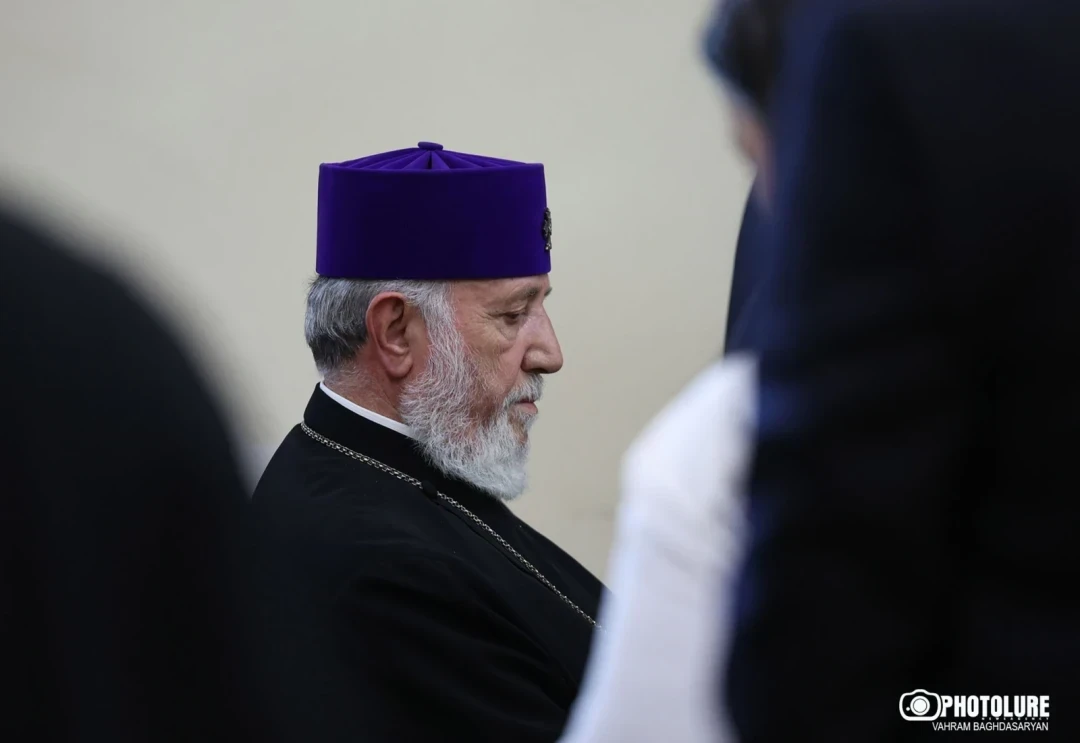
An Armenian court has dismissed a civil lawsuit brought by a former bishop against the Armenian Apostolic Church, ruling that the appointment and dismissal of diocesan leaders fall exclusively under the authority of the Catholicos of All Armenians, according to lawyer Ara Zohrabyan.
The decision could have significant implications for the criminal case against Catholicos Karekin II and six senior bishops, who have been charged with obstructing the enforcement of an earlier court order issued in connection with the same dispute.
The Armavir Court of First Instance, presided over by Judge Edgar Hovhannisyan, terminated proceedings in the lawsuit filed by Arman Saroyan, formerly Bishop Gevorg Saroyan and head of the Masyatsotn Diocese, Zohrabyan announced on Facebook on Thursday.
According to the lawyer, the court upheld the legal position of the Mother See of Holy Etchmiadzin that appointing and dismissing diocesan leaders is an internal Church matter governed by canon law and is not subject to civil court proceedings.
The court also lifted interim measures that had restricted the Church's ability to make decisions concerning the administration of the Masyatsotn Diocese, Zohrabyan said.
Those measures formed the basis of criminal charges brought against the Catholicos and six members of the Church's Supreme Spiritual Council, who are accused of obstructing the enforcement of a legally binding court decision.
The criminal case stems from a January 16 ruling barring the Church from preventing Saroyan from performing his duties as diocesan leader and managing diocesan finances while his lawsuit was pending.
After the interim ruling, Karekin II and the Supreme Spiritual Council decided to defrock Saroyan. Prosecutors argue that the decision violated the court order.
Thursday's decision terminates the underlying civil proceedings but does not itself dismiss the separate criminal charges against the Catholicos and the six bishops.
The latest decision follows a series of procedural complications in the criminal case, which has passed through three judges without substantive hearings beginning.
The first judge, Hakob Manukyan, recused himself on August 7, citing concerns about his impartiality arising from his previous legal career.
On August 28, Judge Serzh Rushanyan transferred the case to a Yerevan court because of unresolved questions over territorial jurisdiction. A third judge, Vahagn Melikyan, referred the jurisdictional dispute to the Court of Cassation on September 3.
The prosecutor who had handled the case, Khachatur Galstyan, subsequently resigned. The Prosecutor General's Office said his resignation was unrelated to the proceedings.
Also read: Third judge declines to hear case against Armenian Catholicos
Government campaign to remove the Catholicos
The legal proceedings have unfolded amid a confrontation between Prime Minister Nikol Pashinyan's government and the Armenian Apostolic Church that intensified in 2025.
Pashinyan has repeatedly demanded Karekin II's resignation and accused the Church's leadership of undermining Armenia's interests. Church leaders have rejected the accusations and accused the government of interfering in religious affairs.
The dispute has also become part of official government policy.
In April, Pashinyan's ruling Civil Contract party included the removal of the Catholicos in its parliamentary election platform. The proposed roadmap called for replacing the Church's leader, appointing a locum tenens, adopting a new Church charter and electing a new Catholicos.
The agenda was subsequently incorporated into the government's 2026–2031 program under a new policy priority described as spiritual security.
The government argues that reforms are necessary to prevent foreign influence, protect national sovereignty and ensure the Church is not used for political purposes.
Critics say the inclusion of a religious leader's removal in an official government program violates the constitutional principle of separation between Church and state.
International criticism
The government's actions against the Church have drawn criticism from international religious freedom organizations, human rights advocates and United Nations experts.
In August, Norway-based religious freedom watchdog Forum 18 criticized the criminal prosecution of Karekin II, arguing that the case violated the Church's autonomy and international standards on freedom of religion.
Christian Solidarity International (CSI), a Switzerland-based human rights organization, published a report in May accusing the Armenian government of carrying out state-sponsored persecution against the Church and seeking to bring the institution under state control.
In September, CSI also rejected a government report proposing the replacement of Karekin II, arguing that the state had no authority to determine the Church's leadership.
Six United Nations human rights experts have separately raised concerns about criminal proceedings against Archbishop Bagrat Galstanyan and members of his opposition movement, questioning whether counterterrorism legislation was being used to restrict political and religious dissent.
The experts cited allegations of a broader campaign against the Armenian Apostolic Church but stressed that they had not established whether those allegations were true.
The Armenian government rejected the concerns, saying the criminal proceedings were based on evidence of preparations for violence and an attempted seizure of power, rather than political or religious motivations.
The World Council of Churches has also expressed concern about developments affecting the Armenian Apostolic Church and called for respect for its independence.




 Stories