By Gevorg Tosunyan
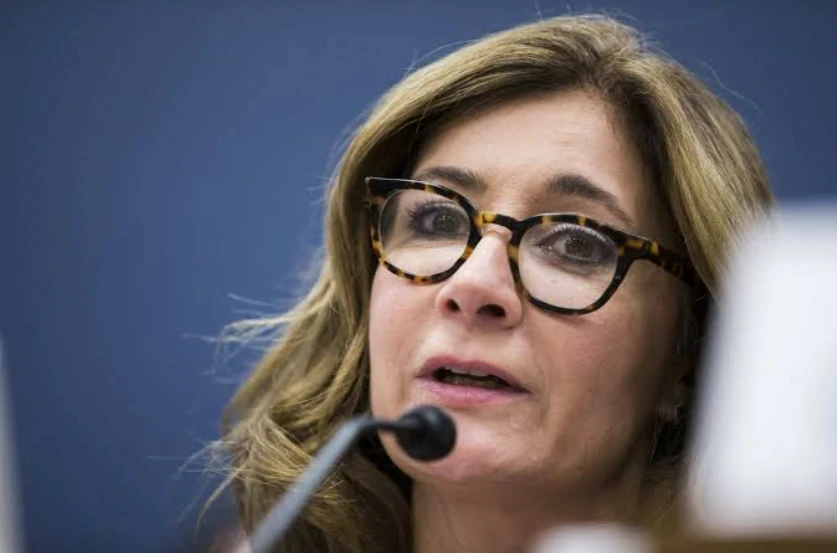
Sarah Leah Whitson, Executive Director of Democracy for the Arab World Now (DAWN) and a board member of the International Observatory for Democracy in Armenia (IODA), has accused Prime Minister Nikol Pashinyan's government of using the judiciary to target political opponents and weakening the country's democratic institutions.
In an interview with CivilNet's Gevorg Tosunyan on November 13, during the Voices Against Erasure: Victims of Atrocity Crimes in an Age of Impunity international conference at the American University of Armenia, Whitson also criticized the United States and European Union for what she described as their failure to challenge democratic backsliding in Armenia.
Whitson, who headed Human Rights Watch's Middle East and North Africa Division from 2004 to 2020, said Western governments were prioritizing their geopolitical competition with Russia over democratic principles.
She also called for greater international pressure on Azerbaijan to release Armenian prisoners and urged Yerevan to make their release a diplomatic priority.
Allegations of political persecution
Whitson said IODA, an organization established to monitor democratic conditions in Armenia, had documented serious problems before the country's 2026 parliamentary elections and was preparing a new assessment of the post-election environment.
According to Whitson, the organization's initial findings showed that the authorities had used criminal prosecutions, pre-trial detention and state resources to disadvantage political opponents.
"What we found was that the government had weaponized the judiciary to bring baseless charges against members of the political opposition," she said.
Whitson cited the detention of businessman and opposition leader Samvel Karapetyan, along with prosecutions involving lawmakers, journalists and bloggers critical of the government.
She also alleged that public facilities, including schools, had been used for election campaigning and that officials had faced retaliation for supporting opposition parties.
The authorities' confrontation with the Armenian Apostolic Church was another major concern, she said. Whitson criticized legal proceedings involving members of the clergy and government interference in the Church's internal affairs.
"In this environment, we concluded that the conditions for a free and fair election had been seriously undermined," she said.
Whitson argued that conditions had deteriorated further since the vote, pointing to investigations and corruption-related proceedings targeting opposition figures.
She questioned the use of pre-trial detention against political leaders and their associates, describing the practice as an instrument of political pressure.
"The use of pre-trial detention as a first resort to imprison leaders of the three main opposition parties, as well as their family members and other party members, is quite shocking," she said.
Whitson also raised concerns about Armenia's asset confiscation legislation. Although she acknowledged the legitimacy of recovering illegally acquired wealth, she argued that the law was being applied selectively against government critics.
"I am not interested in seeing a government use corrupt methods to prosecute corruption," she said. "When allegations of corruption and resulting convictions are politicized in this way, their credibility is undermined."
Her allegations about politically motivated prosecutions and selective enforcement represent IODA's assessment and were not independently verified for this article.
Western governments accused of overlooking democratic decline
Whitson reserved some of her strongest criticism for Western governments, accusing them of supporting Pashinyan despite what she described as growing restrictions on political freedoms.
"I think the United States, the European Union, and European states—the main representatives of what are often called the world's pro-democracy forces, the countries that preach to the rest of the world about the importance of democracy and the rule of law—have betrayed the Armenian people," she said.
According to Whitson, Washington and European capitals have placed greater emphasis on reducing Russian influence in Armenia than on holding the government accountable for alleged violations of democratic standards.
"Unfortunately, they have chosen to prioritize their geopolitical rivalry with Russia. Their only apparent goal and focus is to bring Armenia to their side, dangling the prospect of EU accession and offering all kinds of financial incentives from the U.S. government," she said.
Whitson argued that Armenia's democratic institutions were among the country's most important strategic assets, particularly given its limited natural resources, closed borders and relatively small population.
"Armenia's strongest selling point and greatest asset is the fact that it is a democracy," she said.
"It saddens me to see the Prime Minister and his ruling party dismantling Armenia's greatest asset."
Calls for judicial reform and accountability
Asked what steps Armenia should take to strengthen democratic institutions, Whitson called for an end to what she described as the politicization of the judiciary.
She said IODA had developed recommendations focused on criminal legislation, pre-trial detention and asset confiscation procedures.
Whitson called for amendments to provisions of the Criminal Code concerning hooliganism, arguing that they were being used to prosecute government critics for exercising their right to political expression.
She also criticized prosecutors and judges for allegedly failing to justify detention orders adequately.
"Under the law, pre-trial detention is supposed to be a last resort. It should be used only in rare and specific circumstances, such as when a defendant poses a flight risk or there is a genuine danger that they might obstruct an investigation or tamper with witnesses," she said.
Whitson argued that the repeated extension of detention orders allowed authorities to keep defendants imprisoned without securing convictions.
She also questioned the application of asset confiscation laws, citing proceedings involving Karapetyan's business interests.
"What we are seeing now, as also highlighted in a recent extensive study by an Armenian NGO, is that the lack of due process protections in the law allows the government to confiscate people's assets before a final judicial finding that they have done anything wrong," she said.
Whitson also raised concerns about deaths in Armenian detention facilities. She said 24 people had died in state custody since 2025, a figure that requires independent verification.
She specifically referred to the death of a mayoral candidate identified in the interview as Mr. Gevorgyan, questioning the justification for his detention and calling for an independent investigation.
"Unfortunately, I believe the government bears responsibility for this death," she said.
Whitson said IODA had called on Armenia's Investigative Committee to investigate the circumstances independently and impartially. Her comments did not establish a medical or legal finding about the cause of death or responsibility for it.
Beyond individual cases, Whitson alleged that the ruling party had pressured judges and interfered with judicial and investigative institutions.
She also drew a comparison with developments in the United States under President Donald Trump, saying she had observed similar attempts to use government institutions against political critics.
"But who is going to restrain the Armenian government? Which legislative body has the power or authority to hold the ruling party accountable? None. And that is the problem," she said.
Armenian prisoners held in Azerbaijan
The interview also addressed the continued detention of Armenians in Azerbaijan following the conflict over Nagorno-Karabakh.
Whitson urged the Armenian government to prioritize their release and criticized Pashinyan's approach to the issue.
"I would say that the Armenian government has a very important responsibility to keep the demand for the release of Armenian political prisoners held in Azerbaijan at the center of its agenda," she said.
Whitson accused Pashinyan of abandoning the detainees and said their treatment should remain a central concern for international human rights organizations.
She raised concerns about alleged due process violations during their trials and restrictions on communication with lawyers and family members.
"It is clear that there were serious due process violations in their trials. It is also becoming increasingly evident that their detention conditions do not meet basic standards of fairness and humane treatment," she said.
Whitson called on governments and human rights organizations to maintain pressure on Baku.
"I believe that all of us—not just Armenians, but everyone concerned with human rights—should continue to focus our advocacy on demanding the release of Armenian political prisoners."
Her remarks reflected a broader argument that Armenia's international partnerships should not come at the expense of democratic accountability or human rights protections.
For Whitson, protecting democratic institutions at home and advocating for Armenians detained abroad are both essential responsibilities of the Armenian government.

 Stories