Lavash Inscribed on UNESCO's List of Intangible Cultural Heritage
 Civilnet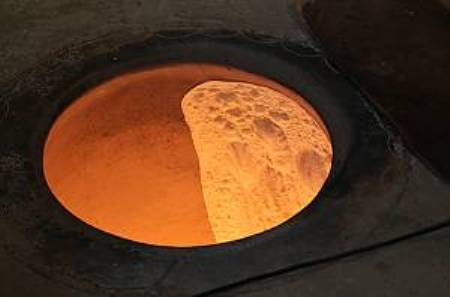
 Traditional Armenian lavash baked in a conical clay oven.
Armenian flatbread, otherwise known as lavash has been inscribed on UNESCO’s Representative List of the Intangible Cultural Heritage of Humanity.
Armenia’s Foreign Ministry announced that the preparation, meaning and appearance of traditional bread as an expression of culture in Armenia had been included in the list during the 9th Session of the intergovernmental committee of UNESCO’s Convention for the Protection of Intangible Cultural Heritage in Paris on November 26.
The application to have lavash included on the list was submitted by the National Academy of Armenia’s Institute of Archaeology and Ethnography, Ministry of Culture and the UNESCO National Commission of Armenia in 2013.
UNESCO stated that lavash satisfies the criteria for the inscription because the knowledge and skills related to preparation, consumption and use of lavash have been transmitted within families as part of their everyday life and these constitute a fundamental component of identity and a symbol of friendship and reconciliation.
The following is UNESCO's description of the popular bread in Armenia: "Lavash is a traditional thin bread that forms an integral part of Armenian cuisine. Its preparation is typically undertaken by a small group of women, and requires great effort, coordination, experience and special skills. A simple dough made of wheat flour and water is kneaded and formed into balls, which are then rolled into thin layers and stretched over a special oval cushion that is then slapped against the wall of a traditional conical clay oven. After thirty seconds to a minute, the baked bread is pulled from the oven wall. Lavash is commonly served rolled around local cheeses, greens or meats, and can be preserved for up to six months. It plays a ritual role in weddings, where it is placed on the shoulders of newlyweds to bring fertility and prosperity. The group work in baking lavash strengthens family, community and social ties. Young girls usually act as aides in the process, gradually becoming more involved as they gain experience. Men are also involved through the practices of making cushions and building ovens, and pass on their skills to students and apprentices as a necessary step in preserving the vitality and viability of lavash making."
Also included on UNESCO's List of Intangible Heritage is the Armenian duduk, the khachkar (Armenian cross stones) and the Armenian national epic, "David of Sassoun."



 Stories