 Civilnet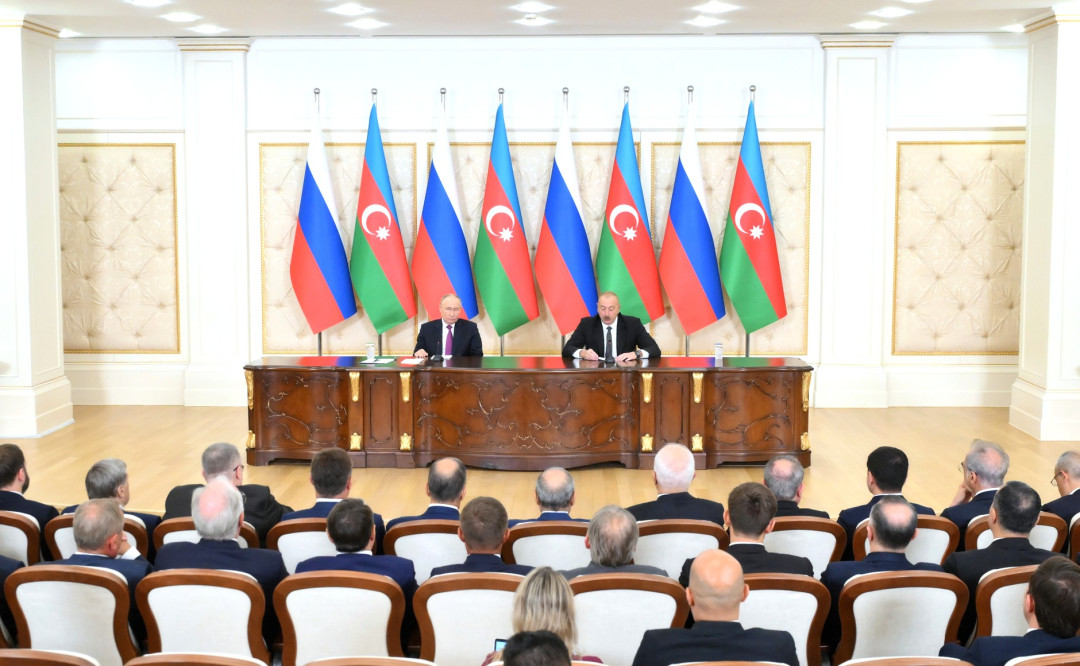
By Karen Harutyunyan
Political tension between Russia and Azerbaijan impacts natural gas transportation from Azerbaijan to the European Union. The conflict between Moscow and Baku escalated after a Russian missile struck an Azerbaijani civilian aircraft over Aktau, Kazakhstan, in late December 2024, resulting in the deaths of nearly forty people.
According to CivilNet’s sources in EU energy circles, the Trans Adriatic Pipeline (TAP), which transports Azerbaijani natural gas to Europe, is only operating at 90% of its capacity, although winter is not yet over in Europe, where gas demand remains high. By this time last year, the TAP system was operating at around 110% of its capacity.
Three explanations can be given to the present low TAP operating rate: Azerbaijan is still experiencing gas output problems; its internal gas consumption volume keeps increasing due to low local tariffs; and Azerbaijan is not increasing its gas imports from Russia, probably for political reasons. Most worryingly for Baku, the present pattern indicates that its European clients can cover their winter needs without maximizing their imports of Azeri gas, even under existing contracts. The July 2022 MOU between President Ilham Aliyev of Azerbaijan and the European Commission President Ursula von der Leyen provided for a doubling of Azeri gas imports to 20 billion cubic meters (bcm) annually by 2027 by the EU.
By way of comparison, the TurkStream gas line, which crosses the Black Sea and brings Russian gas to Turkey’s European territories, in Thrace, is operating at full capacity at this moment, although Turkey does not need a full operating flow through this line because it has many other gas import options, and its own gas production in the Sakarya area (Black Sea) is increasing. The explanation may be found in the flow of Russian gas to the EU through Turkey despite EU sanctions. Some central European countries are still heavily dependent on Russian gas imports, while others do not want to cut their ties with Russia for political reasons.
Before Russia’s invasion of Ukraine in February 2022, Russian natural gas (155 bcm/annum) accounted for approximately 40% of the European Union’s total gas consumption, making it the EU’s single largest energy supplier. The invasion, however, triggered a dramatic shift in EU energy policy, leading to sanctions, a rapid reduction of Russian gas imports, and an accelerated search for alternative suppliers. Major pipelines like Nord Stream 1 were shut down, and Nord Stream 2 was canceled altogether, forcing the EU to diversify its sources through increased LNG imports and seeking to expand partnerships with countries like Azerbaijan.
While Azerbaijan presents itself as a notable alternative gas supplier, it is experiencing problems in increasing its output. The Caspian country simply cannot bring to the commercial stage the volumes of natural gas required to match part of Russia’s vast exports, nor does Azerbaijan have the infrastructure capacity to compete with Russia’s established pipeline networks. The Southern Gas Corridor — comprising the South Caucasus Pipeline (SCP), the Trans-Anatolian Natural Gas Pipeline (TANAP), and the TAP — was designed to diversify Europe’s energy sources but remains limited in scale. TAP, for instance, has a capacity of 10 bcm/annum, with potential expansion to 20 bcm, still a fraction of the 55 bcm Nord Stream 1 once supplied.
Azerbaijan’s role, therefore, is complementary rather than competitive, helping Europe diversify sources without offering a significant replacement for Russian gas. In the meantime, the EU has hugely increased its gas supply chain capacity through the opening of new LNG import facilities (mainly with floating terminals), while global LNG export capacity is increasing as well.
Meanwhile, Russia has maintained a foothold in European gas markets through the TurkStream pipeline, which begins in Russia’s Anapa region, crosses the Black Sea, and reaches Turkey before branching toward the Balkans and Central Europe. Although EU sanctions target Russian energy exports, some Russian gas still enters European markets via TurkStream, especially in countries less aligned with the EU’s aggressive push to cut ties with Russian energy, in addition to Russian LNG which keeps flowing to Europe.



 Stories