 Civilnet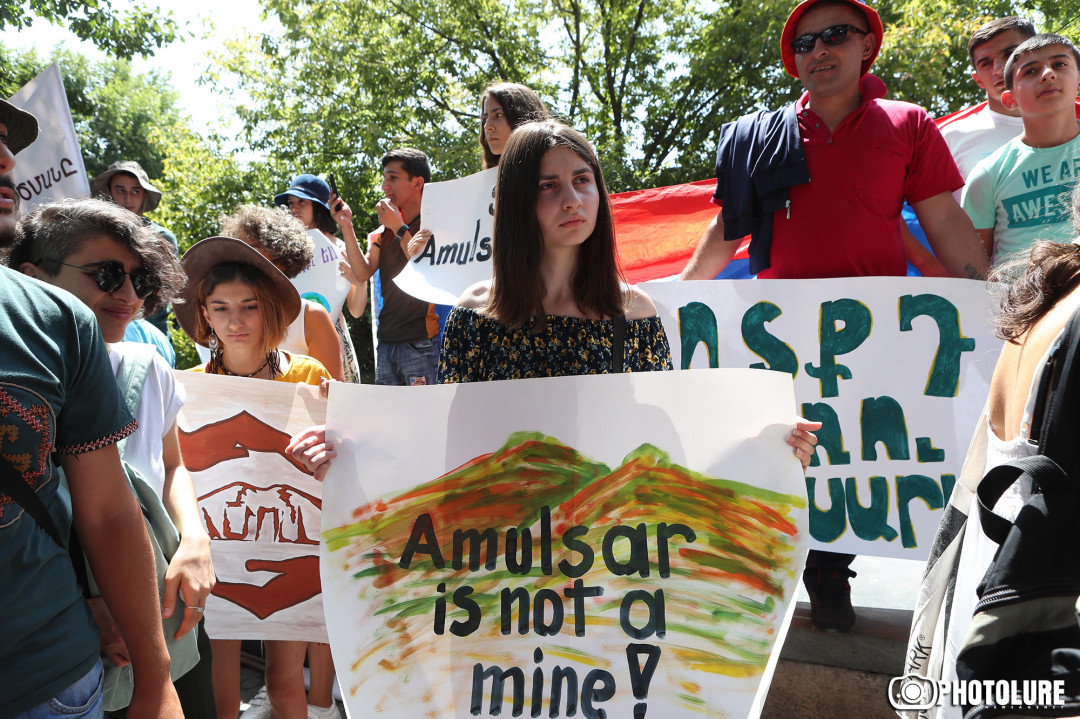
By Elen Muradyan
Several prominent civil society organizations filed a lawsuit Monday challenging the Armenian government's decision to provide a state guarantee for a $150 million loan that Lydian Armenia seeks from financial institutions for the controversial Amulsar gold mine project. Transparency International Anti-Corruption Center, Green Armenia, and the Community Consolidation and Support Center, along with a group of concerned citizens, have petitioned the Administrative Court to invalidate the government's decision, citing multiple legal violations.
The contested decision would authorize the government to act as guarantor for Lydian Armenia as it borrows up to $150 million from banks to operate the Amulsar mine. This means that if Lydian fails to repay its loans, the Armenian government would be obligated to cover the debt using public funds. According to the plaintiffs, this guarantee arrangement violates several provisions of Armenian law, particularly concerning financial safeguards and environmental protections.
The legal challenge comes amid a significant restructuring of the mine's financing. In a notable shift, Lydian Armenia will now secure the $150 million loan from Ameriabank, one of Armenia's largest financial institutions, rather than from a previously planned consortium of local banks. This change was revealed in an amended document published by Prime Minister Nikol Pashinyan's office, though neither Lydian nor Ameriabank have officially commented on the matter.
The plaintiffs argue that the government's guarantee decision is flawed on multiple grounds. They claim the sequential collateral established as security for the repayment of the budget guarantee does not ensure the return of public funds and fails to meet budgetary legislation requirements. They also point out that the decision was made without a market valuation of the company's assets, which is necessary to ensure compliance with legally prescribed limits.
Further concerns include the use of outdated financial records deemed insufficient for assessing the company's current solvency, and the absence of a mandatory positive conclusion from the Finance Ministry, which is a prerequisite for providing a budget guarantee.
The plaintiffs also highlight that the Administrative Court has already invalidated administrative acts related to Lydian Armenia's expansion of the subsoil plot and changes to the permit period, which they argue undermines the legal basis for the guarantee.
Environmental risks associated with the project form a significant part of the challenge. Independent experts, including the ELARD consultancy group, have assessed that the implementation of the project poses serious environmental risks. These include potential contamination of water resources, unassessed risks from the use of heavy metals and sodium cyanide, and threats of acid drainage.
The Amulsar project has been mired in controversy for nearly a decade. Despite being Armenia's second-largest gold deposit, mining operations have yet to begin since Lydian first broke ground in 2016. The project gained new momentum in early 2023 when the government reached an agreement with Lydian to advance the project in exchange for a 12.5% stake.
Lydian CEO Hayk Aloyan recently told the Armenpress news agency that once production begins in the fourth quarter of this year, the mine is expected to generate approximately $120 million in annual tax revenue and create 750 direct and 4,000 indirect jobs.
The mining industry represents a crucial sector for Armenia's economy, providing significant employment opportunities and government revenue. While many of the country's mines are controlled by Russian companies, Amulsar stands out as the only large-scale Western investment into Armenia since Prime Minister Pashinyan assumed office in 2018.




 Stories