 Civilnet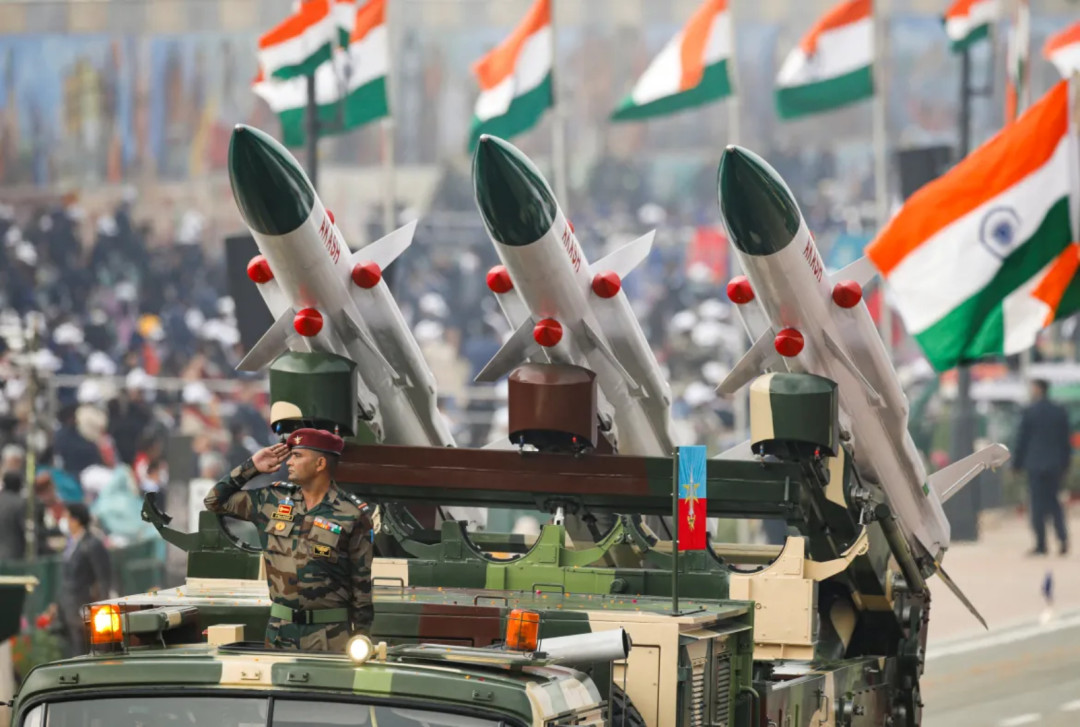
By Eduard Arakelyan
Armenia is quietly rearming—and in a way that signals a profound shift in its geopolitical orientation. Once almost entirely reliant on Russia for military supplies, Yerevan is now turning to new partners, including India and France, to modernize its armed forces. At the heart of this transformation lies a symbolic and strategic choice: the adoption of the NATO-standard 155mm artillery system over the Soviet-standard 152mm.
The move has drawn criticism from former Armenian President Robert Kocharyan, who recently argued against abandoning the older 152mm caliber. Speaking to an event in Yerevan last week, Kocharyan questioned the feasibility of defense reform and warned of rising costs and logistical complications associated with switching standards. He cited open-source estimates suggesting that a single 155mm shell can cost as much as $5,000.
While partially accurate, such figures fail to account for the broader strategic context. Ammunition prices vary significantly by supplier, and countries like India now offer 155mm shells at far lower costs. According to publicly available data, Indian-produced rounds start around $300—much cheaper than Western equivalents. India has already become a major supplier of artillery to Armenia, delivering both MArG towed and ATAGS self-propelled systems. French-made Caesar howitzers are also being integrated into Armenia’s arsenal.
Behind this procurement shift is a growing recognition that Russia is no longer a reliable supplier. Despite longstanding defense ties and a major arms deal signed in 2021, Russia failed to deliver large portions of contracted equipment—reportedly due to its own shortages amid the war in Ukraine. Moscow, once Armenia’s main defense guarantor, is now struggling to supply even its own forces, increasingly depending on imports from North Korea to sustain its artillery campaigns.
Kocharyan’s critique reflects more than concern about defense logistics. His remarks are part of a broader political narrative that remains nostalgic for Russian-led security arrangements. But Armenia’s recent history has tested those assumptions. Russian peacekeepers did little to stop Azerbaijan’s military advances in Nagorno-Karabakh, and Moscow failed to respond meaningfully to Armenian appeals during the 2022 border escalations.
These experiences have driven Armenia to explore new defense partnerships. India, in particular, has emerged as a crucial player, offering competitive prices, rapid deliveries, and growing diplomatic warmth. Defense cooperation between the two countries has expanded steadily over the past three years and now includes not just artillery systems but also radar, ammunition, and training.
For a country with limited resources and a volatile security environment, diversifying arms suppliers is not just strategic—it’s essential. Transitioning to the 155mm standard, widely used by NATO members and regional powers like South Korea, Japan, and Ukraine, opens access to a global market. It also facilitates interoperability, simplifies future procurement, and reduces dependence on a single supplier. By contrast, the 152mm caliber—still used primarily by Russia and North Korea—is increasingly isolated from global defense logistics.
Kocharyan’s argument that logistical challenges make reform impractical misses a deeper point: sticking with outdated Soviet systems ties Armenia to a defense relationship that has repeatedly failed it. While modernization is never without cost, maintaining reliance on a single, declining supplier is far riskier.
The adoption of the 155mm caliber is more than a technical upgrade. It marks a geopolitical pivot—away from a Russian-centric security model toward a more balanced and autonomous defense posture. With India’s emergence as a viable alternative supplier, Armenia is laying the groundwork for a future in which it is less beholden to Moscow and better prepared to defend itself with diversified support.
As global alliances shift and traditional power structures evolve, Armenia’s quiet artillery revolution offers a case study in small-state strategy—one where survival hinges not on loyalty, but on adaptability.
Eduard Arakelyan is a military expert at the Yerevan-based Regional Center for Democracy and Security.
Read the full article in Russian: Артиллерийский выбор Армении: анализ заявлений Роберта Кочаряна




 Stories