 Civilnet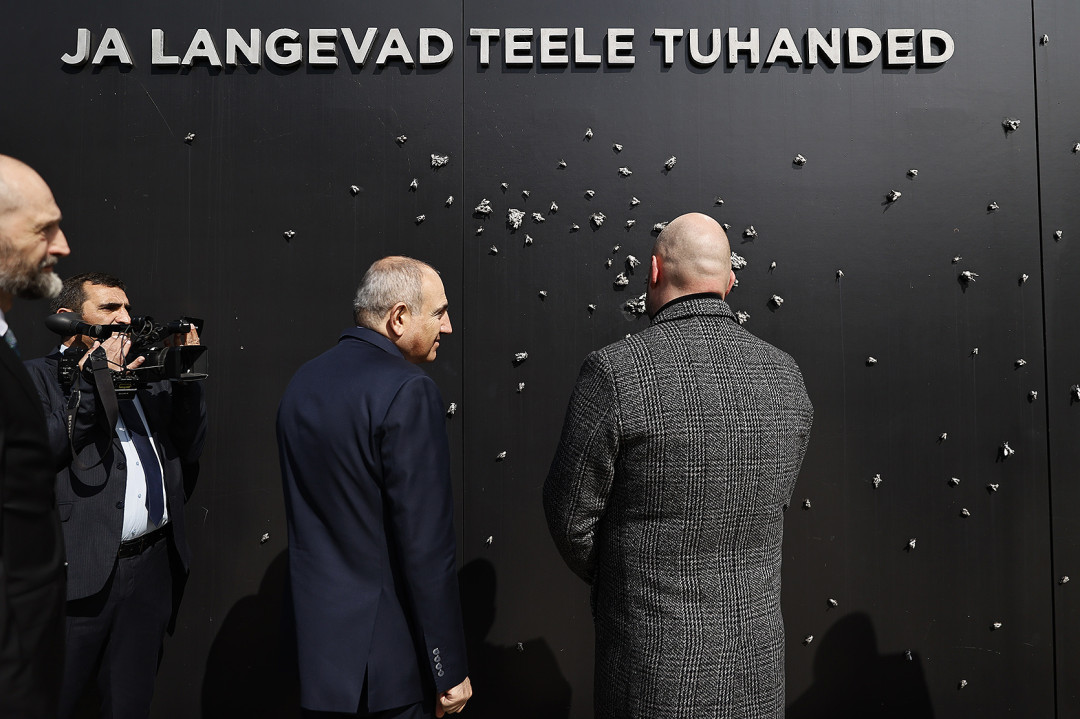
By Brigitta Davidjants
During Armenian Prime Minister Nikol Pashinyan’s visit to Estonia on April 27–28, Estonian media focused heavily on Armenia's relationship with Russia.
Since the collapse of the Soviet Union, ties between Estonia and Armenia have remained relatively formal. Although this is often attributed to limited economic ties, Estonia's cool stance can also be seen as a response to Armenia's traditionally close relationship with Russia, especially as Estonia distanced itself from Moscow after regaining independence and quickly moved toward integration with EU structures.
Estonia’s path toward Europe was, admittedly, more straightforward due to its geographic proximity and more stable geopolitical environment. But now that Armenia has begun distancing itself from Moscow, Estonia seems to be recalibrating its stance in favor of closer cooperation with Armenia. Foreign Ministry spokeswoman Brita Kikas confirmed this:
“Estonia has a vested interest in having a stable, democratic and economically prosperous EU neighbourhood. We see Armenia taking clear steps toward a European and pro-Western policy. We have also made it clear to our Armenian counterparts that we fully support their journey and that their reform process is moving in the right direction. Thanks to our experience with successful reforms and EU integration, as well as our many years of sharing this experience with Eastern Partnership countries, Estonia is well positioned to contribute to the success of Armenia’s reforms. Our cooperation is developing most rapidly in the digital sector and in promoting the diversification of Armenia’s trade.”
Estonia's renewed interest in Armenia
During Nikol Pashinyan’s visit to Estonia, he first met with members of the Armenian diaspora in Estonia – a meeting I attended. About 40 people were present, and mobile phones were left at the door. Diaspora members raised topics ranging from organizing an exhibition on Khachatur Abovyan in Tartu to historical border issues. One participant commented on Armenian men’s tendency to gain weight. These diverse concerns did not distract Pashinyan from emphasizing his central message to the diaspora: a political course focused on peace and stability with any cost. He stressed that for the first time in a long period of history, Armenians’ statehood and historical homeland coincide, to exist on the same territory, treating homeland and state as an inseparable whole.
At the subsequent press conference, the main question posed by Estonian journalists concerned Armenia’s willingness to move out from under Moscow’s shadow. To Aktuaalne Kaamera, Pashinyan responded diplomatically, stating: “We have had no intention of straining relations with Russia. Logically, it makes more sense to maintain good relations with all international partners. We want to normalize relations with our neighbors, including Azerbaijan and Turkey.” This message was prominently echoed in Estonian media coverage.
In Delfi, Pashinyan reiterated Armenia’s balanced approach: “In our foreign relations, we strive to pursue a policy of balance. Our policy and strategy are democratic reforms.” Delfi journalist Kaarel Kressa followed up with a question – how long can a policy of balance be sustained between applying for EU membership and attending military parades in Moscow? Pashinyan again defended the strategy, stating that relations with Russia and the EU are not mutually exclusive.
Russian influence: A recurring question
Questions about Russia’s role in Armenia are nothing new. Having spoken about Armenia in the Estonian media for two decades, I can say that the issue of Russian influence is always the first one raised. Explaining Armenia’s geopolitical constraints and the depth of Russia’s historic presence is never easy. However, awareness and empathy have grown in recent years.
In a March article in Postimees, for instance, the paper suggested that Estonia – as a similarly small post-Soviet country – could help Armenia escape Moscow’s grip. Armenian Deputy Foreign Minister Paruyr Hovhannisyan was quoted, saying that Estonia’s support is especially valuable because Estonians, like Armenians, know what it means to live under Soviet rule. Yet the article also pointed out that freeing Armenia from Russia’s influence will not be easy, especially in a region as complex and conflict-ridden as the South Caucasus.
What Is Estonia offering Armenia?
According to the official statement, discussions between Estonian and Armenian leaders focused on the peace process between Armenia and Azerbaijan, Armenia’s relationship with Ukraine, and opportunities for deeper cooperation. Prime Minister Kristen Michal expressed strong support for Armenia’s democratic reforms and EU aspirations, and reaffirmed Estonia’s willingness to promote expanded EU support, including launching a visa dialogue. Pashinyan emphasized Armenia’s interest in partnering with Estonia in education, science, and technology.
And indeed, relations have deepened. According to Statistics Estonia, in 2024, Estonia’s exports to Armenia amounted to €28.2 million, while imports stood at €864,000 – compared to just €372,000 and €6,650, respectively, twenty years ago. Development cooperation, too, has intensified in recent years, and a number of such projects have been launched. "Thanks to Armenia's democratic and European aspirations, Estonia has once again designated Armenia as a priority partner for cooperation, resulting in financial investment and collaboration at various levels. Armenians are, in my experience, intelligent, hardworking, and determined partners who understand their country's needs and recognize where Estonia’s experience can be valuable, especially in attracting foreign funding,” Iti Aavik from Mondo and AKÜ (Development Cooperation Roundtable) commented.
She added: “Armenia has many strong organizations with whom we can jointly develop projects – for example, together with a local partner, we trained schoolteachers in equality, violence prevention, and anti-bullying. One current project, led by the abovementioned AKÜ, promotes resilience in both Armenian and Estonian societies by connecting democracy and media literacy for people to recognize misinformation.”
A personal note
During Pashinyan’s visit, I spoke on Estonian national broadcast Vikerraadio about Armenia’s international positioning. I also intended to attend a press event to cover the visit for CivilNet. Although I applied slightly past the deadline, I received confirmation of my accreditation. However, after the Estonian Foreign Ministry checked with Armenian counterparts, my accreditation was revoked without explanation. It’s unclear whether this was due to the late registration or concerns about the media outlet.
Brigitta Davidjants is a journalist based in Tallinn, Estonia. In 2023, she interned at the CivilNet office in Yerevan.

 Stories