Civilnet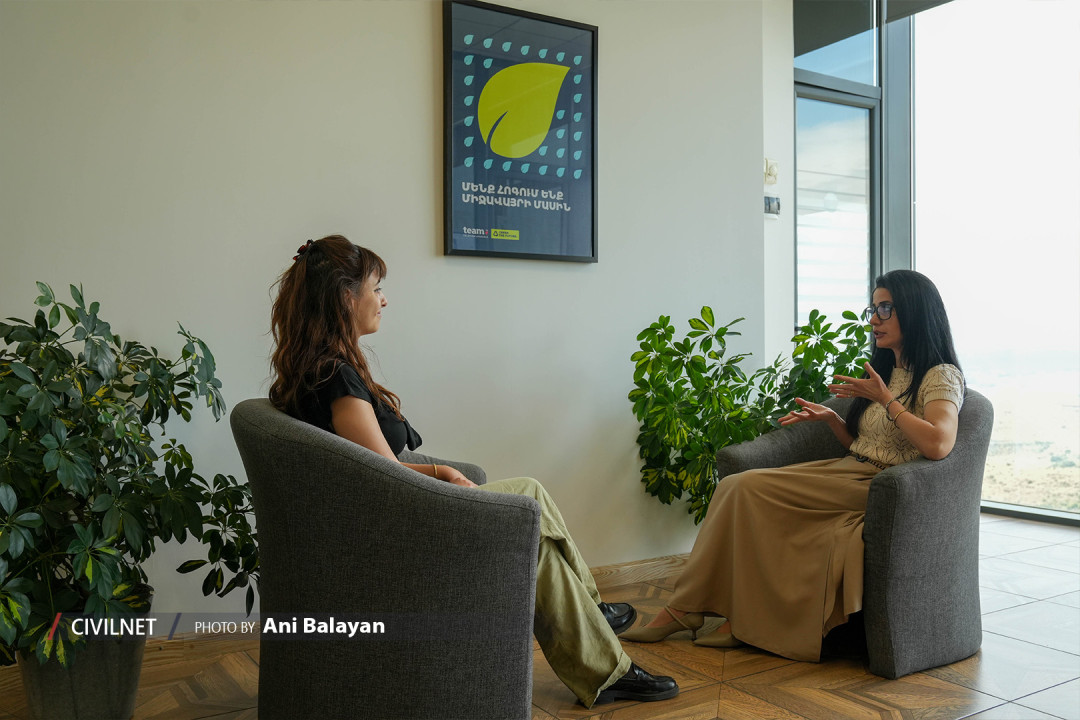
Sponsored content
"Beat Plastic Pollution." This year, World Environment Day on June 5th is dedicated to the fight against plastic. CivilNet spoke with Team Telecom Armenia's environmental and social expert Arevik Mkrtchyan about environmental issues in Armenia and the role of large companies in solving them.
- When and why did Team Telecom Armenia decide to focus on environmental issues and initiatives?
- Environmental protection and the implementation of energy-efficient solutions through new technologies have strategic importance for our company. When initiating each new program, we conduct a study on its potential environmental impact and choose the best solution. Thanks to this, the company reduces its impact on the environment. For example, since 2021, we have quadrupled our use of renewable energy, and this number will continue to grow at the same rate. Last year, the percentage of electric vehicles in our company’s fleet reached 22.8%, and this number will continue to grow, reducing emissions generated from fuel.
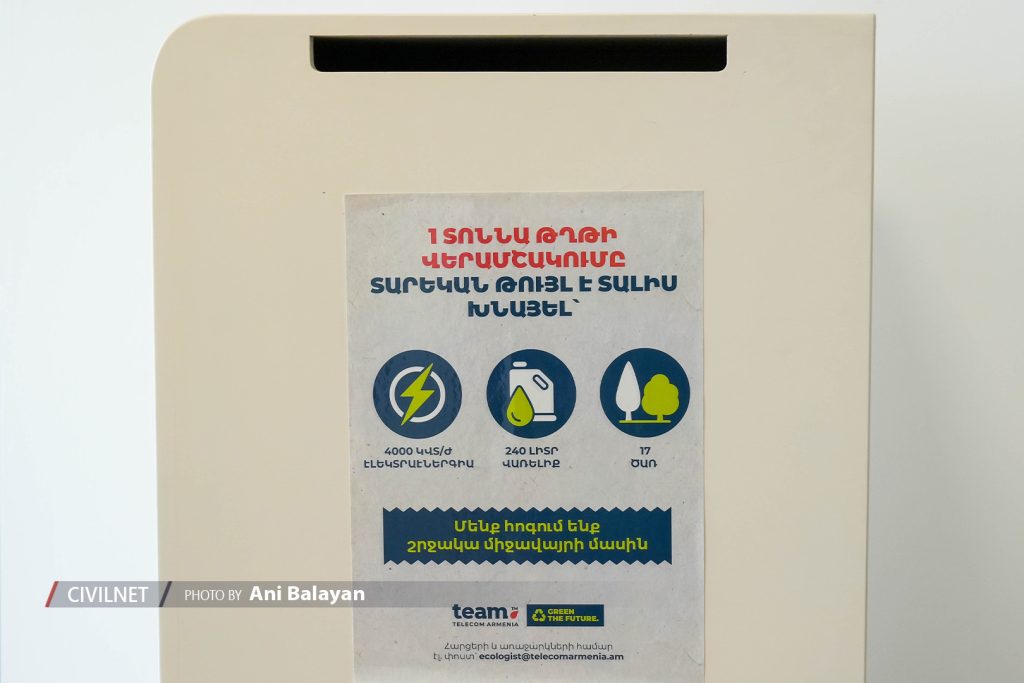
Over the past 3 years, we have also recycled about 6,300 kg of paper and 5,830 kg of cardboard, as well as avoided generating a significant amount of paper waste thanks to the implementation of e-Pen. Similarly, thanks to launching eSIM, we have avoided issuing 1,665 kg of plastic cards and have handed over about 32,672 electronic devices (Wi-Fi, routers) for reuse.
- At the end of 2024, Team Telecom Armenia became the first in the country to issue $75 million in sustainable development bonds. But what is a sustainable development bond, and why is this an important event?
- Every company has an environmental "footprint" or, in simpler terms, a certain impact on the environment. Business growth is typically accompanied by increased impact on the environment. Yet not all businesses measure their impact or calculate the potential risks of their activities.
If we consider any retail store with the same logic, then one of the minimum impacts is waste generation. The more we increase turnover, the greater the pressure on the environment and ecosystems becomes. Sustainable business growth implies business expansion and income growth without impact or with gradual reduction of that impact.
Sustainable development bonds can only be issued by companies that already have an implemented environmental and social management system, as well as set ambitious environmental goals to significantly reduce their impact while ensuring business expansion.
Today, Team Telecom Armenia is not only the only company in Armenia that has issued sustainable development bonds, but also the only ICT (Information and Communication Technologies) sector company in the wider region that has successfully issued bonds of this volume.

In general, ICT is considered a highly energy-intensive sector, and according to the calculations of GSMA (an association representing the interests of mobile network operators), the volume of greenhouse gas emissions resulting from digital technology activities generally comprises 3.5 percent of all greenhouse gas emissions in the world.
In this context and recognizing the existing challenges, by issuing sustainable development bonds, Team Telecom Armenia has set an additional environmental target, namely to reduce its greenhouse gas emissions by 40 percent by 2029.
Moreover, if the company does not reach its environmental targets within the specified timeframe, it will be forced to pay investors 0.25 percent more.
- Can you detail what actions are being taken and what progress there is?
- To achieve the goal, the company is taking a series of steps, of which I will highlight a few:
- Decommissioning old technologies by replacing copper cables with new generation fiber optic cables.
- Implementing exclusively energy-efficient equipment (EnergyStar rating) for information technologies and networks, as well as upgrading base stations with new generation energy-efficient devices.
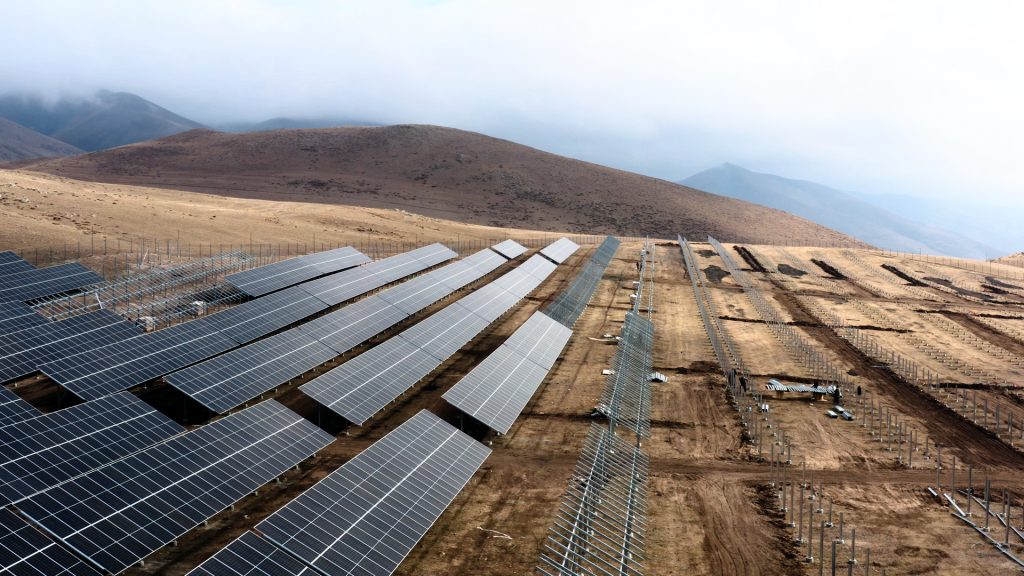
- Transitioning to the use of renewable energy by ensuring solar energy production both within the company and acquiring renewable energy from the liberalized market.
- Reducing and electrifying the vehicle fleet, increasing the number of electric cars to reduce gasoline and diesel fuel consumption.
- Ensuring energy-efficient lighting in all administrative and service offices.
- Reducing the amount of generated waste as much as possible by transitioning to circularity and following the 3R principle (Reduce, Reuse, Recycle).
- What percentage of the electricity used is now provided by alternative energy sources? I know you plan to get energy exclusively from renewable sources by 2050. Is this a realistic goal?
- As of 2024, the share of renewable energy comprises 4.1 percent, another 30 percent is obtained from alternative energy suppliers, and just this year it is planned to double the share of self-produced solar energy. This is a continuous process until 100 percent satisfaction of the company's total needs, that is, the transition to net zero emissions.
- How can environmental topics be brought to the agenda for Armenians? Is it natural that in our country this is not perceived as a priority issue, or is there still an awareness problem, and can the situation be changed?
- Ecology is generally a field that gets addressed when a problem appears. For example, in the case of water pollution or forest destruction, it is only by preventing those problems that we can talk about ensuring ecological balance. Environmental problems must be prevented and we must think about the environment now, ensuring a healthy environment for our generations.
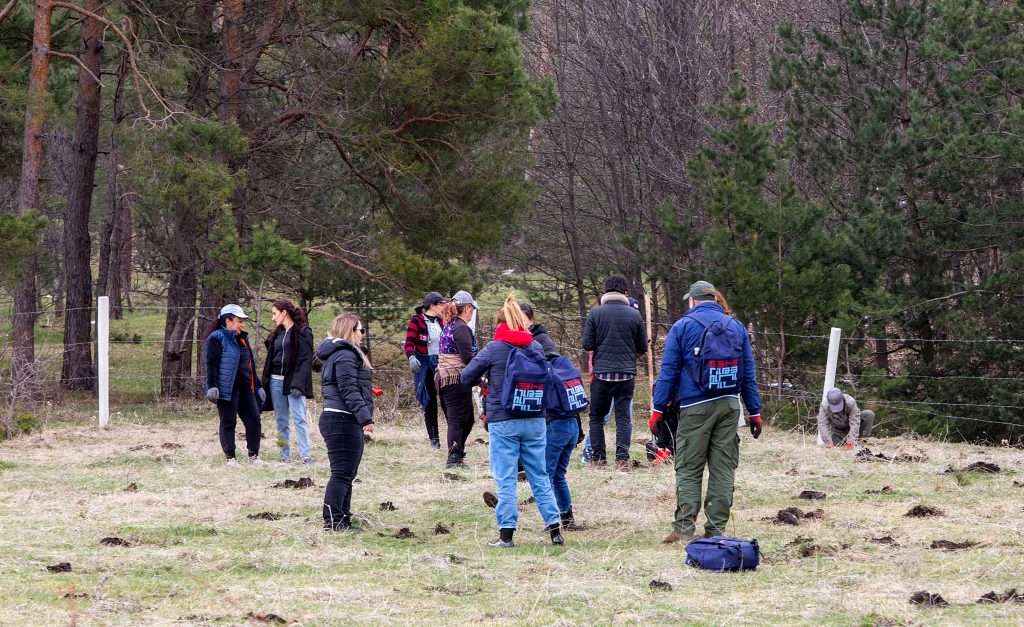
We try to involve our subscribers in such initiatives, and one example of this was the establishment of a 1-hectare forest in Lori Province, where 2-year-old oak seedlings were planted with the participation of our team employees. It will grow into a full forest in about 20 years. It is important to emphasize that this initiative became possible thanks to our subscribers, since during April we committed to planting ten trees for each phone purchased.
- Is it important for the average person living in Armenia to use services from companies that try to preserve the environment? What is your impression? What trend do you see?
- Throughout the world, there is a growing trend of interest among consumers in which preference is given to companies that have a lesser economic footprint.
Sustainable development principles are gradually becoming an important guide not only for countries' public policies, but also for various business sectors, from the textile industry to mining.
Sustainable development is no longer simply a component of social responsibility, but a strategic necessity for maintaining competitiveness in the global market and coordinated response to global challenges.
These days, any company that puts its business interest above everything else is setting itself up for failure eventually, because it does not take into account the dangers that directly threaten its own reputation and the resulting financial losses.
Moreover, international experience shows that people more often choose companies that are not limited to just generating profit, but care about their surrounding environment and communities.
Such companies are more resilient to market changes, properly manage their risks, have formed reliable teams and can offer innovative solutions while maintaining their competitive position and contributing to the general welfare of society.
- When cooperating with any company or organization, do you take into account their sharing of the same ecological values? Is this an important condition for cooperation?
- Since we work with numerous local and international partners, it is very important that they also practice environmental and social awareness. For example, we require that a contractor company follow environmental norms when carrying out work to ensure they do not cause soil, water, and air pollution, that they follow workplace safety norms, address any complaints, do not practice corruption, and so on. In this way, our company can ensure a wide impact within the framework of its suppliers and partners, and as a result, our system has a scale effect.
- How do you measure the success of sustainable development efforts?
- The existing environmental and social impact management system has requirements for data collection, report preparation, analysis, monitoring, and evaluation. For example, once every quarter, the company measures its emissions and compares them with targets, after which it takes necessary measures to reduce risks in the next reporting period.
In addition to environmental data, social indicators are also analyzed, for example, employee satisfaction survey data, workplace safety indicators, and more. This provides an opportunity to see any problem at an early stage and correct actions by cooperating with all departments of the company.
- Do you follow international standards, for example, the Global Reporting Initiative created for business or ISO 14001 (internationally recognized standards for environmental management)?
- Team Telecom Armenia already has 2 ISO certificates: Quality Management System (ISO 9001) and Information Security Assurance (ISO 27001) licenses. This year we have also applied to certify our environmental management system (ISO 14001 standard), and after passing the audit the company will also be certified in this field, ensuring its commitment to sustainable development and environmental responsibility.
By Lusine Vardanyan





 Stories