Civilnet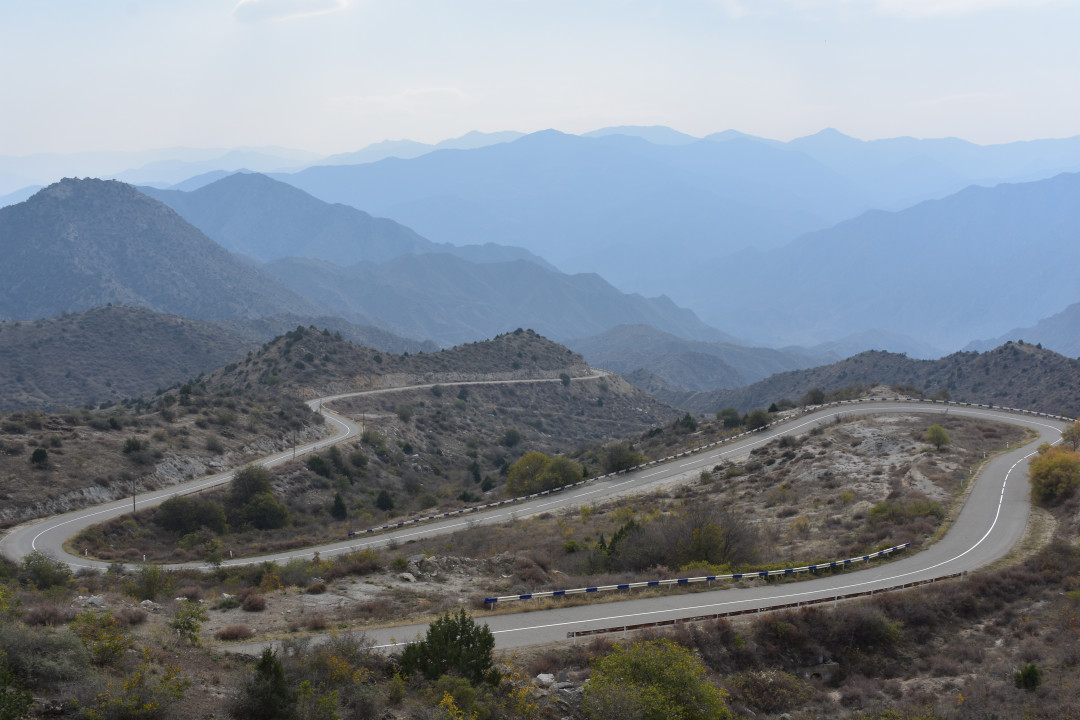
By Alexander Pracht
Thomas Barrack, the U.S. ambassador to Turkey, sparked controversy on Friday with remarks made during a press briefing in New York, suggesting that Washington was considering taking control of a strategic road connecting mainland Azerbaijan to its Nakhichevan exclave under a 100-year lease as part of efforts to facilitate normalization between Armenia and Azerbaijan.
Barrack, who is also the U.S. special envoy for Syria and has served as ambassador since May, described the proposal as a means to address long-standing tensions between Yerevan and Baku over a stretch of road in Armenia’s Syunik region.
During his speech, Barrack used language many in Armenia found offensive, saying that “tribal points of view” are in the way of a successful settlement.
“Azerbaijan and Armenia are arguing over 32 km of road for over a decade. So, what happens if America comes and says: ‘O.K., we’ll take it over. Give us the 32 km road on a hundred-year lease. And you can all share it,’” Barrack said, adding, “But these tribal points of view do not fade. E pluribus unum – what does that mean? It means ‘give up the masses for one’. It exists in America – it does not exist there. [There] it’s individual, family, tribe, and then the nation.”
His comments drew immediate backlash in Armenia, where any concession of sovereign territory is considered a red line. While Barrack did not use the term “Zangezur corridor” — a phrase Yerevan rejects as irredentist — this marked the first on-record confirmation of the Trump administration’s reported plans to mediate the land dispute by leasing the route.
In a follow-up to Barrack’s remarks, President Donald Trump on Monday said during a meeting with NATO Secretary General Mark Rutte at the White House: “It looks like that’s going to come to a conclusion — a successful conclusion,” referring to the Armenia-Azerbaijan peace process.
However, the reaction from both Armenia and Turkey was swift. Armenian Prime Minister’s spokesperson Nazeli Baghdasaryan dismissed the proposal.
“Armenia has never discussed and is not discussing the transfer of control over its sovereign territory to any third party,” she told state news agency Armenpress on Monday.
Baghdasaryan stressed that all negotiations on regional infrastructure take place strictly within the framework of Armenia’s sovereignty, jurisdiction, and territorial integrity. Armenian law, she added, only permits land leases for agricultural purposes, making the U.S. proposal legally and politically impossible.
Officials in Ankara also denied knowledge of such a plan. A representative of the Turkish presidential administration told local media they were unaware of any U.S. intentions to manage a corridor through Armenia.
The idea of a land route connecting Azerbaijan to Nakhichevan through Armenian territory dates back to the 1990s, with various versions tied to broader settlement packages involving the status of Nagorno-Karabakh. Those plans never materialized. In the Russian-brokered ceasefire that ended the 2020 Karabakh war, Baku secured a clause obligating Armenia to ensure unimpeded transit for Azerbaijani cargo through Syunik, initially to be supervised by Russian forces. Yerevan, however, has repeatedly rejected any arrangement that would cede control over the route and continues to treat the issue as a matter of national sovereignty.



 Stories