 Civilnet
By Alexander Pracht
Following the historic summit in Washington on Friday, where Azerbaijani President Ilham Aliyev and Armenian Prime Minister Nikol Pashinyan agreed on a peace declaration, the two sides closed two out of three problematic issues toward normalization. The first was agreeing on the so-called ‘Trump Route’ through southern Armenia, a road Azerbaijan has sought for decades to connect with its Nakhichevan exclave, also coined in Azerbaijani and Turkish media as the ‘Zangezur corridor.’
The second was the dissolution of the Minsk Group, a mediation platform created in 1992 to address the Karabakh conflict. The two leaders announced in Washington they would quit the mechanism. The only precondition that remains is changes to Armenia’s constitution, and Aliyev addressed that immediately after the summit in an interview with Azerbaijani reporters.
“Armenia still has homework to do. After the changes are made to the Armenian constitution, the peace treaty can be signed at any time," Aliyev said.
Since taking power after the 2018 revolution, Pashinyan’s cabinet continued to operate under the 2015 constitution, amended under then-President Serzh Sargsyan. The changes transformed Armenia from a presidential to a parliamentary republic, widely seen as a move by Sargsyan to become prime minister and bypass the two-term presidential limit he had already served.
Pashinyan’s government has said from the start that the current constitution is not suitable for Armenia’s future, but the process of drafting a new one and holding a referendum has been repeatedly delayed. First came the COVID-19 pandemic, followed by the 2020 war with Azerbaijan, and later, the 2023 ethnic cleansing in Nagorno-Karabakh. The process remained inactive for years.
Here, we delve into what the proposed changes would mean for the country.
Why does Azerbaijan care about Armenia’s constitution?
Aliyev, along with Azerbaijan’s foreign ministry and other senior officials, have repeatedly voiced concern over Armenia’s constitution in recent years. Now that Baku has taken full control of Nagorno-Karabakh, Azerbaijani authorities have been promoting a narrative that the conflict is over, conclusively settled in its favor. In this context, they point to what they see as lingering territorial claims embedded in Armenia’s constitution.
While the constitution’s main body contains no mention of Karabakh, its preamble refers to the 1990 Declaration of Independence from the Soviet Union. That document cites earlier resolutions passed by the Armenian Soviet Socialist Republic and the authorities of the Nagorno-Karabakh Autonomous Oblast, calling for the unification of Armenia and Karabakh. Through this chain of references, Baku argues that Armenia continues to assert a legal claim over Nagorno-Karabakh, and demands that this be removed.
In response, Prime Minister Pashinyan has pushed back on several fronts. He has pointed to similarly problematic language in Azerbaijan’s own constitution, which frames the country as the successor to the short-lived Azerbaijan Democratic Republic of the late 1910s, rather than Soviet Azerbaijan. That earlier republic had laid claim to broad territories now internationally recognized as part of Armenia and Georgia.
Pashinyan has also maintained that changing the constitution is a domestic matter, and has urged Azerbaijan not to fixate on legal technicalities. Instead, he proposed that both countries sign a treaty affirming mutual recognition of each other’s territorial integrity, overriding any contradictions in domestic legislation.
Additionally, last September, Armenia’s Constitutional Court, clearly acting in coordination with the government, conducted a legal review and concluded that only the explicit content of the constitution carries legal force. According to the court, the chain of references involving the 1990 Declaration and earlier Soviet-era decisions does not amount to territorial claims against Azerbaijan.
Still, Baku remains firm. In March this year, when Armenia and Azerbaijan announced they had agreed on the text of a peace deal, Azerbaijani officials openly said that changing Armenia’s constitution was one of two preconditions for signing the final agreement.
What domestic issues are in the constitution?
One of the most debated domestic provisions in the 2015 Constitution is the so-called “stable majority” provision. Under this rule, if no party wins more than 50 percent of the seats in parliamentary elections and the qualifying parties fail to form a coalition, a second round of elections is triggered. In this runoff, the two leading parties from the first round compete, and the winner receives additional mandates to secure a majority in parliament, regardless of their initial vote share.
This arrangement means that in the elections, a party with as little as 25% of the vote in the first round can still end up with a majority and govern alone. Critics argue that it grants disproportionate power to a political force with relatively limited public support, undermining the fairness of representation. They point out that it contradicts the principles of parliamentarism by giving a party more seats than its actual voter support warrants, distorts proportional representation in favor of a “winner takes all” approach, and removes incentives for political negotiation and compromise.
This regulation is widely believed to have been designed for former President Sargsyan to allow the ruling party to retain control despite lacking broad electoral legitimacy.
Prime Minister Nikol Pashinyan and his party were outspoken critics of the system both during and after the 2018 revolution, promising to change it. Yet six years later, and with the 2026 parliamentary elections approaching, the provision remains in place. Facing declining popularity, Pashinyan and his allies have shown little urgency in removing a mechanism that could now work in their favor in the next elections.
Another concern is that constitutional mechanisms intended to include civil society in major policy discussions, particularly on political representation, rarely function as intended. In practice, the government often rejects proposals perceived as threatening its hold on power. This results in a process that appears participatory on paper but fails to deliver meaningful change.
How does the government intend to address these issues?
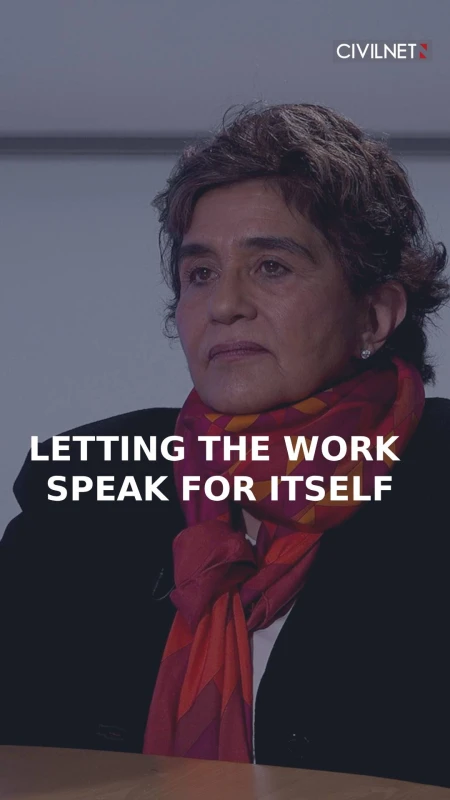
In an interview with CivilNet, Armenia’s Justice Minister Srbuhi Galyan, the key government official responsible for constitutional reform, said that the National Assembly may be assigned a greater role in the formation of the government and establishing stronger oversight mechanisms over the executive. This could mean allowing lawmakers to weigh in on the appointments of cabinet members and to hold them to account through no-confidence votes.
Galyan said discussions with lawmakers have also explored the possibility of scrapping the “stable majority” clause. She emphasized, however, that any changes must minimize the risk of political instability. She pointed out that in some countries, minority governments operate without a single party or coalition holding a majority. In such systems, all political forces that clear the electoral threshold gain representation in parliament, but the chances of instability increase sharply, she explained.
Asked whether the document will remove references to the Declaration of Independence, Galyan said no final decision has been made.
What is problematic about the bid for a new constitution?
Pushing ahead with constitutional reform now risks deepening Armenia’s already severe political polarization, Armen Mazmanyan, a constitutional law expert and professor at the American University of Armenia, told CivilNet. He argued that such changes should be made during moments of national unity and optimism, citing the U.S. Constitution, which was adopted in a period of historic transformation after independence.
“Today we are at a low point of political and moral decline,” he said. “To draft a new constitution and expect it to become a civic contract under these conditions is both risky and pointless.”
According to Mazmanyan, Armenia is as polarized as it has ever been, making broad public support for a new constitution impossible.
“Even the best-designed proposal cannot gain trust in such a climate,” he said, stressing that a constitution must instead be adopted with widespread consensus.
He also criticized Prime Minister Pashinyan’s idea of “discussing the constitution with the people” as a populist move. In his view, constitutional reform should be debated primarily among political leaders, while also engaging professionals and academics. So far, he says, they have not been included.
The path to a new constitution will also face significant procedural challenges. The referendum must win approval from a majority of voters, with a turnout of at least 25% of all eligible voters, creating a high threshold for success. This is why the government is likely to schedule the referendum on the same day as nationwide parliamentary elections, aiming to boost voter participation and meet the required turnout threshold.
Both Mazmanyan and public policy researcher Tigran Mughnetsian of Transparency International Armenia point to several additional obstacles, including public skepticism toward reforms seen as externally imposed, and the fact that constitutional debates are often pushed aside by more urgent socio-economic issues.
They also note strong opposition from the former ruling elite, who see the referendum as an opportunity to mobilize their supporters and undermine the current government.
Linking the peace process directly to constitutional reform and a referendum adds further risk. If the changes are rejected amid internal political tensions, Armenia could face accusations of revanchism and of obstructing peace efforts, potentially providing Azerbaijan with a pretext for renewed military action.


 Stories