Syunik Road vs. Zangezur Corridor: Why the Distinction Matters
 Karen Harutyunyan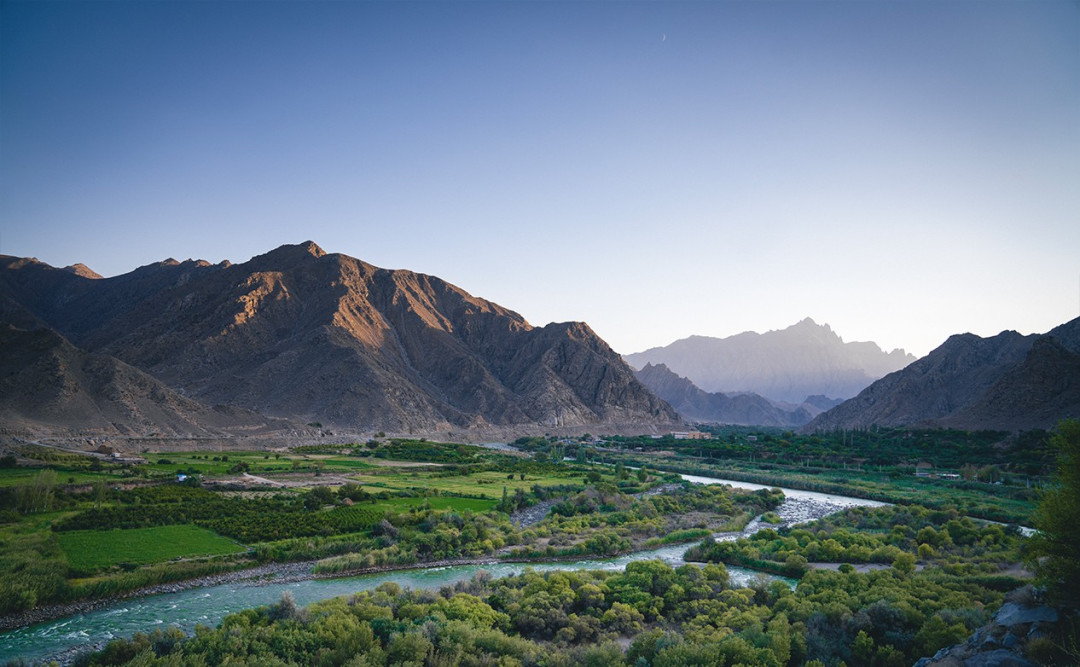
By Karen Harutyunyan
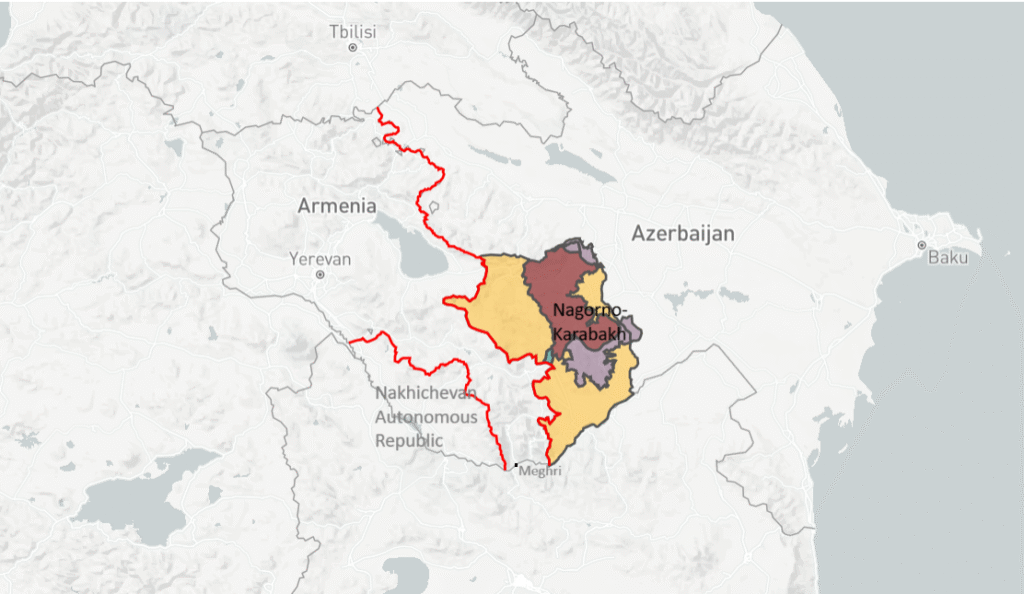
Since Armenia’s loss in the 2020 Karabakh War, the issue of a road through Armenia’s southern Syunik region has been а subject of heated debate. The purpose of this road is to connect mainland Azerbaijan in Armenia’s east with its exclave of Nakhichevan west of Armenia. The current route, in use since the fall of the USSR, is through northern Iran.
The idea of connecting two parts of Azerbaijan via Armenia first emerged in early 1992, when Turkish president Turgut Özal suggested, and U.S. diplomat Paul Goble outlined, a territorial swap plan under which Armenia would gain Nagorno-Karabakh along with the Lachin corridor in return for ceding a strip of land in the Meghri district to link mainland Azerbaijan with its exclave of Nakhichevan. The territorial swap plan was rejected by both Baku and Yerevan.
Variations of this concept resurfaced in the late 1990s and during the U.S.-brokered Key West talks of April 2001. In those negotiations, Azerbaijani president Heydar Aliyev gave initial agreement that Nagorno-Karabakh, together with the Lachin corridor, would pass under Armenia’s sovereignty, while Azerbaijan would receive a sovereign passage—8 meters wide and 42 kilometers long—across Armenia’s south to connect with Nakhichevan. The arrangement was designed so that the corridor would not sever Armenia’s link to Iran. Yet upon Aliyev’s return to Baku, Azerbaijan rejected the plan. For nearly two decades since then, the subject disappeared from diplomatic agendas—until the end of the Second Karabakh War in 2020.
Even though Nagorno-Karabakh is lost to Azerbaijan following the September 2023 ethnic cleansing, and there is no longer the Lachin corridor either on the ground or in negotiations, Azerbaijan and Turkey continue to insist on securing what they call the Zangezur Corridor.
The corridor that Azerbaijani and Turkish officials refer to implies a route over which Armenia’s jurisdiction would not apply, meaning the passageway linking mainland Azerbaijan with Nakhichevan would not be subject to Armenian control. Armenia, while open to establishing such a transport connection, insists that under no circumstances will it cede sovereignty over its territory.
Armenia’s Prime Minister Nikol Pashinyan has rejected any “corridor logic” on Armenian territory as unacceptable and, since October 2023, has instead promoted his “Crossroads of Peace” initiative, which envisions opening all regional communications based on respect for states’ sovereignty and territorial integrity.
Washington Documents and the “Trump Road”
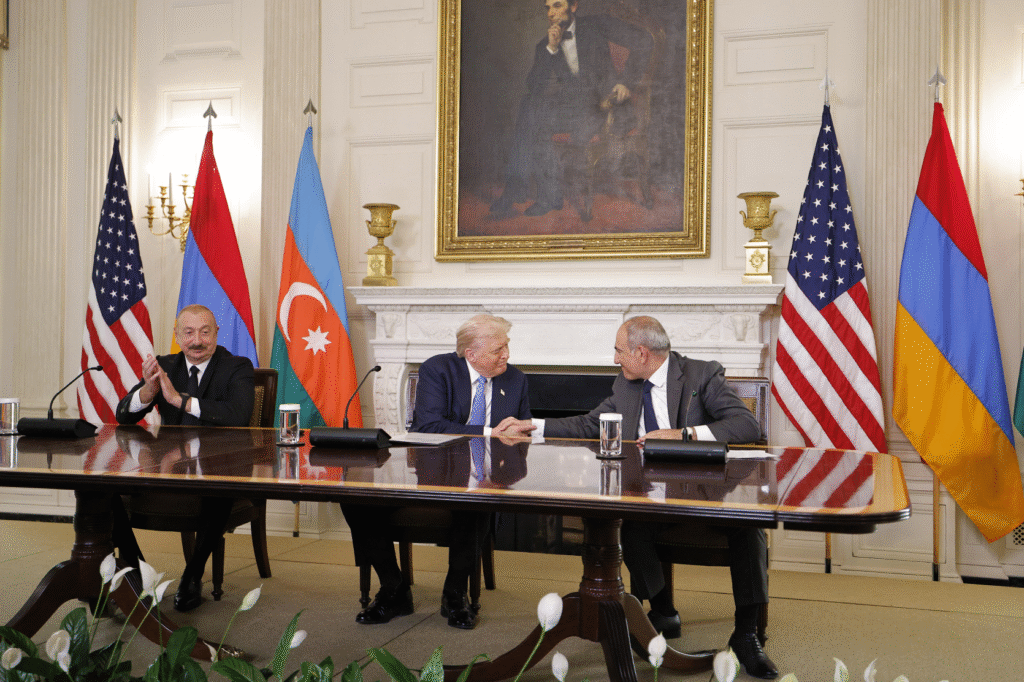
On August 8, in the presence of President Donald Trump in Washington D.C, Armenia and Azerbaijan initialled the Agreement on Establishment of Peace and Inter-State Relations. If and when actually signed, this will become the overarching peace treaty document.
On the same day, the leaders of Armenia, Azerbaijan, and the United States also signed a joint declaration On the outcomes of their meeting in Washington D.C.
That day Armenia and the U.S. signed three bilateral memoranda, one of which was On Partnership in the Field of Capacity Development of the “Crossroads of Peace” Project.
The Washington meeting also announced the Trump Road for International Peace and Prosperity, or the TRIPP initiative – a U.S. presidential proposal on the road through Southern Armenia, with American (yet-unclear) involvement. The memorandum on TRIPP has not been published, and many details remain unknown. CivilNet has sent separate requests to the governments of Armenia and the U.S. for access to the texts of the memoranda
What is clear is that the U.S. will have some role in the road project, though the timeframe and level are unclear.
In his speech in Washington, Armenian Prime Minister Nikol Pashinyan highlighted that “the agreement on opening transport communications in the region is based on the principles of sovereignty, territorial integrity, and jurisdiction.”
However, many technical questions remain unanswered — for example, will Armenian border guards be the ones checking the passports of Azerbaijani citizens and inspecting Azerbaijani cargo? How will transit duties be collected? How will security along the road be ensured?
Statements by Pashinyan and Aliyev
Weeks prior to the Washington meeting, Azerbaijani President Ilham Aliyev, when referencing the road through Armenian territory, declared: “Azerbaijani cargo and Azerbaijani citizens should not see the faces of Armenian border guards or anyone else…” He also ruled out reciprocity in connecting central Armenia with its southernmost town of Meghri via Nakhichevan: “In our territory, there will be neither external operators nor leasing.”
After the Washington meeting, on August 20, Aliyev said that “by initialling the document, we secured a land connection with our historical region of Nakhichevan,” and that Azerbaijan had “achieved everything it wanted.” He gave no technical details about the road’s operation.
On August 18, in an address to the nation, Pashinyan reiterated: “We reaffirmed the importance of unlocking communications between the two countries for domestic, bilateral and international transport, based on respect for the sovereignty, territorial integrity and jurisdiction of states.”
The Road through Syunik
In the Soviet Union, Azerbaijan was in fact connected to its Nakhichevan exclave via both a road and railway that ran along the Araks River through southern Armenia. In turn, Armenia connected its Meghri district and the industrial city of Kapan through roads and railways passing via Azerbaijan’s Nakhichevan region. Following the First Karabakh War and the subsequent road blockades in early 1990s, these routes became nonfunctional.
Before Azerbaijan’s full takeover of Karabakh, the Russian-brokered ceasefire that ended the Second Karabakh War established a 5 km-wide corridor between Armenia and Karabakh through Azerbaijan’s Lachin district. In turn, Armenia committed to “guarantee […] unobstructed movement of persons, vehicles and cargo” between mainland Azerbaijan and Nakhichevan. The agreement noted that the route would be controlled by the Russian border guards.
Although the term corridor was not explicitly used in the November 9 ceasefire statement, it was evident that victorious Azerbaijan sought symmetrical communication with its Nakhichevan exclave, just as Armenia had with Nagorno-Karabakh via Lachin corridor. Following the November 9 agreement, Azerbaijani and Turkish officials as well as media began to widely use the term Zangezur Corridor, implying exclusion of Armenian sovereignty.
Many provisions of the November 9 statement were not implemented. As British analyst Laurence Broers notes, “The ceasefire statement went beyond typical agreements by including ambitious forward-looking measures like opening borders and transit routes. However, its brief nine-article format lacked necessary details, creating a gap between what it prescribed and what it described.”
Russia’s invasion of Ukraine in February 2022 and its early setbacks on the battlefield emboldened Azerbaijan to challenge Russia’s peacekeeping mission in Nagorno-Karabakh. Moscow, which had become the sole mediator after the 2020 war, proved essentially unable or unwilling to pressure Azerbaijan to open the Lachin Corridor.
The Lachin Corridor, Blockade, and Fall of Karabakh
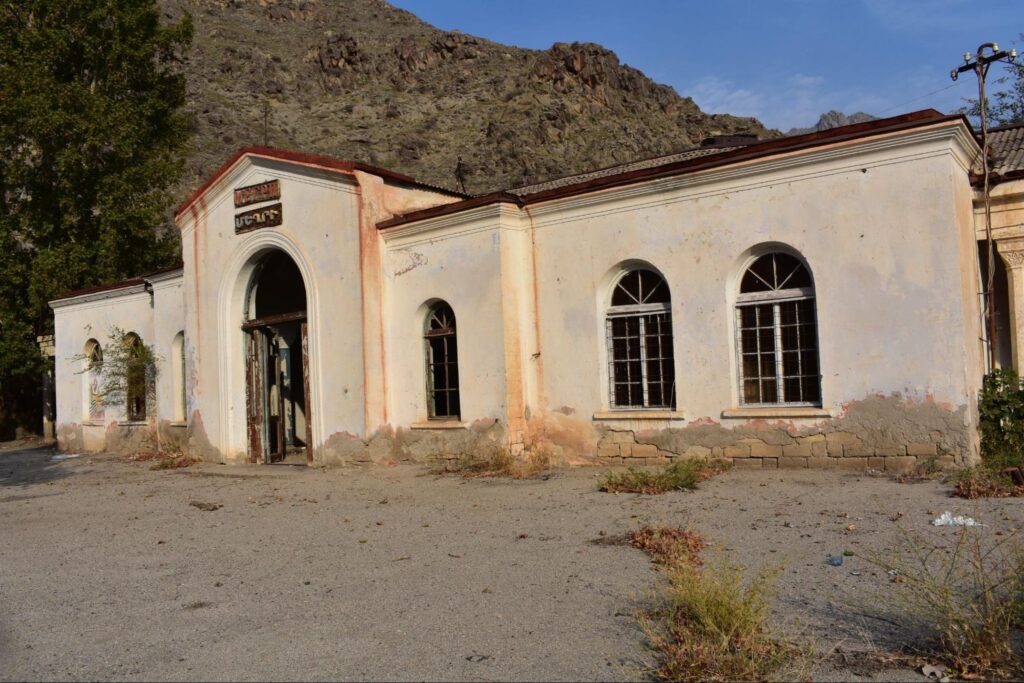
On December 12, 2022, Azerbaijan closed the Lachin Corridor. The blockade lasted about ten months and culminated in an Azerbaijani assault on Nagorno-Karabakh and the ethnic cleansing of the region’s entire Armenian population.
Although the blockade’s initial pretext was environmental, with sham Azerbaijani “eco-activists” blocking the road near Shushi, Azerbaijan’s real demand was “road/corridor for road/corridor.”
Armenia placed full responsibility for reopening the Lachin Corridor on Russia. Foreign Minister Ararat Mirzoyan refused to participate in a December 23, 2022, Moscow meeting with his Azerbaijani counterpart Jeyhun Bayramov, mediated by Russian FM Sergey Lavrov, that was dedicated to lifting the blockade.
Even after the fall and ethnic cleansing of Nagorno-Karabakh, Armenia has not declared the November 9 statement null and void, despite the fact that its core element—Nagorno-Karabakh itself—no longer exists.
Praise and Criticism
U.S. involvement in a project of regional significance in Armenia indirectly reduces the risk of a new Azerbaijani military offensive. However, official propaganda in Yerevan and pro-government analysts exaggerate its importance, suggesting it implies comprehensive security guarantees for Armenia. In reality, U.S. involvement and the published documents do not entail any American security commitments.
The technical parameters of the “Trump Road” also remain undisclosed. So far, it has only been stated that U.S. involvement will be at the level of private companies.
Critics argue that this is essentially a corridor granted in exchange for nothing—and ask why Armenia should even discuss unobstructed communication between Azerbaijan and Nakhichevan when Karabakh no longer exists.
***
It remains unknown whether the Armenian-American memorandum on the “Trump Road” contains technical specifications or whether it is more of a declarative document, leaving details for future negotiations. Publication of the memorandum would in any case shed light on this and other questions.




 Stories